The Hypothesis of the Stolen Painting 1978


One narrator appears on screen while another voice remains hidden, and together they explore how a group of paintings might be linked. The visible narrator moves through three‑dimensional replicas of each work, populated by real people who sometimes act, as he attempts to reveal the deeper meaning of the series.

Does The Hypothesis of the Stolen Painting have end credit scenes?
No!
The Hypothesis of the Stolen Painting does not have end credit scenes. You can leave when the credits roll.
Meet the Full Cast and Actors of The Hypothesis of the Stolen Painting
Explore the complete cast of The Hypothesis of the Stolen Painting, including both lead and supporting actors. Learn who plays each character, discover their past roles and achievements, and find out what makes this ensemble cast stand out in the world of film and television.
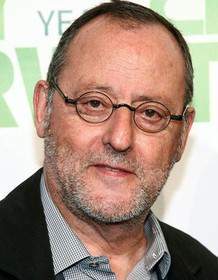
Jean Reno
Character of Paintings

Raúl Ruiz
Gabriel Gascon
Narrator
Raymond Soriano
Character of Paintings
Nadège Clair
Character of Paintings
Philippe Chassel
Character of Paintings
Christian Broutin
Character of Paintings
Bruno Guillain
Character of Paintings
Daniel Grimm
Character of Paintings
Vincent Skimenti
Character of Paintings
Tony Rödel
Character of Paintings
Guy Bonnafoux
Character of Paintings
Alfred Baillou
Character of Paintings
Jean Rougeul
Collector
Anne Desbois
Character of Paintings
Raymond Pierson
Character of Paintings
Jean Narboni
Character of Paintings
Stéphane Shandor
Character of Paintings
Denis Develoux
Character of Paintings
Chantal Paley
Character of Paintings
Jean Raynaud
Character of Paintings
Isidro Romero
Character of Paintings
Bernard Daillencourt
Character of Paintings
Jean-Damien Thiollier
Character of Paintings
Alix Comte
Character of Paintings
Pascal Lambertini
Character of Paintings
Claude Hernin-Helbaut
Character of Paintings
Jean Bessière
Character of Paintings
Dominique Lambertini
Character of Paintings
Aldo Boselli
Character of Paintings
Eric Saulnier
Character of Paintings
Carlos Asorey
Character of Paintings
Jacques Brunswig
Character of Paintings
Pierre Latzko
Character of Paintings
Corinne Berjot
Character of Paintings
Marthe Delboy
Character of Paintings
Oreste Canakis
Character of Paintings
Daniel Musa
Character of Paintings
External Links and Streaming Options
Discover where to watch The Hypothesis of the Stolen Painting online, including streaming platforms, rental options, and official sources. Compare reviews, ratings, and in-depth movie information across sites like IMDb, TMDb, Wikipedia or Letterboxd.




Take the Ultimate The Hypothesis of the Stolen Painting Movie Quiz
Challenge your knowledge of The Hypothesis of the Stolen Painting with this fun and interactive movie quiz. Test yourself on key plot points, iconic characters, hidden details, and memorable moments to see how well you really know the film.
The Hypothesis of the Stolen Painting from 1978 Quiz: Test your knowledge of the film's characters, visual motifs, and thematic threads.
Which actor portrays the meticulous art collector at the heart of the film?
Full Plot Summary and Ending Explained for The Hypothesis of the Stolen Painting
Read the complete plot summary of The Hypothesis of the Stolen Painting, including all major events, twists, and the full ending explained in detail. Explore key characters, themes, hidden meanings, and everything you need to understand the story from beginning to end.
Hypothesis of the Stolen Painting opens with a deliberately still image tempo, a street that lingers on the edge of a photograph before the sound of whispers and questions begins to creep in. The film unfolds as a quiet, patient mockumentary, where a single art collector is the focal point of a sequence of interviews conducted by a disembodied interviewer the audience never sees. The atmosphere is intimate and formal at once, as if we’re peering into a private archive of obsessions rather than watching a conventional drama. The collector is a meticulous, methodical figure, and he is portrayed by Jean Reno in a performance that blends restraint with a compulsive need to decipher the layers of meaning embedded in paint and arrangement.
The setting is a sprawling, ornate house from the 19th century, with grounds that stretch into a labyrinth of rooms, stairways, and galleries. The camera moves like a careful eye that refuses to miss a single detail, tracking the collector as he guides the unseen interviewer through each space with a combination of reverence and insistence. central to his project are six canvases attributed to a fictional 19th‑century painter named Fredéric Tonnerre, a name that nods to literary echoes in Klossowski’s circle. The fascinating complication is that the fourth painting in the sequence vanished long ago, and its absence haunts the collector as both a puzzle and a missing piece of a larger mythos. He becomes obsessed with reconstructing the missing image not by painting anew but by orchestrating and reconfiguring the six surviving works into living tableaux that might, in his view, reveal the logic of the series in a truer, three-dimensional form.
To bring each tableau to life, the collector hires models, gathers props, and rigs lighting so that the six surviving scenes can be staged as tableaux vivants. The process is as much about the manipulation of space as it is about narrative, and the gallery becomes a workshop where the boundaries between painting and reality blur. The collector moves actors into precise positions, adjusts shadows, and choreographs the moment when a painting seems to step off the frame and into the room. It is a meta‑cinematic act, a performance that treats each canvas as a portal rather than a closed image. As the tableaux take shape, the collector cultivates a web of intertextual connections, threading together motifs and motifs—some explicit, some enigmatic—so that each scene speaks to the others in a continuous dialogue.
Among the strands the collector insists are present within the six canvases are mythological allusions—most notably the figures of Diana and Actaeon—where the hunter and goddess meet in a moment of transformation and peril. Another thread places the Knights Templar in a quiet, strategic game of chess, suggesting alliances and betrayals that echo through history. A scandal among the Parisian nobility threads through a separate tableau, hinting at social codes and reputational risk that echo in the present. And there is an occult thread, an idea of ritual sacrifice invoked in a manner that nods to the iconography of Saint Sebastian, all of which the collector claims to uncover through the careful placement of figures and props. He even speaks of a hidden system of codes and sigils that he believes point to an esoteric cult surrounding the painter’s imagined world—the Baphomet as an emblem tucked into the pictures’ architecture. Throughout, he offers long, intricate readings of the paintings’ meanings, insisting that the series as a whole encodes a singular, elusive truth.
The narrator challenges these pedantic conclusions, probing whether the collector’s method risks turning art into a riddle to be solved rather than a space to inhabit. Yet the collector persists, convinced that the missing fourth painting is the key to unlocking the entire sequence, and that the act of reconstructing the series through living tableaux is itself a form of discovery. The tension lies not only in whether the missing piece truly exists but in whether any reconstruction can capture the original intention or spirit—the sense that a painting is more than its visible surfaces and that meaning migrates as observers, objects, and light move through time and space.
As the film moves toward its end, the collector returns to the gallery’s long corridor, passing among the interconnected tableaux. The figures—played by a cast of performers who animate the rooms—appear to struggle with stillness; some blink, others waver, and a few seem to bend under the weight of too many possibilities. It is as if the paintings themselves are breathing and mutating under the gaze of the living and the living’s gaze back at them. The collector exits through a back door, the door closing softly behind him, while the camera lingers in the gallery to let the tableaux continue to inhabit the space a moment longer. The final frame holds the sense that, even with the missing piece, the pursuit of meaning continues to unfold in the architecture of the paintings, in the movements of bodies within a frame that never truly stops speaking. The film leaves us with a quiet, unresolved sense of inquiry: the past, the art, and the questions they raise persist long after the last image fades.
— Gabriel Gascon delivers the narration in a sustained, composed voice that guides the viewer through the interwoven layers of art and speculation. The art’s dialogue, the room’s geometry, and the careful staging of each moment invite a meditative engagement with how we read images and how images read us.

Coming soon on iOS and Android
The Plot Explained Mobile App
From blockbusters to hidden gems — dive into movie stories anytime, anywhere. Save your favorites, discover plots faster, and never miss a twist again.
Sign up to be the first to know when we launch. Your email stays private — always.
Explore the mobile appDiscover Film Music Concerts Near You – Live Orchestras Performing Iconic Movie Soundtracks
Immerse yourself in the magic of cinema with live orchestral performances of your favorite film scores. From sweeping Hollywood blockbusters and animated classics to epic fantasy soundtracks, our curated listings connect you to upcoming film music events worldwide.
Explore concert film screenings paired with full orchestra concerts, read detailed event information, and secure your tickets for unforgettable evenings celebrating legendary composers like John Williams, Hans Zimmer, and more.


The Hypothesis of the Stolen Painting Themes and Keywords
Discover the central themes, ideas, and keywords that define the movie’s story, tone, and message. Analyze the film’s deeper meanings, genre influences, and recurring concepts.
The Hypothesis of the Stolen Painting Other Names and Titles
Explore the various alternative titles, translations, and other names used for The Hypothesis of the Stolen Painting across different regions and languages. Understand how the film is marketed and recognized worldwide.
Similar Movies To The Hypothesis of the Stolen Painting You Should Know About
Browse a curated list of movies similar in genre, tone, characters, or story structure. Discover new titles like the one you're watching, perfect for fans of related plots, vibes, or cinematic styles.




Quick Links: Summary, Cast, Ratings, More

What's After the Movie?
Not sure whether to stay after the credits? Find out!
Check out our other apps:

SAT Sphere
Build confidence for the Digital SAT.

Mori Atlas
Discover wild places worth protecting.

Luntero
Search smarter for a home in Amsterdam.

Plot Explained
Unravel movie endings and hidden clues.

Pokechamp
Dive into Pokémon data and battle logic.

Driving Theory
Get ready for your European theory test.

Movie Dust
Plan your next cinema trip with ease.

Musemap
Find art and culture as you travel.

Selkobase
Compare credentials before committing.

Local Manual
Turn an unfamiliar country into practical next steps.

Lernavi
Compare school systems before your next move.

GymRoam
Find a workout stop wherever your plans take you.
Explore Our Movie Platform
New Movie Releases (2026)
Famous Movie Actors
Top Film Production Studios
Movie Plot Summaries & Endings
Major Movie Awards & Winners
Best Concert Films & Music Documentaries
Movie Collections and Curated Lists
© 2026 What's After the Movie. All rights reserved.
Privacy Policy