Sri Rama Rajyam 2011


After defeating Ravana, Rama returns to Ayodhya with Sita and is crowned king. When Sita becomes pregnant, whispers about her purity arise because she stayed in Ravana’s palace. To preserve his duty, Rama exiles her to the forest, where sage Valmiki shelters her. She bears twins Lava and Kusa, whose later deeds shape the tale.


Does Sri Rama Rajyam have end credit scenes?
No!
Sri Rama Rajyam does not have end credit scenes. You can leave when the credits roll.
Where to Watch Sri Rama Rajyam
See current US streaming, rental, and purchase options for Sri Rama Rajyam (2011) via JustWatch.







Meet the Full Cast and Actors of Sri Rama Rajyam
Explore the complete cast of Sri Rama Rajyam, including both lead and supporting actors. Learn who plays each character, discover their past roles and achievements, and find out what makes this ensemble cast stand out in the world of film and television.

Nayanthara
Sita
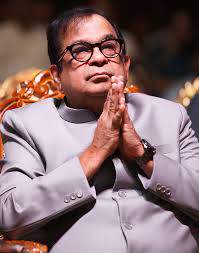
Brahmanandam
Chakail Tippadu
Sudha
Queen Sunanya
Murali Mohan
Janaka Maha Raju
Roja Selvamani
Bhudevi
Sana
Kaikeyi
Sandhya Janak
Sumitra
Nandamuri Balakrishna
Rama
Srikanth
Lakshmana
Sameer Hasan
Bharatha
Hema
Mandodari
Amanchi Venkata Subrahmanyam
Narada
M. Balayya
Sage Vashishta
Vindu Dara Singh
Hanuman
Nageshwara Rao Akkineni
Valmiki
Dhanush Kumar
Kusha
Gaurav
Lava
Pavan Sriram
Balraju / Hanuman
External Links and Streaming Options
Discover where to watch Sri Rama Rajyam online, including streaming platforms, rental options, and official sources. Compare reviews, ratings, and in-depth movie information across sites like IMDb, TMDb, Wikipedia or Rotten Tomatoes.






Full Plot Summary and Ending Explained for Sri Rama Rajyam
Read the complete plot summary of Sri Rama Rajyam, including all major events, twists, and the full ending explained in detail. Explore key characters, themes, hidden meanings, and everything you need to understand the story from beginning to end.
Rama returns to Ayodhya with his wife Sita, his brother Lakshmana, and a loyal retinue, as the city breaks into a grand celebration for the king who has triumphed over Ravana. The mood is bright with pomp and pageantry, and the queen’s pregnancy adds a note of new life to the victorious homecoming. The crowd marvels at the return of a ruler whose restraint and duty have long defined his reign, while Hanuman towers among the celebrants, a symbol of courage and devotion. In those moments, the tale seems to promise a peaceful chapter for the royal family, anchored in duty, honor, and family.
Yet the sutures of peace prove delicate. A washerman’s remark unsettles Rama, nudging him toward the austere path of dharma even at personal cost. To preserve the kingdom’s order and because he believes his wife deserves more than a crown, Rama asks Lakshmana to guide Sita toward exile and to leave her near the hermitage of Valmiki. The decision is conveyed with gravity, and Sita follows into the forest, her heart torn but her resolve steady as the trees close behind them. The moment is marked by sorrow, tears shed in a setting where destiny seems to turn a quiet, inexorable corner.
In the forest, a recently completed Ramayana is complemented by a new arrival: Sita finds shelter with the sage Valmiki, who has been quietly drafting the ancient tale. The sage receives her with solemn hospitality, recognizing the weight of her trials and the steadfastness of her virtue. It is there that a remarkable lineage begins to take shape: Sita gives birth to twins, Lava and Kusha, who are raised among sages and steeped in the knowledge of the Vedas as well as the Ramayana itself. The twins grow up with a deep sense of lineage and a talent for storytelling that rivals the most sacred of texts, their education shaping them into fearless, learned young men.
As time passes, Lava and Kusha embark on a momentous journey back toward Ayodhya. They arrive with songs and stories that enchant the people and even reach the ears of the king, though Rama does not yet recognize his own sons in the performers before him. The two brothers display not only their mastery of the Ramayana’s verses but a natural command of the stage, weaving narrative and music in a way that captivates the crowds. The moment is charged with quiet tension, for the audience senses that something momentous is unfolding, even as the truth remains unseen.
The revelation comes in time, amid trials that test loyalty and strength. When the Ashwamedha yagna is announced, Lava and Kusha confront the royal horse and, with skill and courage, stop it in its tracks. A tense encounter with Rama follows; the king is wary of fighting children, but the test of lineage cannot be avoided, and the clash strains the dignity of the moment. It is at this fraught juncture that [Hanuman] is sighted, and his presence confirms the extraordinary bond between fathers and sons. He witnesses the revelation of Lava and Kusha’s true parentage and conveys a message to Sita, who races to halt the confrontation and restore peace.
Valmiki arrives to witness the growing truth, and the siblings’ identities are finally laid bare. The story culminates in a piercing moment of choice and consequence: Sita, facing her own path and the acceptance of her sons, hands Lava and Kusha to Rama, requesting that the earth itself receive her when her life on the mortal plane ends. She steps toward the earth, a goddess among mortals, as the two boys are acknowledged as rightful heirs to the throne. The realm shifts, and the two young rulers are proclaimed kings, carrying forward a legacy built on devotion, knowledge, and rightful leadership.
In the closing arc, Rama’s earthly life reaches its natural end as he joins Sita in her exalted union with Lakshmi, completing a timeless arc of dharma and devotion. The story leaves a lasting impression of how duty and love can shape generations, and how the lines between mortal kingship and divine purpose can intertwine to illuminate a culture’s most enduring myths. Lava and Kusha’s ascent marks a new chapter for Ayodhya, while the deep bond between Rama and Sita remains an enduring emblem of resilience, sacrifice, and the transformative power of truth.

Coming soon on iOS and Android
The Plot Explained Mobile App
From blockbusters to hidden gems — dive into movie stories anytime, anywhere. Save your favorites, discover plots faster, and never miss a twist again.
Sign up to be the first to know when we launch. Your email stays private — always.
Explore the mobile appDiscover Film Music Concerts Near You – Live Orchestras Performing Iconic Movie Soundtracks
Immerse yourself in the magic of cinema with live orchestral performances of your favorite film scores. From sweeping Hollywood blockbusters and animated classics to epic fantasy soundtracks, our curated listings connect you to upcoming film music events worldwide.
Explore concert film screenings paired with full orchestra concerts, read detailed event information, and secure your tickets for unforgettable evenings celebrating legendary composers like John Williams, Hans Zimmer, and more.


Sri Rama Rajyam Other Names and Titles
Explore the various alternative titles, translations, and other names used for Sri Rama Rajyam across different regions and languages. Understand how the film is marketed and recognized worldwide.
Quick Links: Summary, Cast, Ratings, More

What's After the Movie?
Not sure whether to stay after the credits? Find out!
Check out our other apps:

SAT Sphere
Build confidence for the Digital SAT.

Mori Atlas
Discover wild places worth protecting.

Luntero
Search smarter for a home in Amsterdam.

Plot Explained
Unravel movie endings and hidden clues.

Pokechamp
Dive into Pokémon data and battle logic.

Driving Theory
Get ready for your European theory test.

Movie Dust
Plan your next cinema trip with ease.

Musemap
Find art and culture as you travel.

Selkobase
Compare credentials before committing.

Local Manual
Turn an unfamiliar country into practical next steps.

Lernavi
Compare school systems before your next move.

GymRoam
Find a workout stop wherever your plans take you.
Explore Our Movie Platform
New Movie Releases (2026)
Famous Movie Actors
Top Film Production Studios
Movie Plot Summaries & Endings
Major Movie Awards & Winners
Best Concert Films & Music Documentaries
Movie Collections and Curated Lists
© 2026 What's After the Movie. All rights reserved.
Privacy Policy