Rodin 2018


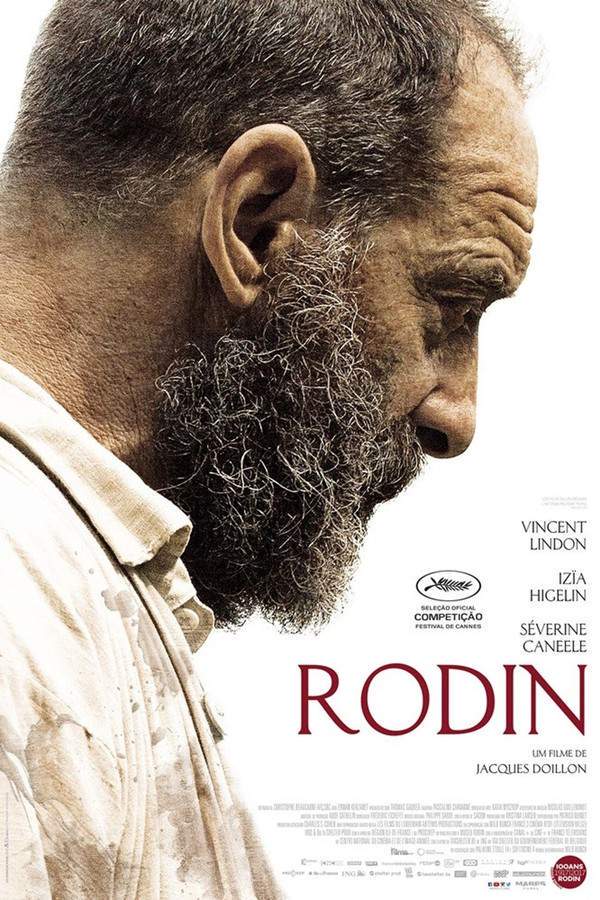
During the 1880s in Paris, the celebrated sculptor Auguste Rodin passionately creates his monumental work, "The Gates of Hell." His artistic process is intertwined with a complex relationship with his muse, Camille Claudel, and fueled by creative collaboration. Rodin faces personal losses, professional rivalries, and grapples with the controversy his increasingly acclaimed sculptures generate. Through his art, he explores themes of love, loss, and the human condition, establishing himself as a pivotal figure in modern art.


Does Rodin have end credit scenes?
No!
Rodin does not have end credit scenes. You can leave when the credits roll.
Where to Watch Rodin
See current US streaming, rental, and purchase options for Rodin (2018) via JustWatch.







Meet the Full Cast and Actors of Rodin
Explore the complete cast of Rodin, including both lead and supporting actors. Learn who plays each character, discover their past roles and achievements, and find out what makes this ensemble cast stand out in the world of film and television.
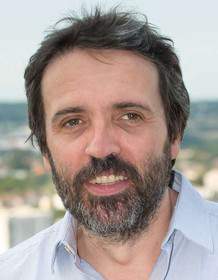
Laurent Poitrenaux
Octave Mirbeau
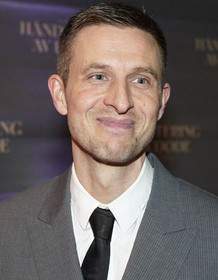
Anders Danielsen Lie
Rainer Maria Rilke

Izïa Higelin
Camille Claudel
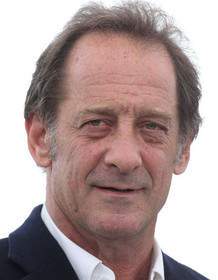
Vincent Lindon
Auguste Rodin

Bernard Verley
Victor Hugo
Alexandre Haulet
Assistant Rodin
Arthur Nauzyciel
Paul Cézanne
Louise Le Pape
Adèle Abruzzesi
Olivier Cadiot
Claude Monet
Séverine Caneele
Rose Beuret
External Links and Streaming Options
Discover where to watch Rodin online, including streaming platforms, rental options, and official sources. Compare reviews, ratings, and in-depth movie information across sites like IMDb, TMDb, Wikipedia or Rotten Tomatoes.








Ratings and Reviews for Rodin
See how Rodin is rated across major platforms like IMDb, Metacritic, and TMDb. Compare audience scores and critic reviews to understand where Rodin stands among top-rated movies in its genre.

The Movie Echo Score
In its measured portrayal of Auguste Rodin, the film excels in authentic performance and moments of visual restraint but is impeded by a disjointed narrative and subdued sensory palette. The lead actor’s nuanced portrayal and well-composed frames draw intermittent engagement, yet the script’s linear progression and episodic structure undermine dramatic momentum. While occasional editing choices lend introspective resonance, persistent pacing lapses and tonal monotony limit broader immersion. Overall, the film presents a thoughtfully crafted premise that seldom sustains its intended intensity.
The Movie Echo Score Breakdown for Rodin

Art & Craft
In terms of direction and visual composition, the film offers moments of authentic framing and restrained camera movement that reflect the sculptor’s discipline. Cinematography is often praised for its austere palette and careful lighting, yet overall production design feels muted. Editing ellipses create reflective beats but lack consistent stylistic cohesion.

Character & Emotion
When it comes to character depth and emotional resonance, the lead performance is consistently nuanced, capturing the artist’s introspective focus with subtle expressiveness. Other ensemble roles feel less developed, contributing occasional detachment. Chemistry between figures arises in select scenes, but limited dramatic arcs constrain broader emotional investment over the film’s duration.

Story & Flow
In terms of story and narrative flow, the film’s chronologically linear approach provides clarity but results in episodic fragmentation. Pacing shifts abruptly between encounters, and the lack of rising tension undermines engagement. Originality emerges in ellipsed timelines, yet overall coherence is weakened by uneven scene transitions and minimal dramatic payoff.

Sensory Experience
When considering the sensory experience, the score and sound design are understated, supporting the austere tone but seldom creating immersive atmosphere. The visual style relies on a desaturated palette and minimal color contrast, which reinforces authenticity but can feel monotonous. Overall, sensory elements maintain consistency without delivering dynamic impact.

Rewatch Factor
In terms of rewatch value, the film’s deliberate pacing and episodic structure limit appeal for subsequent viewings. Moments of strong performance and thematic reflection invite appreciation of acting nuances, but the subdued visual style and lack of narrative momentum reduce lasting engagement. Overall, the film offers limited replay potential beyond initial observation.

39
Metascore
tbd
User Score


32%
TOMATOMETER

23%
User Score

5.0 /10
IMDb Rating
47
%
User Score

2.7
From 1 fan rating
Full Plot Summary and Ending Explained for Rodin
Read the complete plot summary of Rodin, including all major events, twists, and the full ending explained in detail. Explore key characters, themes, hidden meanings, and everything you need to understand the story from beginning to end.
At the turn of the century, Auguste Rodin stands as one of the most celebrated sculptors in the world, directing a bustling studio where assistants, models, and new ideas constantly collide in the pursuit of monumental works. In this intimate portrait of genius and desire, Rodin, Vincent Lindon, navigates the pressures of artistic ambition while his personal life slips into a colder rhythm. His fame brings him commissions for iconic pieces like Balzac, yet the very fame that sustains him also amplifies the emotional distance from Rose Beuret, his wife, who increasingly feels eclipsed by the life he leads beyond their marriage. Amid the friction of fidelity and affection, the sculptor seeks solace in a burgeoning partnership with a younger muse who embodies the emotional void he cannot fill at home, a dynamic that both complicates and enriches his art.
The film begins to sketch Rodin’s world beyond the studio when he travels to engage with Octave Mirbeau, Laurent Poitrenaux about a life-size sculpture of Honore Balzac. Without Balzac as a live model, Rodin improvises with a pregnant woman posing in the nude, whose form he uses to evoke Balzac’s aging heft. This decision leads him into technical experiments as he designs the molding structures necessary to bring the sculpture to completion. The process is iterative and tactile: drafts, clay, and the stubborn realities of translating textual myth into a living, three-dimensional monument. The pregnant model’s presence becomes a striking visual device, shaping not only the figure’s mass but also how the artist conceives the statue’s moral and physical presence.
Amid these professional endeavors, a storm unfolds in Rodin’s private life. Camille Claudel, [Izïa Higelin], is not merely a collaborator but a rising force who demands a clearer place in his life and art. Their relationship deepens into a charged intimacy that unsettles the studio’s routines, and Camille pushes Rodin to formalize their bond by signing a declaration to leave his wife and marry her. Rodin’s response is ambiguous and carefully weighed, balancing personal passion against the demands of his career. The emotional tension between Camille and Rodin becomes a mirror of the evolving dynamic in his marriage, where Rose Beuret, [Séverine Caneele], watches the situation with a mixture of concern, resilience, and quiet complicity. She knows the depths of Rodin’s infidelity, yet she remains a central figure in his world, insisting on a place within the personal conversation even as the landscape of their relationship shifts.
The public face of Rodin’s career, the Balzac commission, encounters a brutal reception. At the review, the assembled patrons react with sharp disapproval, finding the proposed sculpture grotesque in its scale and nudity, with the most controversial feature—the pronounced male anatomy—emphasized and commented on with consternation. The reviewers betray their discomfort and reject the piece, leaving Balzac’s legacy to absorb the sting of criticism. The film frames this professional rebuke not as a single failure but as a telling moment that tests the characters’ loyalties and ambitions, with Balzac himself left unsettled by the transformation of his likeness under the sculptor’s hand.
The confrontation between Camille and Rose becomes a pivotal emotional hinge. Camille travels to confront the reality of Rodin’s marriage, and their exchange radiates tension, anger, and a raw truth about devotion, autonomy, and what each woman seeks from the artist. The meeting ends not with a clean victory for one side but with a painful, unresolved stalemate that pushes Rodin to reassess the promises he has made. In the aftermath, Rodin and his wife reach a form of uneasy coexistence, a pragmatic reconciliation that leaves the lovers to contend with their own bearings while the man continues to sculpt.
In the studio, a crucial technical moment foreshadows the sculpture’s final presentation. A student assists by immersing an oversized overcoat into a clay bath, an act that drapes the wet clay over Balzac’s nude torso to veil the previously exposed anatomy. This act of concealment, carefully choreographed as part of the sculpture’s maturation, signals Rodin’s readiness to adapt his vision to the judgments of institutions and audiences alike. The finished statue—and the art it represents—finds a life beyond Rodin’s workshop: stored in a garden beyond the town, it matures into a work meant for a broader public gaze. Years later, the Balzac statue travels across oceans to Japan, where it is now displayed at the Hakone Open-Air Museum, inviting visitors to contemplate the tension between an artist’s audacious imagination and the world’s demands for form, restraint, and meaning.
The film further crystallizes the sense of a living circle around Rodin, weaving in glimpses of other towering artists of the era who populate the sculptor’s orbit. Rilke, portrayed by Anders Danielsen Lie, appears as part of the era’s introspective atmosphere, while Monet and Cézanne, brought to life respectively by Olivier Cadiot and Arthur Nauzyciel, inhabit the studio’s cultural hinterland, reminding us that Rodin’s world was a loom where poetry, painting, and sculpture intersected. In this milieu, Victor Hugo’s shadow also lingers, with Bernard Verley lending the towering presence of the era’s literary fame to the narrative’s emotional and historical texture. The film does not merely recount a sequence of personal conflicts; it situates Rodin within a network of relationships and ideas that shape the sculptor’s most ambitious choices and, ultimately, his most lasting artistic legacies.
Throughout, the film maintains a calm, restrained tone that respects the complexity of its subjects, blending intimate sentiment with historical texture. It does not sensationalize the affairs or reduce Rodin’s life to a simple melodrama; instead, it invites viewers to consider how a masterworks’ creation can be both an act of self-expression and a negotiation with the people who share a maker’s life. The result is a richly textured exploration of love, loyalty, inspiration, and the stubborn, improvisational craft of sculpture. The final image—Balzac’s statue standing in a quiet garden and later opening itself to the world in a distant museum—resonates as a meditation on the resilience of art in the face of personal struggle, a reminder that great works can endure even when the human relationships behind them are imperfect, fragile, and eloquently human.

Coming soon on iOS and Android
The Plot Explained Mobile App
From blockbusters to hidden gems — dive into movie stories anytime, anywhere. Save your favorites, discover plots faster, and never miss a twist again.
Sign up to be the first to know when we launch. Your email stays private — always.
Explore the mobile appWatch Trailers, Clips & Behind-the-Scenes for Rodin
Watch official trailers, exclusive clips, cast interviews, and behind-the-scenes footage from Rodin. Dive deeper into the making of the film, its standout moments, and key production insights.
Rodin Themes and Keywords
Discover the central themes, ideas, and keywords that define the movie’s story, tone, and message. Analyze the film’s deeper meanings, genre influences, and recurring concepts.
Rodin Other Names and Titles
Explore the various alternative titles, translations, and other names used for Rodin across different regions and languages. Understand how the film is marketed and recognized worldwide.
Similar Movies To Rodin You Should Know About
Browse a curated list of movies similar in genre, tone, characters, or story structure. Discover new titles like the one you're watching, perfect for fans of related plots, vibes, or cinematic styles.



Quick Links: Summary, Cast, Ratings, More

What's After the Movie?
Not sure whether to stay after the credits? Find out!
Check out our other apps:

SAT Sphere
Build confidence for the Digital SAT.

Mori Atlas
Discover wild places worth protecting.

Luntero
Search smarter for a home in Amsterdam.

Plot Explained
Unravel movie endings and hidden clues.

Pokechamp
Dive into Pokémon data and battle logic.

Driving Theory
Get ready for your European theory test.

Movie Dust
Plan your next cinema trip with ease.

Musemap
Find art and culture as you travel.

Selkobase
Compare credentials before committing.

Local Manual
Turn an unfamiliar country into practical next steps.

Lernavi
Compare school systems before your next move.

GymRoam
Find a workout stop wherever your plans take you.
Explore Our Movie Platform
New Movie Releases (2026)
Famous Movie Actors
Top Film Production Studios
Movie Plot Summaries & Endings
Major Movie Awards & Winners
Best Concert Films & Music Documentaries
Movie Collections and Curated Lists
© 2026 What's After the Movie. All rights reserved.
Privacy Policy