Mumbai Saga 2021


Set in the 1980s and 1990s, this film charts the evolution of Bombay into Mumbai. It's a tense cat-and-mouse game between a ruthless crime boss, Amartya Rao, known for his violent methods, and a determined police officer relentlessly pursuing him. The story explores their dangerous conflict as the city undergoes a significant transformation.


Does Mumbai Saga have end credit scenes?
No!
Mumbai Saga does not have end credit scenes. You can leave when the credits roll.
Meet the Full Cast and Actors of Mumbai Saga
Explore the complete cast of Mumbai Saga, including both lead and supporting actors. Learn who plays each character, discover their past roles and achievements, and find out what makes this ensemble cast stand out in the world of film and television.

Prateik Babbar
Shyam Jadhav
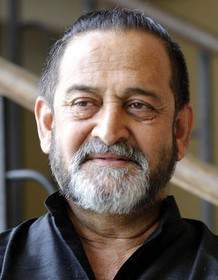
Mahesh Manjrekar

Kajal Agarwal
Jamuna
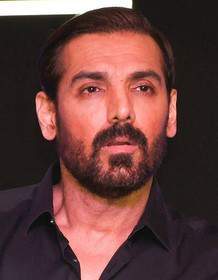
John Abraham
Ganpat Ram Bhonsle

Sanjay Gupta
Samir Soni
Shaad Randhawa
Pankaj Tripathi
Devraj Chaudhary
Emraan Hashmi
Inspector Ambar Khan
Gulshan Grover
Suniel Shetty
Murli Shankar
Amole Gupte
Veerubhai Abhayankar
Kanan Arunachalam
Inspector Mastekar
Ivan Rodrigues
Journalist Sanjay Kumar Pandey
Rohit KaduDeshmukh
Sameer Shinde
Tithi Raaj
Neelam
External Links and Streaming Options
Discover where to watch Mumbai Saga online, including streaming platforms, rental options, and official sources. Compare reviews, ratings, and in-depth movie information across sites like IMDb, TMDb, Wikipedia or Rotten Tomatoes.






Ratings and Reviews for Mumbai Saga
See how Mumbai Saga is rated across major platforms like IMDb, Metacritic, and TMDb. Compare audience scores and critic reviews to understand where Mumbai Saga stands among top-rated movies in its genre.

The Movie Echo Score
Mumbai Saga delivers a gritty 1990s backdrop but struggles to rise above formulaic gangster tropes. Critics note dated direction and uneven performances, while a few reviewers praise the lead actors' energy and the film's momentary fun. The visual style and sound design receive mixed feedback, with some finding the colour palette and mixing distracting. Consequently, the movie offers a brief, surface‑level experience that may satisfy genre fans but lacks lasting impact for broader audiences.
The Movie Echo Score Breakdown for Mumbai Saga

Art & Craft
In terms of direction and production, the film feels anchored in an outdated aesthetic. Critics point to stale cinematography, uninspired set design, and sound mixing that detracts from immersion. Some reviewers acknowledge decent action framing, yet the overall visual execution appears uneven. The cumulative impression is that the technical craft falls short of contemporary expectations, limiting the film's artistic appeal.

Character & Emotion
When evaluating performances, the leads receive the most consistent praise. John Abraham and Emraan Hashmi are noted for delivering strong, physically convincing portrayals, and several viewers describe the star cast as competent. However, supporting actors are criticized for lacking depth, and a few critics highlight moments of wooden acting. Overall, the character work leans positive, driven by the central performances despite occasional weak turns.

Story & Flow
The narrative centers on Mumbai's criminal evolution, but opinions diverge on its execution. Some reviewers enjoy the pulpy, nostalgic vibe and find the plot entertaining in short bursts. Others label it derivative, pointing out recycled beats from earlier gang‑war films and a lack of substantive development. Pacing is described as uneven, resulting in a story that is at times engaging yet frequently feels predictable.

Sensory Experience
The sensory experience receives mixed reactions. A few critics note a loud, effective background score and adequate cinematography, but many complain about harsh colour grading, jarring sound mixing, and over‑stylized visuals that undermine immersion. The soundtrack and sound design are considered functional rather than memorable, contributing to an overall sensory impression that is more distracting than enhancing.

Rewatch Factor
Rewatch value appears limited for most viewers. While some fans appreciate the film's mass‑appeal dialogues and occasional action set‑pieces, a majority describe it as a one‑time watch with little incentive for repeat viewings. The lack of narrative depth and technical shortcomings reduce its lasting appeal, making it suitable mainly for casual genre enthusiasts rather than repeat audiences.
Take the Ultimate Mumbai Saga Movie Quiz
Challenge your knowledge of Mumbai Saga with this fun and interactive movie quiz. Test yourself on key plot points, iconic characters, hidden details, and memorable moments to see how well you really know the film.
Mumbai Saga Quiz: Test your knowledge of the 2021 film Mumbai Saga with these 10 mixed‑difficulty questions.
What is the name of Amartya's teenage brother?
Full Plot Summary and Ending Explained for Mumbai Saga
Read the complete plot summary of Mumbai Saga, including all major events, twists, and the full ending explained in detail. Explore key characters, themes, hidden meanings, and everything you need to understand the story from beginning to end.
In mid-1980s Mumbai, a city brimming with grit and shifting loyalties, Amartya Rao Naik rises from a humble background as his father sells vegetables under a railway overbridge. The streets are dominated by protection money paid to the notorious gangster Gaitonde Gulshan Grover, and a violent underworld peace is enforced through fear. When Gaitonde’s henchmen brutally assault Amartya’s teenage brother Arjun, Amartya responds with shocking force, laying waste to the gang and earning a brutal sort of respect. His fight doesn’t go unnoticed by the underworld’s power players, and even as he faces police brutality, his defiant strength draws attention from Nari Khan’s circle, signaling that a rough and bloody new balance of power has begun to tilt in Amartya’s favor.
Soon after, Amartya’s future becomes intertwined with the political machine of the local Chatrapati Sena. Bhau [Mahesh Manjrekar] a fierce party leader with a vendetta against Gaitonde, helps Amartya secure bail and a foothold in the city’s violent labyrinth. From inside this alliance, Amartya gleans crucial information about Gaitonde’s operations through Nari Khan’s key aides, and with swift, brutal action he targets Gaitonde’s arsenal and control. In return, Amartya uses his leverage to bail out Nari and sends a clear message to Gaitonde: stay out of his way. Gaitonde, sensing his own strength waning, begins to resent his faltering grip, while Amartya’s influence expands with Bhau’s political muscle behind him.
As Amartya consolidates power, he makes the difficult choice to shield his family from the violence that feeds his own rise. He sends Arjun away to boarding school to keep him distant from the path of criminal life. Time passes, and Amartya’s personal life grows more complex: he marries Seema, a childhood friend, and Seema helps arrange Arjun’s marriage to Nilam, a union intended to give the young couple a chance at a normal life abroad. Nilam [Tithi Raaj] becomes a symbol of the life Amartya longs to protect, even as the city’s underworld continues to churn around him.
Gaitonde, not content to fade quietly, forges a rough pact with mill owner Sunil Khaitan to push workers aside and clear land for a lucrative real estate project in a recently liberalized economy. Amartya, wary of this resurgence, strikes a fatal blow by killing Khaitan when he refuses to heed warnings. Khaitan’s death triggers retaliation: his wife Sonali places a bounty on Amartya’s head, setting the stage for a brutal manhunt that pits the city’s best and worst against each other.
Into this powder keg steps Inspector Vijay Savarkar, who leads the police investigation with dogged persistence. He corners Sadashiv, a weakling in Amartya’s gang who agrees to betray his colleagues in exchange for safety. The net tightens as Sadashiv’s information leads to a deadly ambush and a brutal pattern of corruption within the force. Arjun, back in India, confronts the shifting loyalties of a city that blurs the line between law and lawlessness. Amid bribes, deception, and calculated moves, Arjun suspects the traitor and seeks proof, while Amartya’s circle grows more dangerous with every decision.
The courtroom pressure tightens: Vijay secures a court order under the TADA act against Arjun, and warns of an “absentia” encounter if he walks freely. In a tense sequence, Arjun is shot in court by a figure tied to Gaitonde’s network but survives, leaving him permanently paralyzed and Deeply altered. Anger and resolve drive Amartya to return to India to rescue Arjun from a police dragnet, planning to take him to London for treatment. The pursuit grows colder as Vijay corners Amartya, but Bhau—whose loyalties and strategies have long shifted the city’s balance—stages a move that again redefines who holds power.
A dramatic revelation unravels: Vijay is an ex-supporter of Bhau, and his ascent within the police was aided by Bhau’s influence. The two men stand on opposite sides of a line neither can afford to cross. In a climactic confrontation, on a desolate runway, Khan arrives aboard a chartered flight to ferry Arjun and Amartya to the UK, but the last-second assault by Vijay turns the scene into a deadly standoff. In a blaze of gunfire and fire, Amartya detonates a petrol tanker, killing Vijay and ensuring Arjun’s escape onto the aircraft. Khan, though, makes away with Arjun, leaving Amartya to face the consequences of his choices.
The film closes with a stark coda: Bhau hands Mumbai’s long-cherished privileges back into the hands of Baba, a move that signals a full-circle turn in the city’s power structure. The question of who truly holds the city’s reins lingers, as Vijay’s fate and the future of Arjun and the gang are sketched out in a final note that hints at a broader, unresolved arc. What remains clear is that Amartya’s rise, his brutal enforcement of power, and the circle of loyalties around him define a city where control is a constant negotiation and where every ally might become a liability in the blink of an eye.

Coming soon on iOS and Android
The Plot Explained Mobile App
From blockbusters to hidden gems — dive into movie stories anytime, anywhere. Save your favorites, discover plots faster, and never miss a twist again.
Sign up to be the first to know when we launch. Your email stays private — always.
Explore the mobile appDiscover Film Music Concerts Near You – Live Orchestras Performing Iconic Movie Soundtracks
Immerse yourself in the magic of cinema with live orchestral performances of your favorite film scores. From sweeping Hollywood blockbusters and animated classics to epic fantasy soundtracks, our curated listings connect you to upcoming film music events worldwide.
Explore concert film screenings paired with full orchestra concerts, read detailed event information, and secure your tickets for unforgettable evenings celebrating legendary composers like John Williams, Hans Zimmer, and more.


Mumbai Saga Other Names and Titles
Explore the various alternative titles, translations, and other names used for Mumbai Saga across different regions and languages. Understand how the film is marketed and recognized worldwide.
Quick Links: Summary, Cast, Ratings, More

What's After the Movie?
Not sure whether to stay after the credits? Find out!
Check out our other apps:

SAT Sphere
Build confidence for the Digital SAT.

Mori Atlas
Discover wild places worth protecting.

Luntero
Search smarter for a home in Amsterdam.

Plot Explained
Unravel movie endings and hidden clues.

Pokechamp
Dive into Pokémon data and battle logic.

Driving Theory
Get ready for your European theory test.

Movie Dust
Plan your next cinema trip with ease.

Musemap
Find art and culture as you travel.

Selkobase
Compare credentials before committing.

Local Manual
Turn an unfamiliar country into practical next steps.

Lernavi
Compare school systems before your next move.

GymRoam
Find a workout stop wherever your plans take you.
Explore Our Movie Platform
New Movie Releases (2026)
Famous Movie Actors
Top Film Production Studios
Movie Plot Summaries & Endings
Major Movie Awards & Winners
Best Concert Films & Music Documentaries
Movie Collections and Curated Lists
© 2026 What's After the Movie. All rights reserved.
Privacy Policy