Montages of a Modern Motherhood 2024

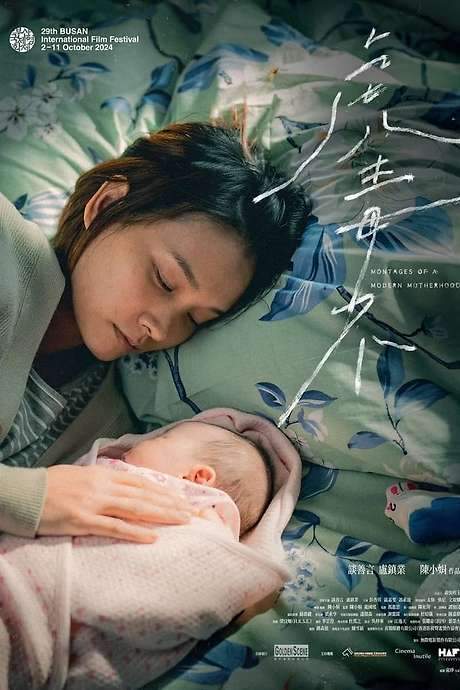
Jing's daily routine begins with a tracking shot as she pumps breast milk and prepares for work at a bakery, leaving her baby with her mother-in-law. Her daughter Qing is a challenging infant, leading to frequent conflicts with her in-laws regarding childcare and housework. Jing's husband, a delivery driver, offers limited assistance with parenting, leaving her feeling as though her career aspirations have been undermined by motherhood. Director Oliver Siu Kuen Chan explores Jing’s emotional struggles, revealing the pressures and societal expectations placed upon women, ultimately forcing her to confront a pivotal decision.

Jing's daily routine begins with a tracking shot as she pumps breast milk and prepares for work at a bakery, leaving her baby with her mother-in-law. Her daughter Qing is a challenging infant, leading to frequent conflicts with her in-laws regarding childcare and housework. Jing's husband, a delivery driver, offers limited assistance with parenting, leaving her feeling as though her career aspirations have been undermined by motherhood. Director Oliver Siu Kuen Chan explores Jing’s emotional struggles, revealing the pressures and societal expectations placed upon women, ultimately forcing her to confront a pivotal decision.

Does Montages of a Modern Motherhood have end credit scenes?

No!

Montages of a Modern Motherhood does not have end credit scenes. You can leave when the credits roll.

Meet the Full Cast and Actors of Montages of a Modern Motherhood

Explore the complete cast of Montages of a Modern Motherhood, including both lead and supporting actors. Learn who plays each character, discover their past roles and achievements, and find out what makes this ensemble cast stand out in the world of film and television.


Ratings and Reviews for Montages of a Modern Motherhood

See how Montages of a Modern Motherhood is rated across major platforms like IMDb, Metacritic, and TMDb. Compare audience scores and critic reviews to understand where Montages of a Modern Motherhood stands among top-rated movies in its genre.


IMDb

6.6 /10

IMDb Rating

TMDB

53

%

User Score

Take the Ultimate Montages of a Modern Motherhood Movie Quiz

Challenge your knowledge of Montages of a Modern Motherhood with this fun and interactive movie quiz. Test yourself on key plot points, iconic characters, hidden details, and memorable moments to see how well you really know the film.


Montages of a Modern Motherhood Quiz: Test your knowledge of the key events, characters, and themes in the 2024 film "Montages of a Modern Motherhood".

What is the name of Jing's infant daughter?

Full Plot Summary and Ending Explained for Montages of a Modern Motherhood

See more

Read the complete plot summary of Montages of a Modern Motherhood, including all major events, twists, and the full ending explained in detail. Explore key characters, themes, hidden meanings, and everything you need to understand the story from beginning to end.


After six long years of waiting for a child, Jing finally holds her infant daughter, Ching, in her arms, shared with the steady support of her husband, Wai. The adoration is real, but so are the mounting pressures of balancing work, motherhood, and the expectations that often come with both. When Jing returns from maternity leave to her job as a pastry chef at a bakery, the routine she once trusted is now tempered by new responsibilities and a sense of vulnerability she’s only just beginning to understand.

Back home, Jing’s mother-in-law steps in to help during the day, a gesture meant to ease the transition but which quickly reveals tensions that simmer beneath the surface. One day, Jing arrives early from work and discovers that the grandmother has bathed Ching with a charm paper water, claiming it will make the baby healthier. The moment feels almost banal in its ritual, yet it bites deep because it signals a larger pattern: an insistence that Jing’s parenting instincts aren’t enough, and that “better” methods must come from outside inputs. Worse still, Jing uncovers a troubling absence of care in the most intimate measure of a mother’s work—her breast milk has been discarded in favor of powdered milk, with the grandmother justifying it by saying Jing’s milk isn’t good enough and that Ching is lighter than other babies her age. The discovery forks Jing’s trust and patience into a sharp, jagged doubt, and the confrontation that follows leaves both women entrenched in a stubborn, hurtful stand-off.

Ching’s nights become a chorus of cries, a small, persistent pressure that demands Jing’s attention while Wai, by contrast, seems removed and distant. He speaks of sleep deprivation and tells stories of nearly having an accident while working as a truck driver during the day, which reads as a defense for his own fatigue rather than a plea for shared responsibility. The imbalance gnaws at Jing, who begins to suffer from insomnia and starts slipping at work, making mistakes that attract her boss’s disapproval. The atmosphere at the bakery grows tenser, and Jing finds herself navigating a delicate tension: she wants to prove she can carry both motherhood and a career forward, yet the external pressures and a lack of real support push her toward breaking points she had not anticipated.

To ease her burden, Jing looks for daytime help and eventually meets Fanny, a retired woman whose family has already migrated overseas. Fanny’s presence offers a quiet relief: a capable, steady routine that allows Jing to focus more on her responsibilities while continuing to pursue her own ambitions. But the arrangements remain precarious. Jing battles with the physical side of motherhood—pumping milk proves difficult, and a visit to a doctor reveals mastitis that requires medical treatment. While Jing fights through the discomfort, Wai steps in with patience and promises to support both her and the baby, yet the promise feels hollow at moments when Jing’s independence and professional identity cry out for recognition.

Jing wants to work and sustain her independence, fueled by the belief that women deserve financial means and personal autonomy. This conviction leads her to apply to more bakeries, seeking a place where motherhood is not a border but a balance she can manage. Yet rejection comes from many corners, a reflection of the era’s lingering attitudes toward new mothers in the workforce. The household frictions intensify as Fanny announces she will migrate to Canada at the end of the month, signaling another impending shift in Jing’s support network and forcing Jing to confront the practical reality that she must find another nanny at short notice.

Formula prices climb again, a small but persistent reminder of the fragility of Jing’s budget and the family’s plans. She returns to Wai, asking for more money for the household, and his response lands with a mixed message: he agrees to the extra support but suggests Jing consider staying home full-time until Ching grows older. The suggestion lands like a chill on Jing’s hopes for a thriving, independent career. The clash between them—his push for economic security and her push for personal and professional fulfillment—highlights a broader question about who shoulders the work, and when, in a modern family.

A party at their home, hosted by Wai to introduce friends to their newborn, becomes a revealing snapshot of their dynamics. Ching soils her diaper, a perfectly ordinary event in the life of a small child, and Wai remains with his friends, leaving Jing to tend to the infant’s needs on her own, a moment that underscores the gulf between the couple’s expectations and realities. The moment also reveals that Wai is more focused on social appearances and potential new opportunities, as he discusses with a friend who has started a logistics company, hinting at hopes for a higher salary and a better future for the family.

On Fanny’s last day, Jing returns to her childhood home to talk with her own mother, but she is repeatedly interrupted by her brother’s children. The delay stretches Jing thin, and she wanders the streets, tempted by thoughts of escaping motherhood itself. Yet a nametag bearing her and Ching’s names triggers a wave of remorse, and she rushes back to Fanny’s place, where she apologizes to Ching and decides to bring her daughter home. The act marks a turning point in Jing’s inner life, a moment of recommitment to the life she’s chosen, even as the weight of the struggle remains.

To offer a moment of respite, Wai takes Jing to the beach, telling her about his transition to a new company and sharing his plan to have another child while promising to help her open her dream bakery once their children are older. The conversation is not a resolution but a pause—a possibility outlined rather than a certainty—yet it carries a strand of hope that Jing can still craft a future that respects both her family and her ambitions. The film closes with a quiet, intimate image: Jing and Ching by a riverside, a scene that crystallizes a dream she has held onto since the beginning—her daughter growing up, thriving, and perhaps someday graduating from university. It is a vision of health, happiness, and the slow, patient work of building a life that reconciles love, work, and independence.

In the end, the story remains intimate and human: a mother’s fierce devotion tested by competing demands, a partner’s evolving responsibilities, and the tremor of change as a family navigates the delicate balance between care and autonomy. It is a portrait of modern motherhood that resists easy answers, choosing instead to linger in the real questions people ask when they try to build a life that honors both a child’s future and a parent’s aspirations.

Uncover the Details: Timeline, Characters, Themes, and Beyond!

Mobile App Preview

Coming soon on iOS and Android

The Plot Explained Mobile App

From blockbusters to hidden gems — dive into movie stories anytime, anywhere. Save your favorites, discover plots faster, and never miss a twist again.

Sign up to be the first to know when we launch. Your email stays private — always.

Explore the mobile app

Watch Trailers, Clips & Behind-the-Scenes for Montages of a Modern Motherhood

See more

Watch official trailers, exclusive clips, cast interviews, and behind-the-scenes footage from Montages of a Modern Motherhood. Dive deeper into the making of the film, its standout moments, and key production insights.


BIFF2024 Trailer l 현대 모성에 관한 몽타주 Montages of a Modern Motherhood l 뉴 커런츠

Montages of a Modern Motherhood Themes and Keywords

Discover the central themes, ideas, and keywords that define the movie’s story, tone, and message. Analyze the film’s deeper meanings, genre influences, and recurring concepts.


babyhusband wife relationshiptitle directed by femalefamily relationshipsparentingmother daughter relationshipmothermother baby relationshiphong kong dramainfant
Movie Wiki CTA - Movie Book

Unlock the World of Movies with Our Comprehensive Wiki

Dive into our Movie Wiki for in-depth film encyclopedia entries, including cast biographies, production trivia, plot synopses, behind-the-scenes facts, and thematic analyses. Whether you’re researching iconic directors, exploring genre histories, or discovering hidden easter eggs, our expertly curated movie database has everything you need to fuel your cinematic passion.

Movie Wiki CTA - Green Blue Wave

Similar Movies To Montages of a Modern Motherhood You Should Know About

Browse a curated list of movies similar in genre, tone, characters, or story structure. Discover new titles like the one you're watching, perfect for fans of related plots, vibes, or cinematic styles.


© 2026 What's After the Movie. All rights reserved.

Privacy Policy