Guang 2018

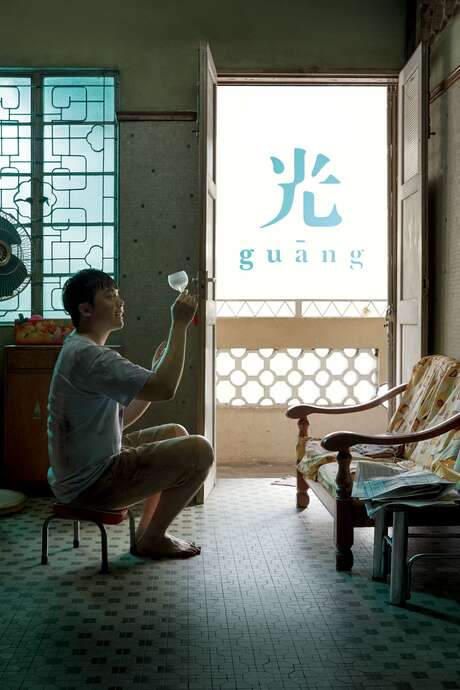
Driven by a childhood fascination, an autistic young man embarks on a quest to collect particular glassware, believing it holds a unique significance. His unusual pursuit puts a strain on his relationship with his younger brother and threatens their jobs. As they delve deeper into this mission, they begin to suspect it may hold the key to resolving a difficult situation they face.


Does Guang have end credit scenes?
No!
Guang does not have end credit scenes. You can leave when the credits roll.
Meet the Full Cast and Actors of Guang
Explore the complete cast of Guang, including both lead and supporting actors. Learn who plays each character, discover their past roles and achievements, and find out what makes this ensemble cast stand out in the world of film and television.

External Links and Streaming Options
Discover where to watch Guang online, including streaming platforms, rental options, and official sources. Compare reviews, ratings, and in-depth movie information across sites like IMDb, TMDb, Wikipedia or Rotten Tomatoes.






Full Plot Summary and Ending Explained for Guang
Read the complete plot summary of Guang, including all major events, twists, and the full ending explained in detail. Explore key characters, themes, hidden meanings, and everything you need to understand the story from beginning to end.
As a child, Wen Guang Kyo Chen is isolated because of autism, a condition that shapes how he experiences the world around him. His younger brother, Didi Ernest Chong, grows up to take care of him after their mother dies when they were kids. Didi works as a waiter at a snooker cafe, juggling the weight of responsibility with his own hopes and fears.
The story opens with Wen Guang delivering a defining self-introduction that anchors the audience in his perspective: “Hello, I am Wen Guang. I am 27 years old. I am nice, kind. I might look a bit weird sometimes, it is because I have autism.” This early moment sets the tone for the film’s delicate exploration of communication, routine, and perception. Wen Guang applies for a job at a flower shop, urged by his brother to seek steady work, but the interview ends without success. A ringing doorbell later triggers an unsettling reaction in him, signaling how ordinary sounds can become overwhelming triggers.
Didi is frustrated by the failed job attempt, especially as he is dealing with the recent breakup with his girlfriend, a strain amplified by the responsibility of caring for Wen Guang. Wen Guang expresses a wish for something as simple as a piano, but Didi insists that they first secure stable employment. The moment Wen Guang visits a piano shop and overhears a conversation about selling a piano, his loud exclamation—“Why are you selling your piano?”—reveals his acute sensitivity to music and sound, a thread that will run through the entire film. The two eventually meet Sue Ann Emily Chan at a bus stop, where a budding friendship begins to form.
Wen Guang finds work washing dishes near the snooker cafe, where the background noise—loud music and clinking wine glasses—reverberates in his mind, triggering memories associated with ringing sounds. He becomes fascinated with collecting glasses, even taking a wine glass from a beggar, and his behavior goes unnoticed at first. When he is caught stealing a glass, he is fired, and Didi admonishes him, forcing Wen Guang to confront the consequences of his actions.
A chance meeting with Sue Ann, who volunteers at a center for children with special needs, deepens Wen Guang’s understanding of his own passions. He explains to her his meticulous interest in collecting glasses and the precise notes and frequencies each cup can produce, a hint of the hidden talent that will eventually emerge. A new job opportunity arises when Didi pushes hard for Wen Guang to find work at a cafe in a mall; the owner, upon discovering Wen Guang’s autism, calmly explains the social demands of cafe life and chooses not to proceed for his well-being, a moment that underscores the film’s compassionate approach.
Frustrated, Wen Guang spots a large, expensive bowl in a shop and tests its sound, but the price—RM1700 (US$400)—is prohibitive. He mutters, “No…” and walks away, while Didi’s impatience grows. A friend helps arrange a cashier position at his shop, giving Wen Guang a chance to contribute in a role that suits his strengths. One night, as he walks home, Wen Guang hears the clinking of glasses from a dumpster truck and clings to the vehicle’s ledge, ending up at a remote rubbish dump. There, he digs through the rubbish with bare hands and retrieves the coveted glass, returning home with undeniable joy.
The news arrives that Wen Guang had stolen the RM1700 bowl, and the police request a statement. Didi’s temper erupts as he confronts Wen Guang, throwing him against the TV and demanding normalcy, a moment that exposes the fragility and strain of their relationship. Wen Guang trembles and collapses as his brother laments their mother’s passing, wondering why Wen Guang spends so much time chasing “useless things” like glass. The scene forces Didi to confront his own inability to fully understand his brother’s world.
After the police visit, Wen Guang disappears. Didi and a friend search frantically, while Sue Ann reveals that Wen Guang wants to do something with notes created by the glasses. Didi’s memories of childhood come rushing back in a series of flashbacks: in school, Wen Guang jumps into a drain during a rainstorm while classmates laugh, and their mother disciplines Didi for mocking him. Their mother’s admonition to treat Wen Guang with care—and her insistence that Didi should watch over him—resonates as Didi begins to understand Wen Guang more deeply.
Wen Guang eventually ends up living on the streets, under a bridge, where he builds a handmade instrument from his glasses. He uses a suction device from a fish-tank cleaner to generate different streams of water that flow over a row of glass bowls and cups. The water moves, the equipment spins, and a melody begins to form. Wen Guang’s discovery of his own musical gift—perfect pitch—reveals how he can translate sound into music with extraordinary precision. His work as a piano tuner comes to life when he joins the store’s piano business, turning his passion into a livelihood.
Back at home, the relationship between the brothers undergoes a quiet transformation. While walking together after a work day, Didi suggests that Wen Guang might pursue a relationship with Sue Ann, signaling a shift toward a more hopeful future. The film closes on a poignant, shared moment between the siblings: a sense of companionship and mutual respect as Wen Guang, empowered by his refined ear for music, proclaims with a playful smile, “Short circuit!” The shy humor in that line underscores the resilience and extraordinary depth of Wen Guang’s inner world.
In the end, Wen Guang emerges not just as a man who hears notes, but as someone who can tune a piano with unmatched sensitivity. His hidden talent—and the siblings’ bid for a better life—offers a nuanced exploration of family, acceptance, and the quiet strengths that can redefine what it means to be different.

Coming soon on iOS and Android
The Plot Explained Mobile App
From blockbusters to hidden gems — dive into movie stories anytime, anywhere. Save your favorites, discover plots faster, and never miss a twist again.
Sign up to be the first to know when we launch. Your email stays private — always.
Explore the mobile appWatch Trailers, Clips & Behind-the-Scenes for Guang
Watch official trailers, exclusive clips, cast interviews, and behind-the-scenes footage from Guang. Dive deeper into the making of the film, its standout moments, and key production insights.
Cars Featured in Guang
Explore all cars featured in Guang, including their makes, models, scenes they appear in, and their significance to the plot. A must-read for car enthusiasts and movie buffs alike.
Guang Themes and Keywords
Discover the central themes, ideas, and keywords that define the movie’s story, tone, and message. Analyze the film’s deeper meanings, genre influences, and recurring concepts.
Guang Other Names and Titles
Explore the various alternative titles, translations, and other names used for Guang across different regions and languages. Understand how the film is marketed and recognized worldwide.
Similar Movies To Guang You Should Know About
Browse a curated list of movies similar in genre, tone, characters, or story structure. Discover new titles like the one you're watching, perfect for fans of related plots, vibes, or cinematic styles.






Quick Links: Summary, Cast, Ratings, More

What's After the Movie?
Not sure whether to stay after the credits? Find out!
Check out our other apps:

SAT Sphere
Build confidence for the Digital SAT.

Mori Atlas
Discover wild places worth protecting.

Luntero
Search smarter for a home in Amsterdam.

Plot Explained
Unravel movie endings and hidden clues.

Pokechamp
Dive into Pokémon data and battle logic.

Driving Theory
Get ready for your European theory test.

Movie Dust
Plan your next cinema trip with ease.

Musemap
Find art and culture as you travel.

Selkobase
Compare credentials before committing.

Local Manual
Turn an unfamiliar country into practical next steps.

Lernavi
Compare school systems before your next move.

GymRoam
Find a workout stop wherever your plans take you.
Explore Our Movie Platform
New Movie Releases (2026)
Famous Movie Actors
Top Film Production Studios
Movie Plot Summaries & Endings
Major Movie Awards & Winners
Best Concert Films & Music Documentaries
Movie Collections and Curated Lists
© 2026 What's After the Movie. All rights reserved.
Privacy Policy