Grom: Boyhood 2022


Set in 1990s St. Petersburg, police major Konstantin Grom is tasked with tracking down a rising crime lord known only as Anubis. Meanwhile, his ten‑year‑old son Igor seeks to make money, dragging himself into risky, shady schemes that pull him into the city’s underworld.


Does Grom: Boyhood have end credit scenes?
No!
Grom: Boyhood does not have end credit scenes. You can leave when the credits roll.
Meet the Full Cast and Actors of Grom: Boyhood
Explore the complete cast of Grom: Boyhood, including both lead and supporting actors. Learn who plays each character, discover their past roles and achievements, and find out what makes this ensemble cast stand out in the world of film and television.
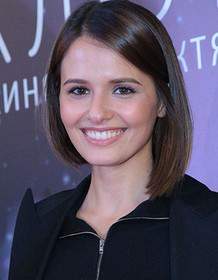
Lyubov Aksyonova
Yuliya Pchyolkina

Anton Adasinsky
Mouthpiece
Konstantin Khabenskiy
Veniamin Rubinshtein
Daniil Vorobyov
Yuriy Smirnov
Irina Rozanova
Yelena Khmurova
Tikhon Zhiznevsky
Igor Grom
Oleg Yagodin
Aleksey Prischurov
Stas Baretsky
Big Kingpin
Kai Aleks Getts
Igor Grom
Alexey Vedernikov
young Fyodor Prokopenko
Maksim Mironov
tall kid
Kirill Grebenshchikov
Bekhtiev
Mikhail Parygin
Anatoliy Vrodin
Sergey Goroshko
Sergey Razumovskiy
Sergey Marin
Konstantin Grom
Alexey Takharov
Shorty Madik
Igor Usachev
rapper
Vladimir Yaganov
Ignat
Rustam Kulbaev
Arman
Timofey Olkov
boy in the glasses
Anna Yenzhaeva
Elena Prokopenko
Timur Ganeev
Priest of Anubis
Anton Sergeev
Oleg Kulik
External Links and Streaming Options
Discover where to watch Grom: Boyhood online, including streaming platforms, rental options, and official sources. Compare reviews, ratings, and in-depth movie information across sites like IMDb, TMDb, Wikipedia or Letterboxd.




Take the Ultimate Grom: Boyhood Movie Quiz
Challenge your knowledge of Grom: Boyhood with this fun and interactive movie quiz. Test yourself on key plot points, iconic characters, hidden details, and memorable moments to see how well you really know the film.
Grom: Boyhood Quiz: Test your knowledge of the 2022 film Grom: Boyhood with these 10 mixed‑difficulty questions.
What is the name of the 12‑year‑old protagonist?
Full Plot Summary and Ending Explained for Grom: Boyhood
Read the complete plot summary of Grom: Boyhood, including all major events, twists, and the full ending explained in detail. Explore key characters, themes, hidden meanings, and everything you need to understand the story from beginning to end.
In an alternate 1990s version of St. Petersburg, set about twenty years before Major Grom: Plague Doctor, the story unfolds through a memory-rich lens that blends crime, loyalty, and the murky lines between justice and vengeance. A flashforward grips the viewer: the twelve-year-old Igor Grom, Kai Aleks Getts, staggers home bloodied, and the narration begins to recount a decade and a half of perilous days in a city where crime and power tango in the shadows.
The early chapters center on Igor’s father, Konstantin Grom, and their world of hard-edged police work. Konstantin, a seasoned detective, and his partner Fyodor Prokopenko interrogate the lone surviving gangster from a brutal ambush launched by Anubis, the film’s enigmatic villainous force. The suspect resists talking, and Konstantin’s brutal fine line between intimidation and coercion becomes clear, even drawing Fyodor into the moment with a rare show of restraint. The gangster’s silence is tied to a drug that dulls memory and judgment, suggesting a larger web of influence that stretches beyond a single crime.
When Konstantin brings the case to Elena Khmurova, the city’s police chief, the tension widens. Elena, a figure of formal authority, urges him to drop the Anubis investigation and instead devote his attention to his own fractured relationship with his son. The internal tension between duty and family becomes a recurring theme, underscoring how the city’s darkest rumors can carve gaps in even the strongest bonds. Elena’s stance sets the stage for a clash between institutional power and the hidden machinations of the criminal underworld.
Beyond the interrogation room, the story broadens to include Igor’s friendships and the pressures of growing up in a city where danger often arrives with the day’s news. Igor’s friend Ignat and the determined journalist Aleksey Prischurov—Aleksey Prischurov—guide the boys toward a stingier path to money: uncover dirt on the city’s elite, the powerful people rumored to be allied with Anubis. The operation pays off in a tense sequence during a midnight gathering where Konstantin and Smirnov infiltrate undercover, and Prischurov entrusts the kids with a video camera to document what unfolds. The moment Igor recognizes a Zealot of Anubis by a handmark becomes a chilling clue that binds his family to the conspiracy in ways he could never have imagined.
As the night erupts into gunfire, the stain of betrayal and the cost of ambition come into sharp relief. Konstantin fights to protect what he believes is right, but the war he is fighting is fought on a ground that cannot be won with bravado alone. Elena Khmurova reveals herself as the architect of many killings, a ruthless figure who orchestrates a deadly tableaux through a drug-fueled illusion that masks a harsher truth. The confrontation spirals into a brutal sequence in which Smirnov shoots Elena, and Konstantin, cornered and out of ammunition, makes a fateful move that ends with his own death and Igor’s sense of culpability sealing itself into his memory. The film foreshadows the weight of legacy and the consequences that ripple across a lifetime.
Years pass, and the story shifts to adulthood through Igor’s eyes. Now living with his girlfriend Yuliya Pchyolkina, Lyubov Aksyonova, the once-bright boy has become a man haunted by the past. A dream of his father offers a fragile moment of forgiveness and a gentle push toward moving on. The diary he keeps—tucked with tickets to Disneyland and a photograph of his father—reappears as a tangible link to a hopeful future, even as the memory of that fateful night continues to cast a long shadow over Igor’s choices. The invitation to Disneyland, a symbol of shared possibility, becomes a quiet beacon: perhaps some wounds heal with time, companionship, and the willingness to look forward.
The film further adds a layer of clinical distance through the closing scene, which returns to a different kind of confrontation. In a therapeutic setting, Dr. Veniamin Rubinstein, Konstantin Khabenskiy, attempts to coax a hidden subpersonality from Sergei Razumovskiy, a figure who emerges and speaks in a different color of consciousness. Razumovskiy’s eyes shift, the subpersonality growing more defined, and Rubinstein records the progress with clinical curiosity. As Razumovskiy asserts the subpersonality’s intent and readiness to act, the scene hints at a future of inner conflict that mirrors the external battles fought in Igor’s youth, a reminder that danger and trauma can reside inside as much as outside the body.
Filled with brisk period details, tense chases through a city rebuilding after chaos, and a central question about what a family owes to itself and to the people it protects, the film keeps a careful moral balance. It never shies away from the gravity of Konstantin’s decisions, the ethical costs of Prischurov’s methods, or the stubborn hope that the next generation might do better than the last. The characters’ arcs—Igor’s grappling with guilt and responsibility, Elena Khmurova’s unmasking, Smirnov’s ruthless pragmatism, and the older generation’s fallibility—cohere into a portrait of a city that survives by facing its own shadows with a mixture of courage, cunning, and, sometimes, tragedy.
In the end, the story remains anchored by human connections rather than pure investigative triumph. Igor’s relationship with Yuliya becomes the living proof that, even after violence and loss, there is room for tenderness and for choosing a different path. Disneyland tickets and a shared dream of a brighter day stand as a quiet counterpoint to the violence that opened Igor’s life, suggesting that forgiveness and forward movement are possible, even when the past refuses to stay buried. The film closes on a note of cautious hope, even as its final medical-session tableau implies that the struggle with inner darkness is far from over.
Note: For cast details, references to the following actors appear in the first mention of their related characters: Igor Grom Kai Aleks Getts, Yuliya Pchyolkina Lyubov Aksyonova, Konstantin Grom Sergey Marin, Elena Khmurova Irina Rozanova, Yuri Smirnov Daniil Vorobyov, Aleksey Prischurov Oleg Yagodin, Dr. Veniamin Rubinstein Konstantin Khabenskiy, Sergei Razumovskiy Sergey Goroshko.

Coming soon on iOS and Android
The Plot Explained Mobile App
From blockbusters to hidden gems — dive into movie stories anytime, anywhere. Save your favorites, discover plots faster, and never miss a twist again.
Sign up to be the first to know when we launch. Your email stays private — always.
Explore the mobile appWatch Trailers, Clips & Behind-the-Scenes for Grom: Boyhood
Watch official trailers, exclusive clips, cast interviews, and behind-the-scenes footage from Grom: Boyhood. Dive deeper into the making of the film, its standout moments, and key production insights.

Unlock the World of Movies with Our Comprehensive Wiki
Dive into our Movie Wiki for in-depth film encyclopedia entries, including cast biographies, production trivia, plot synopses, behind-the-scenes facts, and thematic analyses. Whether you’re researching iconic directors, exploring genre histories, or discovering hidden easter eggs, our expertly curated movie database has everything you need to fuel your cinematic passion.

Quick Links: Summary, Cast, Ratings, More

What's After the Movie?
Not sure whether to stay after the credits? Find out!
Check out our other apps:

SAT Sphere
Build confidence for the Digital SAT.

Mori Atlas
Discover wild places worth protecting.

Luntero
Search smarter for a home in Amsterdam.

Plot Explained
Unravel movie endings and hidden clues.

Pokechamp
Dive into Pokémon data and battle logic.

Driving Theory
Get ready for your European theory test.

Movie Dust
Plan your next cinema trip with ease.

Musemap
Find art and culture as you travel.

Selkobase
Compare credentials before committing.

Local Manual
Turn an unfamiliar country into practical next steps.

Lernavi
Compare school systems before your next move.

GymRoam
Find a workout stop wherever your plans take you.
Explore Our Movie Platform
New Movie Releases (2026)
Famous Movie Actors
Top Film Production Studios
Movie Plot Summaries & Endings
Major Movie Awards & Winners
Best Concert Films & Music Documentaries
Movie Collections and Curated Lists
© 2026 What's After the Movie. All rights reserved.
Privacy Policy