Greed 2020

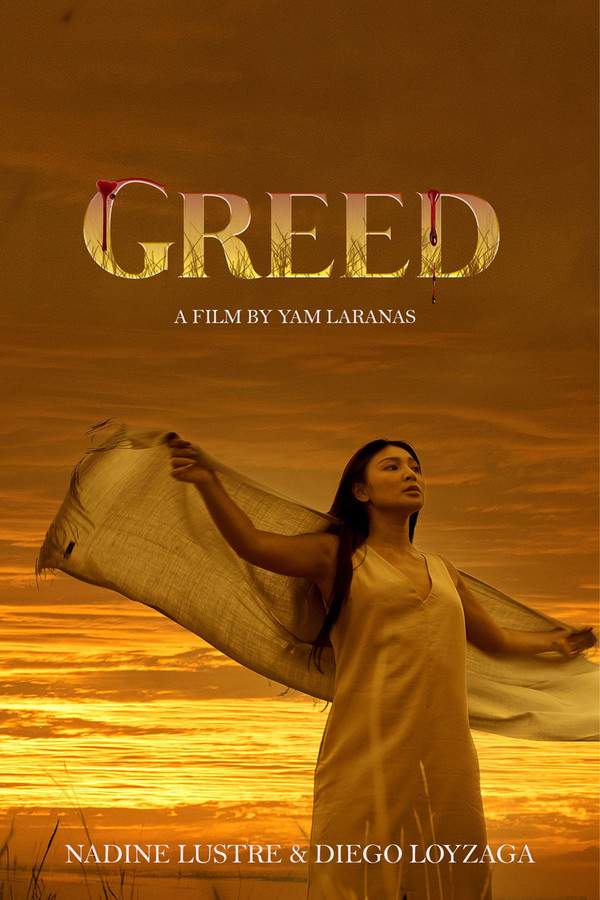
Sir Richard McCreadie, a self-made billionaire, faces a crisis as his retail empire is threatened. To restore his image, he plans an extravagant 60th birthday celebration on the island of Mykonos. However, the lavish party becomes a backdrop for resurfaced rivalries and long-buried secrets. As guests arrive, Richard is forced to examine the sacrifices and consequences of his ambition and wealth.

Does Greed have end credit scenes?
No!
Greed does not have end credit scenes. You can leave when the credits roll.
Where to Watch Greed
See current US streaming, rental, and purchase options for Greed (2020) via JustWatch.









Meet the Full Cast and Actors of Greed
Explore the complete cast of Greed, including both lead and supporting actors. Learn who plays each character, discover their past roles and achievements, and find out what makes this ensemble cast stand out in the world of film and television.

Will Smith
Teacher
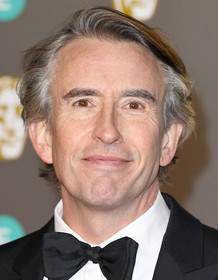
Steve Coogan
Sir Richard McCreadie

Shirley Henderson
Margaret

David Mitchell
Nick

Stephen Fry

Asa Butterfield
Finn

Isla Fisher
Samantha

Enzo Cilenti
Young Eric Weeks

Asim Chaudhry
Frank the Lion Tamer
Charlie Cooper
Dinita Gohil
Jamie Blackley
Young Richard McCreadie
Jonny Sweet
Jules
Pearl Mackie
Sarah Solemani
Melanie
Shanina Shaik
Naomi

Sophie Cookson
External Links and Streaming Options
Discover where to watch Greed online, including streaming platforms, rental options, and official sources. Compare reviews, ratings, and in-depth movie information across sites like IMDb, TMDb, Wikipedia or Rotten Tomatoes.











Ratings and Reviews for Greed
See how Greed is rated across major platforms like IMDb, Metacritic, and TMDb. Compare audience scores and critic reviews to understand where Greed stands among top-rated movies in its genre.

The Movie Echo Score
Greed presents a satirical critique of fast fashion with uneven execution and tone that divides responses. Critics noted that the film oscillates between biting mockumentary and scattershot satire, leading to occasional pacing issues and diluted impact. Users appreciated the topical relevance and moments of humor but pointed to a lack of surprises and emotional depth. As a result, Greed remains a moderately engaging yet inconsistent satire that struggles to fully capitalize on its premise.
The Movie Echo Score Breakdown for Greed

Art & Craft
In terms of direction and cinematography, Greed employs a variety of techniques that yield mixed results. The film’s non-linear editing and direct-to-camera addresses were praised for occasional inventiveness, while rapid tonal shifts and scattershot visual cues introduced whiplash for some viewers. Panoramic shots of the Greek setting received positive mentions, but inconsistent production design undermines cohesion. Overall, the visual execution feels uneven, combining striking moments with jarring transitions.

Character & Emotion
When it comes to character depth and emotional resonance, Greed struggles to engage consistently. While Steve Coogan’s portrayal of the titular mogul earned praise for its sly humor, many supporting figures lack development and emotional weight. Scenes between the lead and his PA offer brief moments of genuine connection, yet these are isolated against a backdrop of one-dimensional portrayals. The result is a performance-driven narrative that often feels emotionally distant.

Story & Flow
In terms of plot coherence and pacing, Greed presents an uneven narrative that oscillates between satire and exposé. Critics and audiences noted that thematic ambitions sometimes outpace the film’s structural clarity, resulting in scattered subplots and diluted focus. The rapid tonal shifts, from comedic set pieces to serious investigative sequences, disrupt momentum. Consequently, the story feels engaging in parts but ultimately inconsistent in its flow and narrative cohesion.

Sensory Experience
When it comes to sound design and musical accompaniment, Greed delivers a modestly effective sensory backdrop. The soundtrack punctuates satirical moments with crisp cues, and ambient sounds in party sequences enhance immersion. Some viewers appreciated varied audio-visual techniques, such as split screens and title cards, which add stylistic flair. However, the mix occasionally feels overengineered, detracting from quieter, character-driven scenes. Overall, the sensory experience is competent but rarely remarkable.

Rewatch Factor
In terms of rewatch value, Greed offers limited lasting appeal. Viewers noted that the film’s satirical edge and topical critique hold interest initially, but repeated exposure reveals predictable beats and minimal character arcs. While some revisit the sharp dialogue and industry references, the uneven tone and lack of narrative surprises diminish replay potential. Consequently, the film feels more suited to a single viewing than sustained re-engagement.

52
Metascore
5.6
User Score

6.0 /10
IMDb Rating

57
%
User Score

2.8
From 3 fan ratings

1.50/5
From 2 fan ratings
Full Plot Summary and Ending Explained for Greed
Read the complete plot summary of Greed, including all major events, twists, and the full ending explained in detail. Explore key characters, themes, hidden meanings, and everything you need to understand the story from beginning to end.
Sir Richard “Greedy” McCreadie [Steve Coogan] is sketched as a billionaire fashion mogul whose public bravado and celebrity circle mask a murky empire built on forceful business moves and ethical compromises. The film moves in a zigzag of time, opening after a disastrous appearance at a government inquiry into financial and ethical abuses in fashion, then turning back to how this man rose from privilege to power. Hired to ghostwrite his memoirs, the journalist Nick [David Mitchell] begins a meticulous dive into McCreadie’s background, hoping to craft a sparkling self-portrait while questioning what really fuels the man’s wealth. The narration repeatedly slips into the past, pulling us through the late 1970s and 1980s to map a remarkable ascent: a rebellious, outcast student in an unnamed British public school becomes a shrewd operator in the high-street fashion world, a rise that is as much about image management as it is about ruthless calculation.
In the earliest chapters, the film foregrounds McCreadie’s formative years and the people who shape him. A few crucial voices from the cast appear in flashbacks as the smoothed edges of his legend begin to crack. A young Richard McCreadie [Jamie Blackley] surfaces in the memories of his school days, a figure both defiant and restless, hinting at the appetite for control that will later dominate his business. A separate thread follows the rougher beginnings of Eric Weeks, a younger figure who crosses McCreadie’s path and hints at alliances made in those formative years [Enzo Cilenti]. As the present unspools, we learn that the wealth he amasses rests on more than savvy branding: it relies on sweatshops in Southeast Asia, aggressive tax practices, and asset stripping that undersell the lives of many who help keep his empire running.
The present-day centerpiece is McCreadie’s 60th birthday party, a Gladiator-themed spectacle set on the island of Mykonos. The intention is simple and ostentatious: a moment of relaxation for a man who has spent decades orchestrating public spectacle around his personal legend. Yet the party is entangled in problems from the start. The arena set piece is poorly built because it depends on undocumented immigrant labor, and the resident lion—strainfully restrained and tragically passive—becomes a symbol of the broader, darker machinery at work behind the celebration. The guest list—star power colliding with a world-weary public—shows cracks as some celebrities distance themselves from McCreadie, exhausted by the scandal shadowing his name. Nearby, Syrian refugees have established a makeshift camp on the beach, a stark counterpoint to the gilded chaos inside the celebration.
The film also follows McCreadie’s tangled family web. His ex-wife Samantha [Isla Fisher], who once ran the family’s public face as CEO, still carries a complicated pull over him even as he has remarried Naomi, a much younger trophy wife [Sophie Cookson]. Their daughter Lily, who stars in a reality-TV show with her boyfriend Fabian, lives under the same roof, creating a domestic theater of ambition, publicity, and pressure. His son Finn [Asa Butterfield], a restless and conflicted young man, lurches toward a more dangerous path, marked by an Oedipal impulse to usurp his father’s throne and a growing appetite for self-destruction. The film uses these family textures to underscore the way power distorts relationships, exposing fissures that money alone cannot smooth over.
As Nick works on the memoir, he wrestles with a difficult moral assignment: how to present McCreadie’s public persona without erasing the moral cost of his business strategies. A budding friendship forms between Nick and Amanda, one of McCreadie’s assistants who is morally unsettled by her employer’s cruelty and the human cost behind the wealth. [Isla Fisher] appears here as Samantha, the ex-wife whose presence keeps surfacing in Nick’s negotiations with truth, while Naomi’s glamorous veneer complicates his readings of McCreadie’s personal life. The personal and the political collide as Nick learns that McCreadie’s world demands workers wear Roman slave outfits as part of the party’s “theatricality”—a revelation that intensifies Nick’s ethical conflict. The narrative’s weight rests on the burden of portraying a man who has won celebrity friends at the cost of real human lives.
The night deepens with mischief and danger. McCreadie’s plan exploits a cluster of vulnerable workers: he uses a three-card monte trick to coerce local refugees into labor, paralogizing their tool and loyalty with spectacle. In parallel, Finn pilfers cocaine from Naomi and laces the lion’s food, muddling lines between decadence and danger. When Samantha rejects his advances, McCreadie wanders into the arena in a drunken haze, where the lion’s cage becomes a stage for a violent, cataclysmic reckoning. Amanda, moving with a pulse of impulsive courage, releases the beast, and the animal mauls McCreadie to death in a drug-fueled frenzy. Nick witnesses the moment and helps Amanda escape, a quiet act of conscience amid the chaos.
In the aftermath, the mood shifts to reverent propaganda. McCreadie’s death becomes a catalyst for a flood of flattering eulogies as Nick’s project evolves into a sanitized, hagiographic biography designed to preserve the family business. Finn steps into the maelstrom, taking over the reins of the enterprise, and it is suggested—and perhaps feared—that he will continue to wield power with the same duplicitous dexterity as his father. Amanda’s decision to conceal her role in McCreadie’s death is presented as morally ambiguous, echoing the earlier tragedy that claimed her mother’s life in a sweatshop fire: she resumes work in a Leicester sweatshop, tying the present to the past’s relentless cycles of exploitation. The closing credits broaden the lens, offering viewers a stark, factual reflection on exploitation and inequality within the fashion industry.
Throughout, the film maintains a tightly wound, morally complex tone, inviting audiences to weigh glamor against harm while watching a tumultuous life unravel on screen. The non-linear structure, the cutaways to the school days and early ambitions, and the stark contrasts between the Mykonos splendor and the refugees’ hardship combine to deliver a pointed meditation on power, money, and accountability. The result is a provocative, multi-layered portrait that stays faithful to its core events while expanding them into a broader conversation about wealth, ethics, and the human cost of high fashion.

Coming soon on iOS and Android
The Plot Explained Mobile App
From blockbusters to hidden gems — dive into movie stories anytime, anywhere. Save your favorites, discover plots faster, and never miss a twist again.
Sign up to be the first to know when we launch. Your email stays private — always.
Explore the mobile appWatch Trailers, Clips & Behind-the-Scenes for Greed
Watch official trailers, exclusive clips, cast interviews, and behind-the-scenes footage from Greed. Dive deeper into the making of the film, its standout moments, and key production insights.
Cars Featured in Greed
Explore all cars featured in Greed, including their makes, models, scenes they appear in, and their significance to the plot. A must-read for car enthusiasts and movie buffs alike.
Greed Other Names and Titles
Explore the various alternative titles, translations, and other names used for Greed across different regions and languages. Understand how the film is marketed and recognized worldwide.
Quick Links: Summary, Cast, Ratings, More

What's After the Movie?
Not sure whether to stay after the credits? Find out!
Check out our other apps:

SAT Sphere
Build confidence for the Digital SAT.

Mori Atlas
Discover wild places worth protecting.

Luntero
Search smarter for a home in Amsterdam.

Plot Explained
Unravel movie endings and hidden clues.

Pokechamp
Dive into Pokémon data and battle logic.

Driving Theory
Get ready for your European theory test.

Movie Dust
Plan your next cinema trip with ease.

Musemap
Find art and culture as you travel.

Selkobase
Compare credentials before committing.

Local Manual
Turn an unfamiliar country into practical next steps.

Lernavi
Compare school systems before your next move.

GymRoam
Find a workout stop wherever your plans take you.
Explore Our Movie Platform
New Movie Releases (2026)
Famous Movie Actors
Top Film Production Studios
Movie Plot Summaries & Endings
Major Movie Awards & Winners
Best Concert Films & Music Documentaries
Movie Collections and Curated Lists
© 2026 What's After the Movie. All rights reserved.
Privacy Policy