Clara 2019

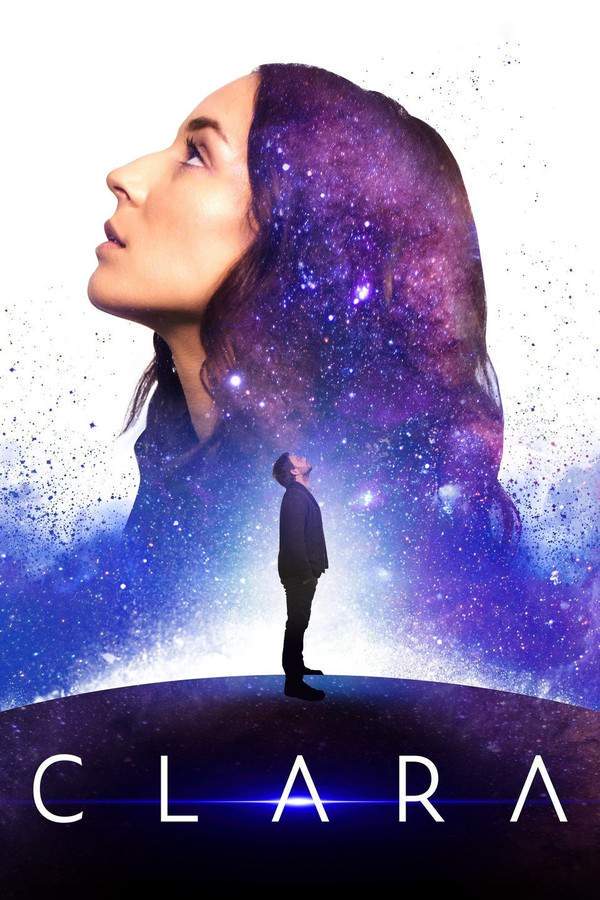
Astronomer Isaac Bruno is driven by a relentless search for extraterrestrial life, but his work is complicated by a personal tragedy. When he meets the mysterious artist Clara, they form an unexpected partnership, combining his scientific expertise with her unique perspective. Together, they delve into newly released stellar data, hoping to make revolutionary discoveries while Isaac confronts his past and rekindles his passion for the universe.


Does Clara have end credit scenes?
No!
Clara does not have end credit scenes. You can leave when the credits roll.
Where to Watch Clara
See current US streaming, rental, and purchase options for Clara (2019) via JustWatch.

Streaming availability powered by 
Meet the Full Cast and Actors of Clara
Explore the complete cast of Clara, including both lead and supporting actors. Learn who plays each character, discover their past roles and achievements, and find out what makes this ensemble cast stand out in the world of film and television.


External Links and Streaming Options
Discover where to watch Clara online, including streaming platforms, rental options, and official sources. Compare reviews, ratings, and in-depth movie information across sites like IMDb, TMDb, Wikipedia or Rotten Tomatoes.










Ratings and Reviews for Clara
See how Clara is rated across major platforms like IMDb, Metacritic, and TMDb. Compare audience scores and critic reviews to understand where Clara stands among top-rated movies in its genre.
The Movie Echo Score
Clara presents a balanced blend of visual polish and thoughtful performances, tempered by uneven narrative momentum. The film’s art direction and cinematography deliver a refined cosmic backdrop, while the leads offer nuanced emotional interplay that explores the tension between logic and intuition. The script’s premise is conceptually engaging but at times suffers from lapses in clarity and deliberate pacing. Sensory elements create an immersive atmosphere, and the thematic depth encourages repeat viewings. Overall, Clara achieves a moderately compelling experience with moments of genuine resonance and occasional narrative stasis.
The Movie Echo Score Breakdown for Clara

Art & Craft
In terms of art & craft, Clara delivers a refined visual aesthetic but its pacing and static compositions sometimes hinder momentum. The direction employs contemplative framing and restrained editing to underscore scientific themes, while the cinematography offers polished, wide-range shots of cosmic vistas. Production design convincingly evokes a small-scale observatory setting. Overall, the film’s art & craft present a polished look that at times feels visually restrained.

Character & Emotion
When it comes to character & emotion, the two leads provide nuanced and heartfelt performances that anchor the film’s central relationship. Their chemistry conveys genuine intellectual curiosity and romantic tension, supported by measured dialogue and understated interactions. Some narrative choices introduce uneven sentimentality and occasionally undermine emotional momentum. Nevertheless, the primary character dynamics maintain a believable exploration of intuition versus logic, resulting in moderately resonant emotional depth.

Story & Flow
In terms of story & flow, Clara offers an intriguing premise of scientific discovery interwoven with a romantic arc. The screenplay’s focus on the conflict between logic and feeling provides conceptual interest, but plot progression suffers from occasional lapses in clarity and predictable turns. The pacing is deliberate but can feel static, and certain sequences lack engaging conflict. Overall, the story balances inventive ideas with uneven momentum, yielding moderate engagement throughout.

Sensory Experience
When it comes to sensory experience, Clara presents an elegant visual style marked by polished cinematography and a subtle, atmospheric score. Ambient sound design reinforces the sense of isolation and cosmic wonder, while production elements ground the science fiction in a tangible environment. The soundtrack’s restrained instrumentation complements the reflective tone without overwhelming key scenes. Overall, the sensory aspects create an immersive yet meditative atmosphere that strongly supports the narrative themes.

Rewatch Factor
In terms of rewatch factor, Clara’s thoughtful exploration of philosophical questions and the chemistry between the leads encourage repeated viewings. Audiences can uncover additional thematic nuances on subsequent watches, particularly in scenes juxtaposing data-driven inquiry with intuitive insights. Although some pacing choices feel slow, the blend of intellectual intrigue and subtle emotional beats rewards further engagement. Overall, the film offers lasting appeal for viewers drawn to contemplative science fiction storytelling.

43
Metascore
7.0
User Score


56%
TOMATOMETER

90%
User Score

6.7 /10
IMDb Rating
75
%
User Score

3.2
From 47 fan ratings
Full Plot Summary and Ending Explained for Clara
Read the complete plot summary of Clara, including all major events, twists, and the full ending explained in detail. Explore key characters, themes, hidden meanings, and everything you need to understand the story from beginning to end.
Dr. Isaac Bruno, Patrick J. Adams, holds a postdoctoral fellowship in astrophysics at a fictional Ontario university in Toronto, where his quest to detect signs of intelligent life has become an all-consuming mission grounded in a private trauma from two years past. This fixation has left him increasingly hostile toward students and colleagues, and it culminates in him misappropriating time on ground-based telescopes in Chile that were meant for a peer’s research. The department head, Jennifer Dale, ultimately suspends him, cutting him off from the school’s facilities and forcing him to confront the consequences of his unyielding approach.
Meanwhile, the TESS orbiting telescope is launched, churning out vast streams of data that invite a global, collaborative effort to hunt for life on distant worlds. In this wave of open science, Isaac posts flyers seeking an unpaid research assistant, offering nothing but room and board in return. The lone applicant is Clara, Troian Bellisario, an uneducated artist who has lived a Bohemian life and carries her own hidden burdens, including medicine for an illness that isn’t fully explained.
Isaac fixates on M dwarf stars, convinced that this narrow niche will slip past the attention of others. When Clara discovers a promising exoplanet, Isaac covertly returns to the university at night and lies to the telescope operators in Chile, claiming permission from his old friend Charlie to obtain more data on the planet. Charlie, Ennis Esmer, is furious yet intrigued by what the data could mean; he urges Isaac to reach out to Rebecca, Isaac’s ex-wife, who holds an endowed chair at Caltech, and Clara pushes Isaac to make the connection.
Rebecca Jenkins, Kristen Hager, tells Isaac that discovering life won’t repair the losses of their dead baby son. Yet she agrees to give him time on the Keck telescope, and the breakthrough follows: a habitable-planet candidate is within reach. Clara grows close to Isaac, and she offers him a fragile glimpse of love, even as he remains cautious, convinced that anything meaningful must be proven by data and not by feeling. They share a kiss, but Isaac pulls away, wary of hope and the possibility of heartbreak.
After a hospital delivery for Charlie’s wife, Isaac bluntly muses that the universe is a “cosmic accident”—a string of luck that could just as easily strand any given being. Clara counters with a deeper view of possibility: the atoms that constitute his dead son still exist, merely transformed, and their connection endures in a broader sense. Her perspective nudges Isaac toward openness, and the two become a couple, choosing to nurture their bond even as the search for life intensifies.
When they learn that another group has already located the planet they were pursuing, Isaac’s mood dips before he renews his focus on detecting signs of an evolved civilization that could be altering its planet’s environment. He wants not merely a home world, but evidence of intelligent life shaping its surroundings. Clara’s health begins to slip as the strain of his obsession grows, and Charlie challenges Isaac to reassess his priorities. In a gesture of trust, Clara asks Isaac to map the universe using the newly released TESS data and to select a star by intuition rather than by the data’s blind scope. He chooses a spot on the map that lies outside the current dataset, but their moment of anger—Isaac accusing Clara of planning to leave him—hurts her deeply, and she collapses when she tries to leave.
In the hospital, doctors reveal that Clara suffers from an autoimmune disease that has been slowly degrading her organs and muscles; yet she remains physically capable enough to speak and walk, a testament to a stubborn resilience. Isaac stays by her bedside as her condition worsens, and just before she dies she whispers a final, intimate line to him: “I wish I could see your face when you see it.”
A new batch of TESS data later arrives, and Isaac discovers that the star he once avoided is now swarmed by data revealing anomalies in its companion’s orbit—an artificial object clearly maintained by an intelligent hand. He presents his findings to Charlie, who introduces him to Dr. Rickman, the head of the TESS project. Two years pass, and at a high-profile JPL press conference, Rickman, Rebecca, and Charlie declare that the evidence now proves the existence of intelligent life elsewhere in the galaxy. Isaac, however, is not in his assigned seat; he sits apart, lost in memory of Clara.
Months later, Rebecca invites Isaac to the SETI laboratory, where a message from the aliens arrives in Morse code addressed to “Isaac Bruno.” He witnesses the next transmission—a sound file of a Bob Dylan song he and Clara used to listen to together. The film closes on Isaac’s face, torn between tears and a quiet, hopeful smile, as he murmurs the final, grateful acknowledgment: “Thank you.”

Coming soon on iOS and Android
The Plot Explained Mobile App
From blockbusters to hidden gems — dive into movie stories anytime, anywhere. Save your favorites, discover plots faster, and never miss a twist again.
Sign up to be the first to know when we launch. Your email stays private — always.
Explore the mobile appWatch Trailers, Clips & Behind-the-Scenes for Clara
Watch official trailers, exclusive clips, cast interviews, and behind-the-scenes footage from Clara. Dive deeper into the making of the film, its standout moments, and key production insights.
Cars Featured in Clara
Explore all cars featured in Clara, including their makes, models, scenes they appear in, and their significance to the plot. A must-read for car enthusiasts and movie buffs alike.
Clara Themes and Keywords
Discover the central themes, ideas, and keywords that define the movie’s story, tone, and message. Analyze the film’s deeper meanings, genre influences, and recurring concepts.
Clara Other Names and Titles
Explore the various alternative titles, translations, and other names used for Clara across different regions and languages. Understand how the film is marketed and recognized worldwide.
Similar Movies To Clara You Should Know About
Browse a curated list of movies similar in genre, tone, characters, or story structure. Discover new titles like the one you're watching, perfect for fans of related plots, vibes, or cinematic styles.





Quick Links: Summary, Cast, Ratings, More

What's After the Movie?
Not sure whether to stay after the credits? Find out!
Check out our other apps:

SAT Sphere
Build confidence for the Digital SAT.

Mori Atlas
Discover wild places worth protecting.

Luntero
Search smarter for a home in Amsterdam.

Plot Explained
Unravel movie endings and hidden clues.

Pokechamp
Dive into Pokémon data and battle logic.

Driving Theory
Get ready for your European theory test.

Movie Dust
Plan your next cinema trip with ease.

Musemap
Find art and culture as you travel.

Selkobase
Compare credentials before committing.

Local Manual
Turn an unfamiliar country into practical next steps.

Lernavi
Compare school systems before your next move.

GymRoam
Find a workout stop wherever your plans take you.
Explore Our Movie Platform
New Movie Releases (2026)
Famous Movie Actors
Top Film Production Studios
Movie Plot Summaries & Endings
Major Movie Awards & Winners
Best Concert Films & Music Documentaries
Movie Collections and Curated Lists
© 2026 What's After the Movie. All rights reserved.
Privacy Policy