Becoming Led Zeppelin 2025

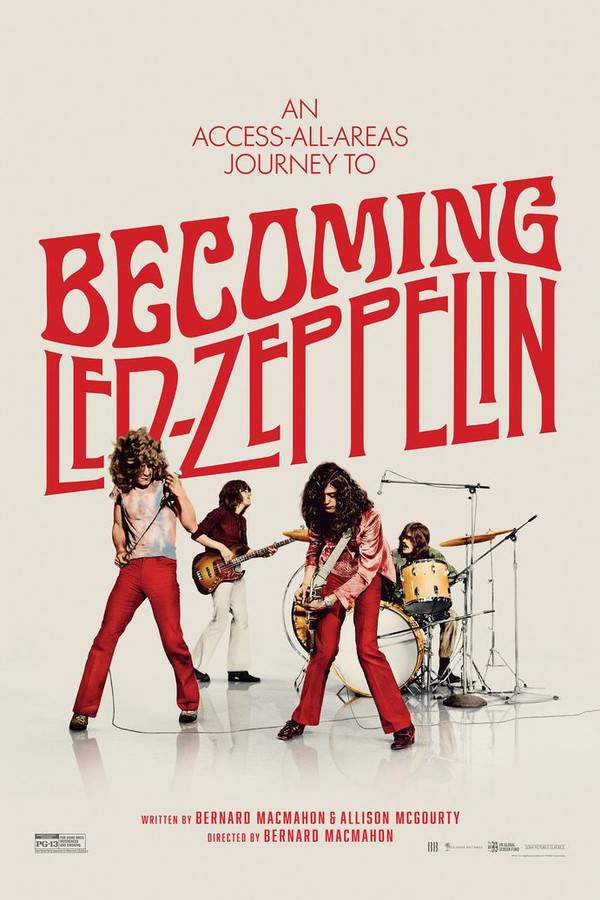
This documentary provides an intimate look at the early years of Led Zeppelin, featuring unprecedented access to the band members and their personal archives. Rare, never-before-seen footage and the group's full support offer a compelling immersion into their formative period. It promises a unique experience for those who have never had the opportunity to see Led Zeppelin perform live.

Does Becoming Led Zeppelin have end credit scenes?
No!
Becoming Led Zeppelin does not have end credit scenes. You can leave when the credits roll.
Where to Watch Becoming Led Zeppelin
See current US streaming, rental, and purchase options for Becoming Led Zeppelin (2025) via JustWatch.








Meet the Full Cast and Actors of Becoming Led Zeppelin
Explore the complete cast of Becoming Led Zeppelin, including both lead and supporting actors. Learn who plays each character, discover their past roles and achievements, and find out what makes this ensemble cast stand out in the world of film and television.


External Links and Streaming Options
Discover where to watch Becoming Led Zeppelin online, including streaming platforms, rental options, and official sources. Compare reviews, ratings, and in-depth movie information across sites like IMDb, TMDb, Wikipedia or Rotten Tomatoes.










Ratings and Reviews for Becoming Led Zeppelin
See how Becoming Led Zeppelin is rated across major platforms like IMDb, Metacritic, and TMDb. Compare audience scores and critic reviews to understand where Becoming Led Zeppelin stands among top-rated movies in its genre.

The Movie Echo Score
The film offers a respectful yet surface-level account of Led Zeppelin’s formation. Reviewers commend the archival footage and clear interviews but criticize the authorized approach for glossing over controversy. Observers highlight impressive concert audio and striking era visuals balanced by repetitive montages and uneven pacing. Fans of the band may enjoy the immersive soundtrack while viewers seeking deeper analysis of the group’s later legacy may find the narrative lacking. In sum it’s an engaging but incomplete documentary.
The Movie Echo Score Breakdown for Becoming Led Zeppelin

Art & Craft
In terms of craft, the documentary presents visually engaging concert sequences yet relies on repetitive editing choices. Critics note striking period cinematography in the archival footage, but also describe uneven pacing in transitions and an infomercial-like feel. The direction feels cautious and lacks bold stylistic risks. Overall, the art design is competent but unadventurous.

Character & Emotion
When it comes to character and emotion, the film includes amiable interviews that showcase the band members’ camaraderie. Observers appreciate moments of genuine warmth and humor, particularly from Plant and Jones, yet note limited exploration of personal struggles and emotional depth. The chemistry among the surviving members feels authentic but contributes to a sanitized portrayal. Overall, character depth is moderate.

Story & Flow
In terms of story and flow, reviewers describe a cohesive origin narrative that covers the band’s early formation but criticize the film for stopping short of later milestones. The pacing is uneven, with extended jam montages that disrupt momentum. The plot remains informative yet feels superficial. Overall, the storytelling is competent but lacking in depth.

Sensory Experience
When it comes to sensory experience, the documentary excels in its use of concert soundboards and archival audio, delivering clear, powerful live performances. The soundtrack integration and era-appropriate visuals receive praise, yet some find the repetitive audio-visual montages tedious. Despite moments of sonic immersion, the film’s sensory appeal is occasionally undermined by redundancy.

Rewatch Factor
In terms of rewatch value, the film’s rich archival footage and clear interviews may appeal to dedicated fans, encouraging multiple viewings of the concert sequences. However, the lack of fresh insight and lengthy, repetitive segments diminish replay appeal for broader audiences. Overall, the rewatch factor is modest and most effective for enthusiasts of the band.

64
Metascore
6.4
User Score


%
TOMATOMETER

0%
User Score

7.5 /10
IMDb Rating

74
%
User Score

/5
Full Plot Summary and Ending Explained for Becoming Led Zeppelin
Read the complete plot summary of Becoming Led Zeppelin, including all major events, twists, and the full ending explained in detail. Explore key characters, themes, hidden meanings, and everything you need to understand the story from beginning to end.
In 1944, Jimmy Page is born amid the rubble of a Britain scarred by the Nazi Blitz. As World War II ends, John Paul Jones queues for rations, while Robert Plant chafes against the country’s grey austerity, gazing toward the color and promise of the United States. Plant is a free-spirited singer shaped by his Romani heritage, whose parents suppress his musical ambitions. Jones is a gifted multi-instrumentalist raised by vaudeville-performer parents, Page is a disciplined, forward-thinking guitarist encouraged by his mother, and John Bonham — who died in 1980 and is represented through previously unheard interviews — is a fiercely driven drummer determined to provide for his family. All four cite early inspiration from African American artists such as Sonny Boy Williamson II, Little Richard, and James Brown, with Jones and Bonham drawing especially deep influence from jazz and soul.
As teenagers, Page and Jones establish themselves as elite session musicians in London, playing on recordings by Shirley Bassey, Donovan, and Lulu. Meanwhile, Plant and Bonham drift through a series of short-lived bands across the West Midlands of England, unable to find an audience. As prospects fade, Bonham’s wife Pat forbids him from associating with Plant, dismissing him as “a disaster.” Soon after, Plant’s parents cast him out for rejecting a respectable career as a chartered accountant, leaving him homeless.
Page, disillusioned with session work that has devolved into recording Muzak, quits and joins the Yardbirds alongside his friend Jeff Beck. After Beck’s acrimonious exit, Page becomes lead guitarist and pushes the band toward a heavier sound inspired by American underground FM radio, but the group rejects his overtures and deserts him.
Determined to rebuild, Page resolves to form a new lineup under the Yardbirds’ name. He auditions the homeless Plant at his Pangbourne boathouse, where they rehearse Joan Baez’s “Babe I’m Gonna Leave You” and are inspired. Plant recommends John Bonham. Despite Pat’s fierce objections, Bonham agrees to join after being offered a higher weekly wage. Encouraged by his wife, Mo, John Paul Jones contacts Page and abandons his lucrative session career to complete the lineup.
In the summer of 1968, Bonham, Jones, Page and Plant convene for their first rehearsal — an experience Page calls “life-changing,” and Jones recalls as explosive. They rehearse in Pangbourne and embark on a Scandinavian tour as the Yardbirds. Audiences are left nonplussed by the unexpected force of the music, but the band is convinced of its power. They immediately record their first album, the eponymous Led Zeppelin I, at their own expense. Page, Jones, and Bonham lock in effortlessly, while Plant — recording his vocals separately — is intimidated singing over such virtuosity.
No British record label will release the album, so Page and his formidable manager, Peter Grant, fly to New York to secure a deal with Atlantic Records. Renamed Led Zeppelin, the band still confounds European audiences, and promoters refuse to book them. Atlantic Records schedules the album for a U.S. release only, and sends the band to America on Christmas Eve for their first tour. In January 1969 at San Francisco’s Fillmore West, Grant warns Plant, “If you don’t crack it here, it’s over.” The band performs ferociously, igniting the counterculture crowd. As Zeppelin tours from West Coast to East, underground FM radio plays the entire album on air, selling out shows through word of mouth.
They return to Britain exhilarated — only to face a wave of negative American reviews attacking the album and each member personally. Stung, the band vow to never engage with the press, appear on television or release singles, choosing to reach their audience solely through live performances and albums.
With a British release finally secured, Led Zeppelin promote the album through concerts which highlight their musical improvisational skills. They immediately plan to record another album that is more sonically and musically expansive than the first and to lean into their burgeoning audience and take inspiration from it by recording on the road.
For months they tour back and forth across America and the UK, snatching short recording sessions when they can. The intensive touring, travelling on commercial flights and getting lost driving the back-roads of North America, puts a strain on the lives of Bonham, Jones and Plant who have very little time to spend with their wives and young children. The energy from audience reactions sustains them as the tour takes the group from concert halls to outdoor festivals, like the Newport Jazz Festival where Bonham’s drumming draws the admiration of his childhood heroes — James Brown’s drummers — Clyde Stubblefield and Jabo Starks. Page and Plant nervously build a songwriting partnership, with Page working to inspire Plant’s nascent lyric writing through his music. Plant reaches into the heritage of his Midlands home for his lyrics and writes “Ramble On,” a song which he says is “the story of my life.” When the recording is complete, Page mixes the album with dramatic stereo effects and inserts a long, unprogrammable avant-garde section into the most commercial track “Whole Lotta Love” to prevent it from being released as a single.
In October 1969, with no TV, no AM radio, and almost no press, Led Zeppelin II is released and climbs the Billboard 200 charts in the United States, replacing The Beatles’ Abbey Road in the number one US album spot. Returning home for a concert at the Royal Albert Hall, the band find the venue sold out, their families present, and a British audience in rapture. After the performance, Jones, Page and Plant listen to Bonham’s voice for the first time in forty years, talking about his feelings for each of them and reflecting on their musical bond. Jimmy Page summarizes their philosophy, stating:
if you have something that you know is different in yourself, then you have to put work into it. You have to work and work and work. You also have to believe in it. But as long as you can stay really true, your aim is true, you can realize your dreams. I do believe that. I believe that that can be done, because this is what happens.

Coming soon on iOS and Android
The Plot Explained Mobile App
From blockbusters to hidden gems — dive into movie stories anytime, anywhere. Save your favorites, discover plots faster, and never miss a twist again.
Sign up to be the first to know when we launch. Your email stays private — always.
Explore the mobile appWatch Trailers, Clips & Behind-the-Scenes for Becoming Led Zeppelin
Watch official trailers, exclusive clips, cast interviews, and behind-the-scenes footage from Becoming Led Zeppelin. Dive deeper into the making of the film, its standout moments, and key production insights.
Becoming Led Zeppelin Themes and Keywords
Discover the central themes, ideas, and keywords that define the movie’s story, tone, and message. Analyze the film’s deeper meanings, genre influences, and recurring concepts.
Becoming Led Zeppelin Other Names and Titles
Explore the various alternative titles, translations, and other names used for Becoming Led Zeppelin across different regions and languages. Understand how the film is marketed and recognized worldwide.
Articles, Reviews & Explainers About Becoming Led Zeppelin
Stay updated on Becoming Led Zeppelin with in-depth articles, critical reviews, and ending explainers. Explore hidden meanings, major themes, and expert insights into the film’s story and impact.

Similar Movies To Becoming Led Zeppelin You Should Know About
Browse a curated list of movies similar in genre, tone, characters, or story structure. Discover new titles like the one you're watching, perfect for fans of related plots, vibes, or cinematic styles.



Quick Links: Summary, Cast, Ratings, More

What's After the Movie?
Not sure whether to stay after the credits? Find out!
Check out our other apps:

SAT Sphere
Build confidence for the Digital SAT.

Mori Atlas
Discover wild places worth protecting.

Luntero
Search smarter for a home in Amsterdam.

Plot Explained
Unravel movie endings and hidden clues.

Pokechamp
Dive into Pokémon data and battle logic.

Driving Theory
Get ready for your European theory test.

Movie Dust
Plan your next cinema trip with ease.

Musemap
Find art and culture as you travel.

Selkobase
Compare credentials before committing.

Local Manual
Turn an unfamiliar country into practical next steps.

Lernavi
Compare school systems before your next move.

GymRoam
Find a workout stop wherever your plans take you.
Explore Our Movie Platform
New Movie Releases (2026)
Famous Movie Actors
Top Film Production Studios
Movie Plot Summaries & Endings
Major Movie Awards & Winners
Best Concert Films & Music Documentaries
Movie Collections and Curated Lists
© 2026 What's After the Movie. All rights reserved.
Privacy Policy