American Factory 2019


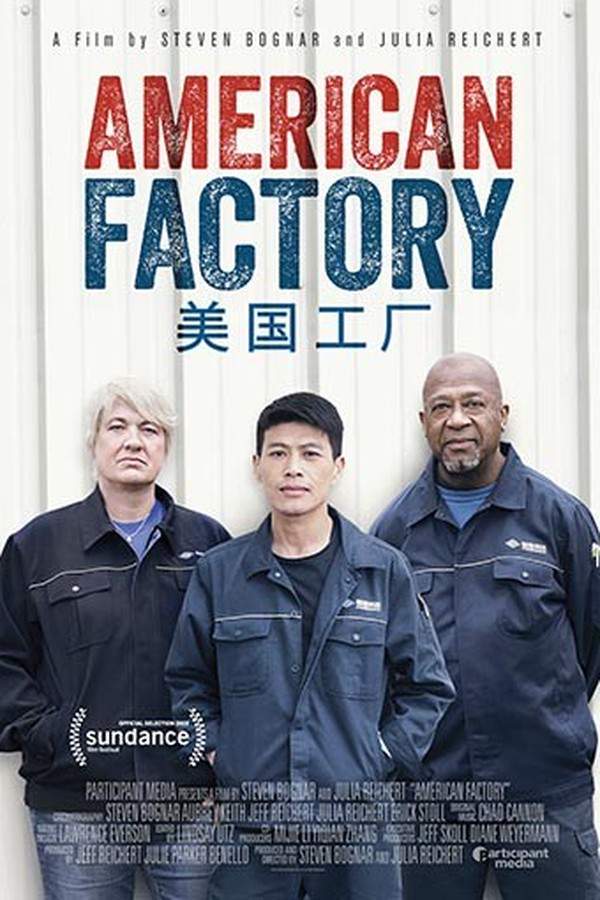
In post-industrial Ohio, a Chinese company opens a new factory in a shuttered General Motors plant, bringing the promise of jobs and economic revitalization. Initial optimism and excitement gradually give way to cultural clashes and labor disputes as American and Chinese workers navigate differing approaches to work and management. The film explores the challenges and complexities of globalization and the collision of cultures in a changing American landscape, revealing unexpected tensions and frustrations.



Does American Factory have end credit scenes?
No!
American Factory does not have end credit scenes. You can leave when the credits roll.
Where to Watch American Factory
See current US streaming, rental, and purchase options for American Factory (2019) via JustWatch.


Streaming availability powered by 
Meet the Full Cast and Actors of American Factory
Explore the complete cast of American Factory, including both lead and supporting actors. Learn who plays each character, discover their past roles and achievements, and find out what makes this ensemble cast stand out in the world of film and television.

Austin Cole
Self - Tempering Backlight Production Supervisor
Cho Tak Wong
Cynthia Harper
Self - Lamination Specialist
Dave Burrows
Self - Vice President, Fuyao Glass America
Jeff Daochuan Liu
Self - President, Fuyao Glass America
Jill Lamantia
Self - Forklift Operator
John Crane
Self - Fuyao Safety Director
John Gauthier
Self - President, Fuyao Glass America
Junming 'Jimmy' Wang
Self - Vice President, Fuyao
Rob Haerr
Self - Furnace Supervisor

Robert Allen
Self - Furnace Off-Loader
Shawnea Rosser
Self - Glass Inspector

Sherrod Brown
Self - U.S. Senator, Ohio
Wong He
Self - Furance Engineer
External Links and Streaming Options
Discover where to watch American Factory online, including streaming platforms, rental options, and official sources. Compare reviews, ratings, and in-depth movie information across sites like IMDb, TMDb, Wikipedia or Rotten Tomatoes.











Ratings and Reviews for American Factory
See how American Factory is rated across major platforms like IMDb, Metacritic, and TMDb. Compare audience scores and critic reviews to understand where American Factory stands among top-rated movies in its genre.

The Movie Echo Score
In American Factory, the documentary’s greatest strength lies in its balanced observational approach, providing a sober examination of cultural and economic tensions. The film’s direction maintains a measured pacing, while detailed portrayals of workers and leadership convey emotional depth without overt judgment. The narrative structure engages through cause-and-effect storytelling, supported by understated visuals and an unobtrusive soundtrack. Despite occasional thematic digressions, the documentary offers a cohesive and thought-provoking look at the modern labor landscape.
The Movie Echo Score Breakdown for American Factory

Art & Craft
In terms of art and craft, American Factory excels in its unembellished observational style. The direction favors fly-on-the-wall framings that capture factory interiors with precise framing, while editing choices sustain a steady, contemplative rhythm. Production design authentically reflects industrial settings, and the editing’s restraint supports thematic clarity. Overall, the art direction enhances immersive realism.

Character & Emotion
In terms of character and emotion, the documentary reveals nuanced interactions among workers and management, depicting personal stakes with empathetic restraint. Interviews uncover individual motivations and cultural perspectives, fostering emotional resonance. Some portrayals of Chinese training sessions feel generalized, yet overall, the film’s attention to interpersonal dynamics delivers thoughtful insight into the human dimension of globalization.

Story & Flow
When it comes to story and flow, American Factory presents a cause-and-effect narrative that chronicles the reopening of a factory and ensuing cultural clashes. The pacing is measured, allowing economic and social factors to unfold organically, though occasional thematic strands—such as automation and unionization—receive briefer treatment. While some viewers may find the moral framework diffuse, the overarching narrative remains engaging and informative.

Sensory Experience
In terms of sensory experience, the documentary pairs understated visuals with an unobtrusive musical score to reflect its observational ethos. The sound design captures factory ambiance and machinery hum without distraction, while cinematography emphasizes natural lighting and authentic textures. Although it lacks bold stylistic flourishes, the cohesive audiovisual presentation supports immersion in the industrial environment.

Rewatch Factor
In terms of rewatch factor, American Factory offers lasting appeal through its multifaceted exploration of labor and globalization. The balanced presentation of cultural tensions and economic realities rewards repeat viewings with incremental insight, though some thematic threads may feel fully resolved after an initial watch. Overall, its documentary style invites further reflection on its complex subject matter.

86
Metascore
7.6
User Score


95%
TOMATOMETER

82%
User Score

7.4 /10
IMDb Rating

72
%
User Score

3.7
From 14 fan ratings

0.00/5
Take the Ultimate American Factory Movie Quiz
Challenge your knowledge of American Factory with this fun and interactive movie quiz. Test yourself on key plot points, iconic characters, hidden details, and memorable moments to see how well you really know the film.
American Factory Quiz: Test your knowledge about the cultural clash and challenges faced by the workers in the documentary 'American Factory'.
What major company closed its plant in Dayton, Ohio, leading to significant job losses?
Awards & Nominations for American Factory
Discover all the awards and nominations received by American Factory, from Oscars to film festival honors. Learn how American Factory and its cast and crew have been recognized by critics and the industry alike.
Full Plot Summary and Ending Explained for American Factory
Read the complete plot summary of American Factory, including all major events, twists, and the full ending explained in detail. Explore key characters, themes, hidden meanings, and everything you need to understand the story from beginning to end.
In post-industrial Ohio, a Chinese billionaire initiates a bold venture by establishing a factory within an abandoned General Motors plant, bringing employment opportunities to two thousand Americans. Initially marked by optimism and hope, this endeavor soon encounters difficulties as the technological advancements of high-tech China clash with the realities faced by the American working class.
On December 23, 2008, the GM facility in Dayton, Ohio, shuts its doors, resulting in the loss of 10,000 jobs. As showcased in a video depicting a glass manufacturing plant in China, these factories are heavily automated. By 2010, China begins investing in the U.S. market, buying up closed factories and revitalizing them. In 2015, Fuyao, a Chinese glass manufacturing company, secures the GM plant. Within half a year, they employ 1,000 workers and import the necessary equipment to start operations, with a significant number of Chinese workers on site. These workers are enrolled in special classes aimed at familiarizing them with American culture.
The Chairman, Cao, of the Fuyao group, attends the formal opening ceremony on October 7, 2016. Among his team is Rebecca, the Fuyao attorney in the U.S., and Dave, the Vice President of the Dayton factory. The event includes heavy public relations efforts, including naming a street after Fuyao, as the community is told that a bright future lies ahead. The Fuyao factory emerges as a symbol of Chinese investment in America.
However, the dynamics within the factory soon reveal challenges. Chinese supervisors report to the Chairman that the Americans seem slow and have “fat fingers,” despite the fact that companies like Chrysler express satisfaction with the products. As part of aligning with Feng Shui, the Chairman orders the main entrance of the factory to be repositioned, which comes at a price of $35,000. He also advocates for local artworks to adorn the office, albeit with particular requests that conflict with local regulations.
Leon, the lead Chinese supervisor, along with Boddy, a U.S. furnace off-loader who struggled with unemployment for 18 months, works tirelessly at Fuyao. Shawnea, a glass inspector, experiences a salary drop, earning $12.84/hour at Fuyao compared to the $29/hour she made at GM. Jill, a forklift operator who lost her home following GM’s closure, now resides with her sister.
Yet, production is marred by frequent stoppages as the employees grapple with language barriers while identifying defects in the output. Wong, a Chinese furnace engineer with 20 years of experience at Fuyao, subsists on Twinkies due to his busy schedule, while Rob serves as the furnace supervisor. John is the President of the factory, which does not support union activity—this stance draws media attention.
As tensions escalate, Sherrod Brown, a local senator, asserts that workers have the right to form a union. This comment seems improper to Dave and causes unease among the factory management, including John, who is made aware that their positions are at risk. The Chairman expresses to his management team that any union activity will jeopardize productivity and profitability, leading to job losses.
The Chinese leadership is adamant about producing glass at the same cost as in China. However, issues arise as glass begins to shatter throughout the plant. Moreover, safety protocols are ignored as workers risk close proximity to dangerously hot glass. During a return visit, Chairman Cao conveys disappointment to his Chinese staff, reiterating that factory goals have not been met and demanding increased effort. He embarks on private jet trips, concluding that U.S. workers are unmanageable.
When Cao tasks John and the American managers to visit the Fuyao facility in Fujiyan province, they witness a different culture of work—young, disciplined employees functioning in a fast-paced environment with minimal breaks. This stark contrast leads them to perceive U.S. workers as less industrious, who enjoy shorter work hours and greater time off.
Shimeng, Chairman of the Fuyao workers’ union in China and Cao’s brother-in-law, supports the management’s perspective. Upon their return, the U.S. workers express dissatisfaction over minimal amenities and the strict work atmosphere, leading to a significant rise in workplace accidents. Eleven safety complaints are lodged against Fuyao, and a movement toward unionization gains traction.
As the Chairman dismisses John and Dave, he appoints Jeff, a Chinese President, and this transition marks a harsh turn for the U.S. workforce, resulting in 3,000 employee terminations or resignations. The Chinese supervisors, frustrated by the inability to mandate overtime or weekend hours, pursue ways to motivate the U.S. workers, ultimately opting to shower them with encouragement.
When Fuyao proposes a $2/hour raise in exchange for longer working hours, the workers take steps to vote for a union. Although they engage a Labor Relations Institute (LRI) consultant, who emphasizes that strikes are manageable for employers, workers vote against unionization, fearing plant closure.
Despite incurring losses of $40 million in 2016, Fuyao continues to invest in automation, ultimately dismissing more U.S. workers while maintaining only $14/hour wages for their remaining employees. As the landscape evolves, the factory employs 2,200 American and 200 Chinese workers, marking a transformation shaped by a complex interplay of culture, economics, and labor dynamics.

Coming soon on iOS and Android
The Plot Explained Mobile App
From blockbusters to hidden gems — dive into movie stories anytime, anywhere. Save your favorites, discover plots faster, and never miss a twist again.
Sign up to be the first to know when we launch. Your email stays private — always.
Explore the mobile appWatch Trailers, Clips & Behind-the-Scenes for American Factory
Watch official trailers, exclusive clips, cast interviews, and behind-the-scenes footage from American Factory. Dive deeper into the making of the film, its standout moments, and key production insights.
Cars Featured in American Factory
Explore all cars featured in American Factory, including their makes, models, scenes they appear in, and their significance to the plot. A must-read for car enthusiasts and movie buffs alike.
American Factory Themes and Keywords
Discover the central themes, ideas, and keywords that define the movie’s story, tone, and message. Analyze the film’s deeper meanings, genre influences, and recurring concepts.
American Factory Other Names and Titles
Explore the various alternative titles, translations, and other names used for American Factory across different regions and languages. Understand how the film is marketed and recognized worldwide.
Articles, Reviews & Explainers About American Factory
Stay updated on American Factory with in-depth articles, critical reviews, and ending explainers. Explore hidden meanings, major themes, and expert insights into the film’s story and impact.


Similar Movies To American Factory You Should Know About
Browse a curated list of movies similar in genre, tone, characters, or story structure. Discover new titles like the one you're watching, perfect for fans of related plots, vibes, or cinematic styles.




Quick Links: Summary, Cast, Ratings, More

What's After the Movie?
Not sure whether to stay after the credits? Find out!
Check out our other apps:

SAT Sphere
Build confidence for the Digital SAT.

Mori Atlas
Discover wild places worth protecting.

Luntero
Search smarter for a home in Amsterdam.

Plot Explained
Unravel movie endings and hidden clues.

Pokechamp
Dive into Pokémon data and battle logic.

Driving Theory
Get ready for your European theory test.

Movie Dust
Plan your next cinema trip with ease.

Musemap
Find art and culture as you travel.

Selkobase
Compare credentials before committing.

Local Manual
Turn an unfamiliar country into practical next steps.

Lernavi
Compare school systems before your next move.

GymRoam
Find a workout stop wherever your plans take you.
Explore Our Movie Platform
New Movie Releases (2026)
Famous Movie Actors
Top Film Production Studios
Movie Plot Summaries & Endings
Major Movie Awards & Winners
Best Concert Films & Music Documentaries
Movie Collections and Curated Lists
© 2026 What's After the Movie. All rights reserved.
Privacy Policy