A Distant Neighborhood 2010


Thomas, a man in his fifties, revisits the town of his youth by chance. After collapsing, he awakens forty years in the past, inhabiting his teenage body. Thrust into his younger days, he must relive his first love while uncovering the mystery behind his own father's sudden departure, questioning whether living the past can alter it.


Does A Distant Neighborhood have end credit scenes?
No!
A Distant Neighborhood does not have end credit scenes. You can leave when the credits roll.
Meet the Full Cast and Actors of A Distant Neighborhood
Explore the complete cast of A Distant Neighborhood, including both lead and supporting actors. Learn who plays each character, discover their past roles and achievements, and find out what makes this ensemble cast stand out in the world of film and television.
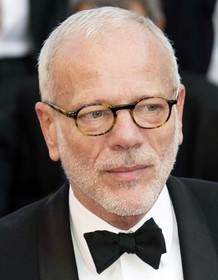
Pascal Greggory
Thomas Verniaz, adulte

Alexandra Maria Lara
Anna Verniaz née Zorn

Jonathan Zaccaï
Bruno Verniaz
Lionel Abelanski
Godin adulte
Evelyne Didi
Mémé Yvette
Tania Garbarski
Nelly
Léo Legrand
Thomas Verniaz, adolescant
Sophie Duez
Catherine
Laura Martin
Sylvie
Laura Moisson
Corinne
Pierre-Louis Bellet
Rousseau
Laurence Lipski
Rachel
Louis Bianchi
Godin adolescent
Théo Dardenne
Chabrot
Augustin Lepinay
Jules
Pauline Chappey
Emma
Juliette Lembrouk
Alice
Jean-François Wolff
Surveillant
Charlie Dupont
Contrôleur
Jacques Berenbaum
Professeur de latin
Odile Mathieu
Professeur de mathématiques
Patrick Zimmermann
Dr Dumontel
Clément Chebli
Adolescent au salon de la BD
Norbert Rutili
Le chef de gare
Jirô Taniguchi
Le passager dans le train
External Links and Streaming Options
Discover where to watch A Distant Neighborhood online, including streaming platforms, rental options, and official sources. Compare reviews, ratings, and in-depth movie information across sites like IMDb, TMDb, Wikipedia or Box Office Mojo.





Full Plot Summary and Ending Explained for A Distant Neighborhood
Read the complete plot summary of A Distant Neighborhood, including all major events, twists, and the full ending explained in detail. Explore key characters, themes, hidden meanings, and everything you need to understand the story from beginning to end.
Thomas Verniaz, Pascal Greggory in the lead role, is a comic book artist in his fifties who is stalled by a creative block and lives under the weight of an unhappy home life. After returning to Paris from a professional convention, a misboarded train sends him hurtling back to his rural hometown. With hours to spare before the next connection, he meanders through familiar spots, visits his long-forgotten childhood home with an old friend, and ultimately makes his way to the cemetery where his mother rests. Through these quiet wanderings, a heavier history unfolds: in 1967, his father Bruno — a skilled tailor — abandoned the family without explanation and vanished from their lives. His mother Anna never recovered from that rupture and died years later of grief. The searing heat at the graveside pushes Thomas to the brink, and he faints.
When Thomas regains consciousness, he discovers something astonishing about his body and clothes: he’s back in time, a teenager again. The shock is instantaneous, and the world he re-enters feels both familiar and unreal. He is soon reunited with his father, mother, little sister, childhood friends, and even the family dog. The experience stirs a flood of emotions, including the certainty that this might be a dream, a temporary reversal before life returns to the way it was. Yet as the days pass, the boundary between memory and reality blurs, and Thomas accepts that he is stuck in 1967, fourteen years old and newly alive with the knowledge of what lies ahead.
As a student in the town’s school, Thomas rekindles old friendships and re-encounters Sylvie Dumontel, the girl he once loved from afar but never had the nerve to approach. Now equipped with foreknowledge of events to come, he tries to alter the course of his family’s life: he pays closer attention to his mother, he seeks to understand his father better, and he pursues his feelings for Sylvie with a new, conflicted courage. The more he observes his family, the more he realizes that the beloved marriage he thought existed between his parents was more fragile—and more fragilely forged—than he had believed. Through his grandmother, he learns that his mother once had been engaged to Bruno’s best friend, a man who died in World War II, a loss that unexpectedly bound the couple together in the past.
Thomas’ attempts at intervention aren’t straightforward. He cannot openly approach his father, and a palpable ache lingers in Bruno that hints at a hidden ache he has carried for years. Driven to uncover the truth, Thomas shadows Bruno on his delivery rounds and uncovers a quiet, troubling pattern: his father has been secretly visiting a gravely ill woman in a sanatorium. The woman dies soon after speaking with Thomas, a moment that deepens the mystery and unsettles the boy-turned-teenager.
That night, Bruno enters Thomas’ room and speaks with words heavy with bitterness and doubt. The very next day is Bruno’s fortieth birthday—the moment Thomas realizes poignantly when his father disappeared from their lives. He watches his father all day, but in the evening a single moment slips away, and Bruno is gone. He hurries to the train station, finding a man about to board a train to Paris. He pleads with him to stay, outlining what lies ahead: the shop’s collapse, his mother’s grief, and the pain that would haunt him for a lifetime. But Bruno speaks of a need to leave, a weight on his chest that is too heavy to bear, and he boards the train, vanishing from the present.
Back at home, his mother tries to explain the absence as a night out with friends, but Thomas cannot accept this simple cover story. He confesses to her that his father is not coming back and begs her not to torment herself with false hopes—his attempt to spare her the grief that time would eventually prove fatal.
In the film’s final stretch, Thomas makes his way to the cemetery once more. The family grave remains unfilled, a stark, silent reminder of absence. He faints again and wakes in the present, meeting the same gravestone that bears the same date of death as before. He returns to the urban present, boarding a train back to Paris. As he walks through the city, an elderly man who bears a striking resemblance to his father crosses his path but does not stop him with a word. The moment leaves Thomas with a quiet, unresolved ache, wondering about what might have been. He finally arrives home to the sight of his wife and daughters gathering around the table for dinner, a scene that feels both ordinary and freighted with unspoken questions about time, memory, and the bonds that endure beyond disappearance.
Notes on performances seen through Thomas’s eyes invite a gentle, reflective mood throughout the narrative. The film lingers on small details—the summer heat, the scent of a bakery, a bus ride through familiar streets, the creak of a door in the old family home—that collectively build a portrait of a man who learns the gravity of family ties by stepping out of his own time. The story’s weighty emotional turns are conveyed with restraint and care, never rushing the transformations that come from revisiting one’s past, reexamining the ones he loves, and confronting the quiet, enduring pain that time cannot erase.
- Cast highlights to note: Thomas Verniaz — Pascal Greggory; Bruno Verniaz — Jonathan Zaccaï; Anna Verniaz née Zorn — Alexandra Maria Lara; Sylvie Dumontel — Laura Martin; Mémé Yvette — Evelyne Didi. These performers anchor a narrative that moves from contemporary frictions to a retrospective world where past and present collide in quiet, human ways.

Coming soon on iOS and Android
The Plot Explained Mobile App
From blockbusters to hidden gems — dive into movie stories anytime, anywhere. Save your favorites, discover plots faster, and never miss a twist again.
Sign up to be the first to know when we launch. Your email stays private — always.
Explore the mobile appDiscover Film Music Concerts Near You – Live Orchestras Performing Iconic Movie Soundtracks
Immerse yourself in the magic of cinema with live orchestral performances of your favorite film scores. From sweeping Hollywood blockbusters and animated classics to epic fantasy soundtracks, our curated listings connect you to upcoming film music events worldwide.
Explore concert film screenings paired with full orchestra concerts, read detailed event information, and secure your tickets for unforgettable evenings celebrating legendary composers like John Williams, Hans Zimmer, and more.


A Distant Neighborhood Other Names and Titles
Explore the various alternative titles, translations, and other names used for A Distant Neighborhood across different regions and languages. Understand how the film is marketed and recognized worldwide.
Quick Links: Summary, Cast, Ratings, More

What's After the Movie?
Not sure whether to stay after the credits? Find out!
Check out our other apps:

SAT Sphere
Build confidence for the Digital SAT.

Mori Atlas
Discover wild places worth protecting.

Luntero
Search smarter for a home in Amsterdam.

Plot Explained
Unravel movie endings and hidden clues.

Pokechamp
Dive into Pokémon data and battle logic.

Driving Theory
Get ready for your European theory test.

Movie Dust
Plan your next cinema trip with ease.

Musemap
Find art and culture as you travel.

Selkobase
Compare credentials before committing.

Local Manual
Turn an unfamiliar country into practical next steps.

Lernavi
Compare school systems before your next move.

GymRoam
Find a workout stop wherever your plans take you.
Explore Our Movie Platform
New Movie Releases (2026)
Famous Movie Actors
Top Film Production Studios
Movie Plot Summaries & Endings
Major Movie Awards & Winners
Best Concert Films & Music Documentaries
Movie Collections and Curated Lists
© 2026 What's After the Movie. All rights reserved.
Privacy Policy