Psycho 2020

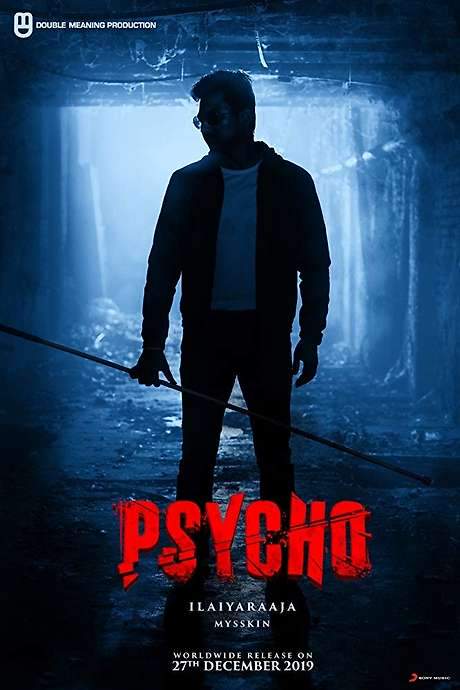
Inspired by a Buddhist tale, this thriller follows a blind man drawn into a disturbing murder mystery. He attempts to rescue his lover, who has been kidnapped by a dangerous psychopath. The story explores themes of obsession, guilt, and the blurred lines between sanity and madness.

Does Psycho have end credit scenes?
No!
Psycho does not have end credit scenes. You can leave when the credits roll.
Where to Watch Psycho
See current US streaming, rental, and purchase options for Psycho (2020) via JustWatch.






Meet the Full Cast and Actors of Psycho
Explore the complete cast of Psycho, including both lead and supporting actors. Learn who plays each character, discover their past roles and achievements, and find out what makes this ensemble cast stand out in the world of film and television.


External Links and Streaming Options
Discover where to watch Psycho online, including streaming platforms, rental options, and official sources. Compare reviews, ratings, and in-depth movie information across sites like IMDb, TMDb, Wikipedia or Letterboxd.




Ratings and Reviews for Psycho
See how Psycho is rated across major platforms like IMDb, Metacritic, and TMDb. Compare audience scores and critic reviews to understand where Psycho stands among top-rated movies in its genre.

The Movie Echo Score
Psycho delivers a mixed viewing experience, with technical strengths offset by narrative weaknesses. The film’s cinematography, music, and production design receive consistent praise, while its story and character development draw criticism for lack of originality and depth. Audience reactions vary, noting strong atmospheric elements but pointing out predictable plot points and uneven performances. Consequently, the movie stands as a respectable thriller for genre enthusiasts yet falls short of broader appeal.
The Movie Echo Score Breakdown for Psycho

Art & Craft
Regarding direction and visual craft, the film is noted for its strong cinematography and precise editing, which create an immersive atmosphere. Reviewers commend the dynamic camera work and professional cut, highlighting the director’s ability to sustain tension. However, some critics argue that the overall direction lacks innovation, relying on familiar stylistic choices. Overall, the art and craft are solid, with visual execution outweighing directional shortcomings.

Character & Emotion
When evaluating character work, performances receive a mixed appraisal. Some actors are recognized for delivering competent portrayals, particularly the lead and a supporting female role, while overall chemistry and depth are viewed as limited. Critics note that many characters feel one‑dimensional, and the dubbing quality further diminishes impact. The acting thus provides occasional highlights but generally falls short of creating fully engaging emotional resonance.

Story & Flow
The narrative is criticized for borrowing heavily from existing genre conventions, resulting in a predictable and unoriginal plot. Reviewers point out logical inconsistencies and pacing issues that weaken engagement, despite an initially compelling premise. While the central investigative thread maintains some tension, the overall flow lacks the freshness needed to sustain interest throughout the film. Consequently, the story component is regarded as the film’s weaker element.

Sensory Experience
The sensory dimension receives strong commendation, especially for Ilaiyaraaja’s score, which amplifies tension and emotional beats. Cinematography is praised for dynamic angles and atmospheric lighting, contributing to a cohesive visual style. Sound design complements the score, though some viewers note occasional lapses in audio mixing. Overall, the soundtrack and visual presentation enhance the thriller atmosphere, making the sensory experience a standout aspect of the film.

Rewatch Factor
Replay value is mixed; while the film offers compelling visual and auditory moments that can reward repeat viewings for genre fans, predictable plot twists and uneven character arcs limit broader rewatch appeal. Some audiences appreciate the atmospheric tension on subsequent watches, yet others find the story's lack of novelty diminishes lasting interest. Overall, the film provides moderate rewatch potential, appealing mainly to thriller enthusiasts.
Full Plot Summary and Ending Explained for Psycho
Read the complete plot summary of Psycho, including all major events, twists, and the full ending explained in detail. Explore key characters, themes, hidden meanings, and everything you need to understand the story from beginning to end.
Gautham, Udhayanidhi Stalin, a blind musician, is in love with Dagini, Aditi Rao Hydari, a radio jockey. After several attempts to reach her, Dagini asks him to meet at a place she will describe on her radio show. Gautham spends the day listening to her program and traces the clue to a location that turns out to be a train station. There, Dagini spots the psycho-killer and tries to flee, but he sedates her. Gautham arrives just in time but cannot save her because his blindness blinds him to the unfolding danger. Still, his other senses prick him with the unsettling feeling that something has gone terribly wrong.
The next day, the police brief Gautham: fourteen girls have been abducted, with thirteen murdered and Dagini remaining the 14th target. Realizing the system can’t find the killer, Gautham chooses to hunt him down on his own terms, leaning on his senses and stubborn resolve. He teams up with Kamala, a handicapped ex-cop who previously handled the case, Nithya Menen. Together they start to connect clues and pursue a lead that the killer is a wealthy man who runs pig farms, a clue they derive from the smell of decayed bodies left behind by the victims. Their investigation takes them through a string of pig-farm owners as they chase whispers and rumors, hoping to close in on the culprit.
Along the way, Gautham’s brave friend Rajanayakam, Singampuli, steps in to help chase down the killer by car, but the killer hides himself in a dense patch of tall grass and ambushes him, killing Rajanayakam. Grief hits hard, and Gautham mourns his friend as he debates whether to push forward or abandon his quest. Kamala reveals she had prior notice that the killer had attended a college function, which rekindles their hope. They return to the college with renewed purpose, reviewing recordings from that day to spot any anomaly.
From there, they narrow the suspect pool to someone associated with the campus, and a college staff member’s presence around a suspect draws attention. The team identifies the killer as Angulimala, Rajkumar Pitchumani. Dagini, meanwhile, navigates the killer’s lair and discovers a jailed woman and a dead police officer’s body. The jailed woman reveals that the killer was her former student, a disturbed man who used to masturbate and who was beaten 60 times every day for his transgressions—a brutal history that helps expose the killer’s psychology.
At around 11:45 PM, Gautham reaches the lair. As the psycho is about to behead Dagini, an intruder alarm blares and the struggle intensifies. The enraged killer runs to finish them, but Gautham manages to cuff his leg and forces a retreat, then makes a perilous escape with Dagini. They flee together, aided by Kamala, who keeps watch over their backs.
Yet the confrontation reaches a nauseating turning point when the imprisoned teacher—who had tried to discipline the killer—fights to protect Dagini and sacrifices by taking the key, then swallowing it to deny the killer his escape. The killer, furious, tears her stomach to retrieve the key. He breaks free and charges after the trio, but Dagini and Gautham manage to get away.
In the aftermath, Dagini’s perspective shifts as she confronts the possibility of Stockholm Syndrome—she begins to feel empathy for the killer and questions whether he could have been a victim of his own broken past. When the killer finally watches a televised interview and senses the warmth of being understood, he realizes his crimes and ends his life by stepping off a cliff, a final, unsettling smile crossing his face.

Coming soon on iOS and Android
The Plot Explained Mobile App
From blockbusters to hidden gems — dive into movie stories anytime, anywhere. Save your favorites, discover plots faster, and never miss a twist again.
Sign up to be the first to know when we launch. Your email stays private — always.
Explore the mobile appDiscover Film Music Concerts Near You – Live Orchestras Performing Iconic Movie Soundtracks
Immerse yourself in the magic of cinema with live orchestral performances of your favorite film scores. From sweeping Hollywood blockbusters and animated classics to epic fantasy soundtracks, our curated listings connect you to upcoming film music events worldwide.
Explore concert film screenings paired with full orchestra concerts, read detailed event information, and secure your tickets for unforgettable evenings celebrating legendary composers like John Williams, Hans Zimmer, and more.


Psycho Other Names and Titles
Explore the various alternative titles, translations, and other names used for Psycho across different regions and languages. Understand how the film is marketed and recognized worldwide.
Quick Links: Summary, Cast, Ratings, More

What's After the Movie?
Not sure whether to stay after the credits? Find out!
Check out our other apps:

SAT Sphere
Build confidence for the Digital SAT.

Mori Atlas
Discover wild places worth protecting.

Luntero
Search smarter for a home in Amsterdam.

Plot Explained
Unravel movie endings and hidden clues.

Pokechamp
Dive into Pokémon data and battle logic.

Driving Theory
Get ready for your European theory test.

Movie Dust
Plan your next cinema trip with ease.

Musemap
Find art and culture as you travel.

Selkobase
Compare credentials before committing.

Local Manual
Turn an unfamiliar country into practical next steps.

Lernavi
Compare school systems before your next move.

GymRoam
Find a workout stop wherever your plans take you.
Explore Our Movie Platform
New Movie Releases (2026)
Famous Movie Actors
Top Film Production Studios
Movie Plot Summaries & Endings
Major Movie Awards & Winners
Best Concert Films & Music Documentaries
Movie Collections and Curated Lists
© 2026 What's After the Movie. All rights reserved.
Privacy Policy