4:30 2005

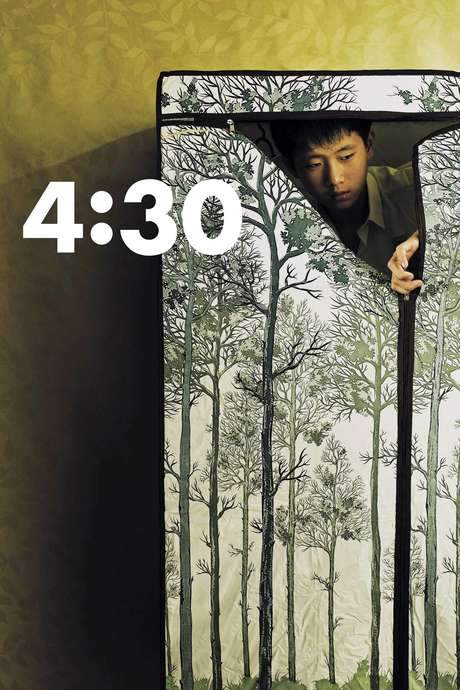
Longing for human contact Xiao Wu tries all he can to make a connection through physical and metaphorical walls in that hour between night and day.


Does 4:30 have end credit scenes?
No!
4:30 does not have end credit scenes. You can leave when the credits roll.
Meet the Full Cast and Actors of 4:30
Explore the complete cast of 4:30, including both lead and supporting actors. Learn who plays each character, discover their past roles and achievements, and find out what makes this ensemble cast stand out in the world of film and television.

External Links and Streaming Options
Discover where to watch 4:30 online, including streaming platforms, rental options, and official sources. Compare reviews, ratings, and in-depth movie information across sites like IMDb, TMDb, Wikipedia or Rotten Tomatoes.






Take the Ultimate 4:30 Movie Quiz
Challenge your knowledge of 4:30 with this fun and interactive movie quiz. Test yourself on key plot points, iconic characters, hidden details, and memorable moments to see how well you really know the film.
4:30 (2005) Quiz: Test your knowledge of the 2005 film "4:30" with these ten questions ranging from easy to difficult.
What is the name of the Korean man who lives with Xiao Wu while his mother is away?
Full Plot Summary and Ending Explained for 4:30
Read the complete plot summary of 4:30, including all major events, twists, and the full ending explained in detail. Explore key characters, themes, hidden meanings, and everything you need to understand the story from beginning to end.
Beijing provides the quiet, uneasy backdrop as Xiao Wu waits for his mother to return to Singapore from an overseas trip, only to find himself sharing the house with a Korean man named Jung. The exact nature of the relationship between Xiao Wu’s mother and Jung isn’t spelled out, but she has left Jung as the lone tenant in the home while she travels, occasionally checking in by phone to ask if Xiao Wu is eating well and still has enough pocket money. The arrangement feels provisional, almost provisional in a way that makes the boy’s loneliness sting a bit more sharply.
Jung is introduced as distant, withdrawn, and visibly burdened by something he doesn’t share with those around him. He speaks little to Xiao Wu, and the emotional gap between them grows into a kind of quiet, suffocating tension. At times his pain erupts in perilous acts—suicidal thoughts surface as he attempts to end his life, first by hanging in the kitchen and later by drowning in a bathtub. The film never explains the source of his torment, but it’s suggested that a woman’s absence or memory weighs heavily on him, a shadow that Xiao Wu seems to sense even before he fully understands it.
Xiao Wu is a lonely, friendless boy who flounders at school and finds it hard to fit in with teachers and peers. He craves Jung’s attention with a kind of quiet desperation, and he clings to small, repetitive rituals to feel less invisible. He develops a set of quirky, almost obsessive habits as he tries to bridge the gap between them: he frequents clinics after school to obtain cough syrup bottles, he plays with the house’s furniture, and most notably, he quietly slips into Jung’s room in the early hours of the morning—often at 4:30 am—to take a single item from him each night. He catalogs these stolen items in a notebook—to Wirtten pages that map a private, intimate portrait of Jung. Through this ritual, the boy constructs a fragile sense of closeness, even as the act reveals how deeply he longs to know Jung.
Xiao Wu’s longing spills into small, tender gestures. He sits beside Jung on the stairs as Jung smokes and cries, and in a moment charged with unspoken emotion, Jung looks at him and says something in Korean while gestures toward Xiao Wu’s head and heart. The moment moves Xiao Wu to tears, and he leans on Jung’s arm, seeking a form of reassurance he cannot name. The next day, Jung has prepared Korean instant noodles for him, leaving a handwritten note in Korean that Xiao Wu carefully preserves in his growing book. Xiao Wu also severs a piece of his clothing that bears Jung’s tears from the night before and keeps it as a keepsake. In a bid to please Jung, he makes orange juice and buys ice cream—the flavors Jung once bought from a street vendor—and leaves them outside Jung’s room, waiting for him to come home.
The relationship shifts and mutates as time passes. After falling asleep in his own room, Xiao Wu wakes to find the house tidy, the bed made, and Jung’s personal space cleared—an implication that Jung has left for reasons known only to him. Xiao Wu is left to wander the house, clutching the notebook that contains Jung’s memorabilia, and he spends nights by the clock, manually nudging its hands back to 4:30 am in a ritual of waiting. The clock, once a symbol of time passing aimlessly, becomes a map of longing that Xiao Wu cannot turn away from. He sits under the house clock, embracing the book and the memory of Jung, trying to will him back into the present with each turn of a page.
As days melt into weeks, Xiao Wu’s world contracts around this fragile attachment. He imagines Jung’s return in small, almost childlike fantasies: a flashlight’s beam crossing the window as if Jung is reaching out to him, a breath of warmth that never fully arrives. The film’s mood settles into a haunting stillness, where hope and absence blur into one continuous ache. Xiao Wu’s attempts to connect feel sincere even when they border on desperation, and the film refuses to provide easy answers about Jung’s absence or about what might have happened to drive him toward despair.
In the end, the story lingers in ambiguity. Xiao Wu is seen closing some of the windows and even painting a coat of black over them, a small, final act that hints at a decision to confront the emptiness and to keep living within the half-lit spaces of the house. The closing credits roll over a quiet, unsettled atmosphere, leaving viewers with questions about whether Jung will ever return, whether Xiao Wu will find another way to connect, and what the future holds for a boy who has learned to measure time by the moments he spends waiting for someone who may never come back. The film remains faithful to its delicate, unsettled tone, offering a portrait of loneliness, longing, and the fragile threads that tether people to one another.

Coming soon on iOS and Android
The Plot Explained Mobile App
From blockbusters to hidden gems — dive into movie stories anytime, anywhere. Save your favorites, discover plots faster, and never miss a twist again.
Sign up to be the first to know when we launch. Your email stays private — always.
Explore the mobile appWatch Trailers, Clips & Behind-the-Scenes for 4:30
Watch official trailers, exclusive clips, cast interviews, and behind-the-scenes footage from 4:30. Dive deeper into the making of the film, its standout moments, and key production insights.
4:30 Themes and Keywords
Discover the central themes, ideas, and keywords that define the movie’s story, tone, and message. Analyze the film’s deeper meanings, genre influences, and recurring concepts.

Unlock the World of Movies with Our Comprehensive Wiki
Dive into our Movie Wiki for in-depth film encyclopedia entries, including cast biographies, production trivia, plot synopses, behind-the-scenes facts, and thematic analyses. Whether you’re researching iconic directors, exploring genre histories, or discovering hidden easter eggs, our expertly curated movie database has everything you need to fuel your cinematic passion.

Similar Movies To 4:30 You Should Know About
Browse a curated list of movies similar in genre, tone, characters, or story structure. Discover new titles like the one you're watching, perfect for fans of related plots, vibes, or cinematic styles.











Quick Links: Summary, Cast, Ratings, More

What's After the Movie?
Not sure whether to stay after the credits? Find out!
Check out our other apps:

SAT Sphere
Build confidence for the Digital SAT.

Mori Atlas
Discover wild places worth protecting.

Luntero
Search smarter for a home in Amsterdam.

Plot Explained
Unravel movie endings and hidden clues.

Pokechamp
Dive into Pokémon data and battle logic.

Driving Theory
Get ready for your European theory test.

Movie Dust
Plan your next cinema trip with ease.

Musemap
Find art and culture as you travel.

Selkobase
Compare credentials before committing.

Local Manual
Turn an unfamiliar country into practical next steps.

Lernavi
Compare school systems before your next move.

GymRoam
Find a workout stop wherever your plans take you.
Explore Our Movie Platform
New Movie Releases (2026)
Famous Movie Actors
Top Film Production Studios
Movie Plot Summaries & Endings
Major Movie Awards & Winners
Best Concert Films & Music Documentaries
Movie Collections and Curated Lists
© 2026 What's After the Movie. All rights reserved.
Privacy Policy