





Thanksgiving movies about complicated families work best when the holiday creates a problem rather than simply supplying decorations. Somebody has to cook. Somebody expects an apology. Somebody returns home hoping to be treated as an adult, only to discover that the family still remembers every earlier version of them. A shared meal can offer welcome, but it can also expose who decides when everyone eats and who is expected to do the work.
For warmth with a little abrasion, start with Pieces of April. For broad comic release, choose Planes, Trains & Automobiles. For a crowded reunion that recognizes the difference between affection and understanding, try Home for the Holidays. The final two selections, The Ice Storm and Krisha, are substantially harsher choices for a quiet evening after the guests leave.
These are twelve editorial selections, organized by viewing mood rather than ranked against one another. Most place Thanksgiving at the center of the action; a few use the holiday as a structural marker or an occasion for satire. Those distinctions are identified below. This guide discusses premises and dramatic approaches without disclosing endings or the solutions to its relationship mysteries. The intensity notes describe material to consider, not age recommendations.
Pick a Thanksgiving movie by mood
| For this evening | Start with | What to expect |
|---|---|---|
| Tenderness without a tidy family | Pieces of April | A broken oven turns hosting into a request for help. |
| Travel comedy | Planes, Trains & Automobiles | Getting home matters more than the dinner itself. |
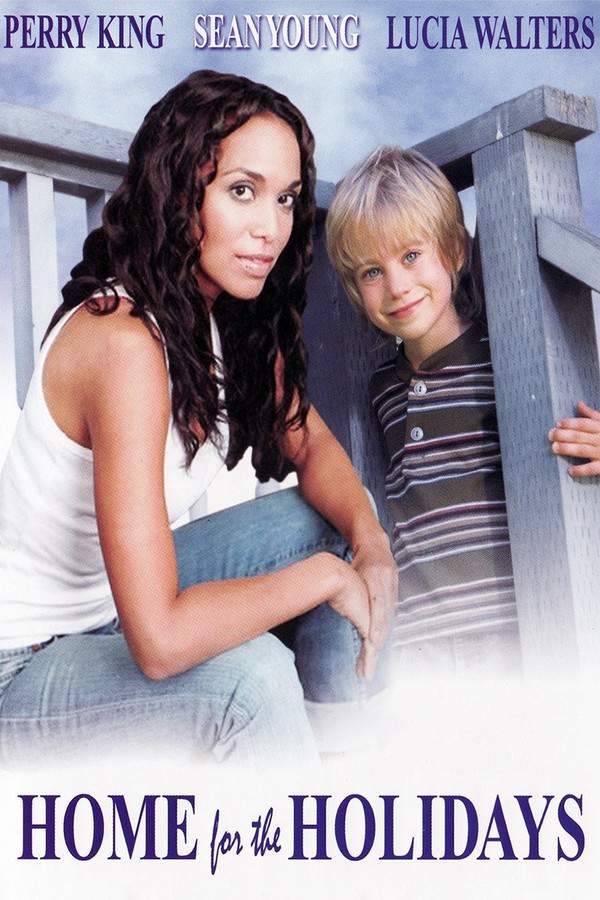
| A recognizable family reunion | Home for the Holidays | Affection, sibling friction and parental expectations. |
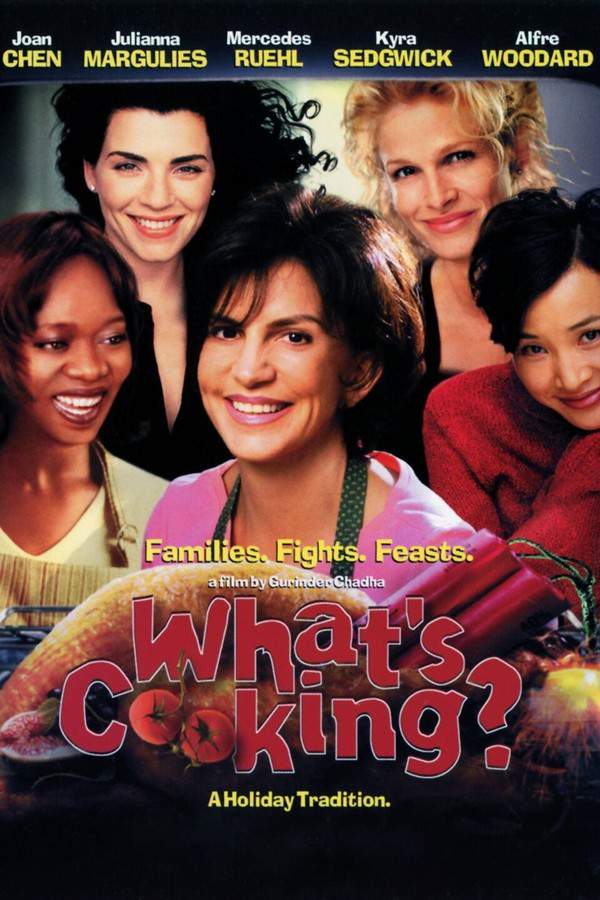
| Several households and traditions | What’s Cooking? | Four households prepare Thanksgiving dinners. |
| Generational melancholy | Avalon | A dinner ritual tests who still belongs together. |
| Uncomfortable adult drama | The Ice Storm or Krisha | Estrangement and distress outweigh holiday reassurance. |
Warm Thanksgiving movies with room for hurt
1. Pieces of April (2003): reconciliation as practical work
April wants to host her estranged family for Thanksgiving in her New York apartment. Her mother is seriously ill, so the invitation carries a pressure that no attractive table setting can remove. When April’s oven will not work, the dinner turns into a series of negotiations with neighbors. Hosting stops being an image she can present and becomes something she needs help to accomplish. That gives a familiar reconciliation premise a concrete, absorbing task.
The family traveling toward her has its own version of who April is. The tension comes from the distance between that inherited story and the effort taking place in the apartment. A meal cannot erase years of disappointment, and the film is more interesting when its comedy acknowledges that limitation. Choose it if you want tenderness with embarrassment and impatience still attached. ATM lists an approximately eighty-minute runtime, making this one of the more compact commitments here. Roger Ebert’s contemporary review discusses the broken-oven premise and the contrast between April and her mother; it also contains later story details if you prefer to save critical reading until afterward.
2. Home for the Holidays (1995): returning home without returning to childhood
Claudia arrives for her family’s Thanksgiving carrying disappointments that would be difficult enough without an audience of relatives. Holly Hunter gives the premise an appealing imbalance: Claudia wants comfort, but she also wants space from the people offering it. The reunion is consequently neither a simple nightmare nor an uncomplicated refuge. It is a place where help arrives bundled with questions, judgments, and expectations that nobody thought to negotiate.
This is a good selection when you want an ensemble rather than a single central argument. Different relatives generate different kinds of friction, and the holiday keeps them in circulation around the same household. Paramount’s holiday overview confirms the Thanksgiving setting and pairing with Planes, Trains and Automobiles. The useful distinction is that this film spends its energy on being home, while that companion spends most of its energy on getting there. Choose Claudia’s visit if you want sibling familiarity and parental pressure mixed with humor. Expect family arguments and homophobia among the sources of conflict; the warmth does not mean that everyone behaves generously.
3. Planes, Trains & Automobiles (1987): learning to make room for a stranger
Neal Page wants to reach Chicago for Thanksgiving. Del Griffith becomes the traveling companion he cannot seem to escape. The journey repeatedly deprives Neal of control over his schedule, money, surroundings, and personal space. That is an efficient comic design: every practical obstacle becomes another occasion to blame the person standing closest. Steve Martin’s contained irritation and John Candy’s expansiveness make the mismatched partnership immediately legible.
Although the film is less concerned with a biological family’s dinner than most entries here, it belongs because the wish to get home supplies its moral test. Does wanting to be with the people you love excuse treating everyone else as an obstruction? Its broader slapstick makes it a better choice than Pieces of April when the room wants conspicuous comic set pieces. The official Paramount trailer establishes the disrupted journey and the two leads. Keep in mind the strong language and escalating travel disasters. The emotional appeal depends on a change in attention, not on a claim that exhausting strangers are secretly easy company.
If dinner means negotiating more than one tradition
4. What’s Cooking? (2000): four households, several definitions of belonging
Gurinder Chadha’s ensemble follows four Los Angeles families preparing Thanksgiving meals. The shared occasion gives the stories a common clock, while their different households prevent one set of customs from standing in for the entire holiday. The Frameline festival record identifies the film, filmmaker, year, and 109-minute length. It is a more expansive viewing choice than the compact Pieces of April, with attention distributed across several tables.
The appeal is in comparing who gets to call something traditional. Food can express continuity, but an argument over what belongs on a menu can also become an argument over who belongs in a family. Generational friction, romantic relationships, and the management of appearances give the ensemble more to negotiate than cooking logistics. This is the selection for viewers who want several kinds of family experience without treating them as interchangeable. Its busy structure can make individual conflicts feel more schematic than those in a film devoted to one household. Watch the connections between the stories, but allow each family its own pressures instead of reducing the film to a lesson about everyone being the same.
5. Hannah and Her Sisters (1986): measuring change by the same annual gathering
Thanksgiving functions as a recurring frame in this film rather than a deadline for one disastrous day. The relationships among Hannah, Lee, Holly, and the people around them continue between gatherings. Returning to the occasion invites a comparison: the family may assemble in recognizable ways even though its private arrangements have changed. That is a different use of a holiday from the travel countdown in Planes, Trains & Automobiles.
Choose this for a conversation-driven evening about adult siblings, dependence, jealousy, and competing ideas of happiness. Its structure makes continuity itself ambiguous. Seeing people together does not establish that they understand one another, and the person perceived as stable can become a convenient support for everybody else’s uncertainty. The appeal depends on an appetite for intimate moral discomfort rather than a succession of holiday mishaps. Infidelity and anxiety are central to the material. Compared with What’s Cooking?, the film narrows its social world but stretches its observation across time, making the repeated meal a way to notice what an ordinary family photograph cannot explain.
6. Avalon (1990): when a ritual becomes a measure of distance
Barry Levinson’s family drama places Thanksgiving within a longer account of immigration, work, aspiration, and generational change. A dispute over beginning the turkey before relatives arrive gives a small practical decision a much larger meaning. Waiting is not merely a question of keeping dinner hot. For a family that understands gathering as a commitment, starting without someone can feel like a declaration about whose presence matters.
That tension makes Avalon a strong choice when the conversation after the film may turn toward grandparents, suburbs, or traditions that have become harder to sustain. It also complicates the comforting assumption that prosperity automatically strengthens a family. More private space and more independence can mean fewer occasions to depend on one another. Ebert’s 1990 review documents the Thanksgiving disagreement and discusses the film’s family history. The reading here is narrower: rituals provide a common language, but people can disagree about what the same ritual requires. Expect a reflective, melancholy drama rather than the quicker comic exchanges of Home for the Holidays.
If you prefer awkwardness, satire, or an unconventional household
7. The Daytrippers (1996; U.S. theatrical release 1997): relatives who turn concern into a group expedition
This is a Thanksgiving-adjacent selection, largely concerned with the following day’s consequences. A troubling letter sends Eliza and her family into Manhattan to investigate her marriage. A private uncertainty becomes a collective project. Once the relatives are traveling together, advice cannot remain abstract: each person gets to interpret the evidence, redirect the conversation, and make the investigation partly about themselves.
The Criterion edition identifies Greg Mottola’s film as 1996; ATM uses its 1997 theatrical-release year. Both refer to the Hope Davis and Parker Posey ensemble, not different movies. That compressed trip makes it a good follow-up to Home for the Holidays: one gathers relatives inside a house, the other carries their established dynamics into public space. At 87 minutes, it is also a manageable choice for a shorter evening. Expect uncomfortable relationship questions and deadpan detours. The central attraction is the unstable boundary between being supported by your family and having your family take possession of your problem.
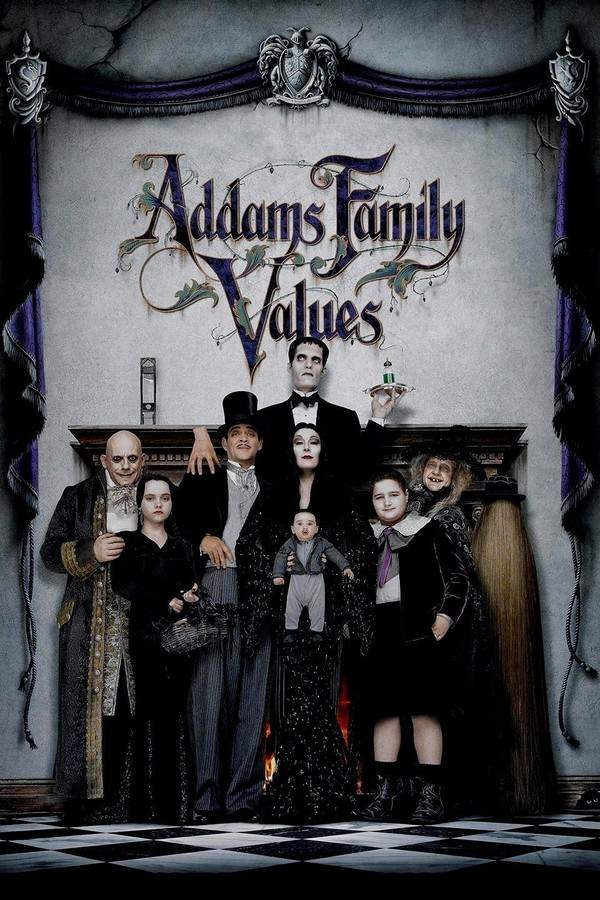
8. Addams Family Values (1993): a Thanksgiving pageant inside a summer-camp satire
This film does not take place over Thanksgiving. Its claim on the holiday comes from a camp pageant, and pretending otherwise would give the wrong impression of the story. The Addams children’s encounter with organized cheerfulness makes the family comedy a contest over conformity. The people demanding that everyone participate can appear considerably less welcoming than the supposedly alarming outsiders.
The official Paramount Thanksgiving clip supplies the relevant sequence, though watching the clip first reveals the scene’s comic escalation. Within a holiday program, the film offers a shift away from reconciliation narratives: perhaps the household being judged does not need to become more conventional. It is the surrounding institution’s idea of normality that needs examining. Choose it for macabre exaggeration and satirical release, with attempted violence and morbid jokes rather than domestic realism. Its broad comic mode makes it an especially sharp contrast with Avalon, where maintaining a shared tradition carries a much more sorrowful weight.
9. Alice’s Restaurant (1969): a meal in a chosen community
Arthur Penn’s film follows Arlo Guthrie through a countercultural world in which friendship and shared living offer alternatives to a conventional household. Thanksgiving matters as an occasion for gathering, but the movie extends beyond the meal into encounters with authority and the uncertainties of maintaining that community. Turner Classic Movies’ account confirms the relationship between the Thanksgiving episode, the arrest, and the larger story. The film should not be treated as a literal documentary record simply because Guthrie appears as himself.
This is the loosest and most wandering selection in the group. That can be a pleasure when a tightly constructed family showdown feels too emphatic. It can also be a limitation if you want the holiday to organize every scene. The connection to Pieces of April is the practical idea that care sometimes arrives outside the family structure you expected. The difference is historical and tonal: Penn gives the communal alternative room to appear unstable as well as appealing. Expect drug-related material and a story shaped by the Vietnam-era draft, rather than a straightforward celebration of dropping out.
10. Scent of a Woman (1992): a temporary arrangement that becomes a demanding bond
A scholarship student accepts a Thanksgiving-weekend job looking after a blind retired officer. Charlie needs the money; Frank Slade has his own plans for their time together. Their relationship begins with an imbalance of authority rather than an easy friendship. The Universal film page confirms Martin Brest’s direction, the leads, and the 157-minute runtime. This is a considerably longer commitment than The Daytrippers or Pieces of April.
The Thanksgiving connection is a premise and an opportunity for contact, not a promise that the story will stay around a family dinner. Choose it if you want a forceful two-character drama about responsibility toward someone whose behavior is difficult to endure. Al Pacino’s expansive performance gives the relationship a different scale from the quieter hurt in Avalon. The limitation is that such force can crowd the younger character’s perspective, depending on what you want from the pairing. Strong language and suicidal crisis are part of the film’s material. It is a choice for an attentive adult drama, rather than light background entertainment during a crowded gathering.
If you want the holiday’s pressure to remain uncomfortable
11. The Ice Storm (1997): a family holiday without a reassuring frame
Ang Lee’s drama follows two Connecticut families during Thanksgiving break in 1973. That date matters: the film is looking at a particular social moment, not an unspecified suburban present. Criterion’s film record confirms the setting, the Rick Moody source novel, and the 113-minute edition. Its apparently orderly homes contain adults and children negotiating desire, dissatisfaction, and rules that no longer seem dependable.
This is the pick for viewers interested in family drama as an atmosphere of disconnection. Thanksgiving supplies proximity without guaranteeing intimacy. Putting people near one another does not mean they possess a shared way to talk about what is happening. The contrast with What’s Cooking? is productive: both involve several households, but Lee’s film offers a colder account of what shared surroundings can conceal. Sexual situations involving adults and adolescents, infidelity, and devastating events make this one of the heavier selections. Avoid choosing it merely because the calendar says holiday movie; its purpose is to disturb the comforting picture of family life.
12. Krisha (2015 premiere; U.S. release 2016): reconciliation under intolerable pressure
Krisha returns to her sister’s home hoping to rejoin a family from which she has been absent. Preparing Thanksgiving dinner becomes her opportunity to demonstrate that things can be different. The difficulty is that the people around her have memories, boundaries, and reasons for caution. A24’s synopsis identifies this return and the strained family gathering; the distributor and ATM both use the 2016 release year.
Cooking links the film to Pieces of April, but the emotional experience is much less forgiving. A task meant to establish belonging becomes something on which too much hope has been placed. The family home feels crowded with more than people: everyone arrives with an interpretation of Krisha’s past and expectations about her behavior. Choose this for concentrated, distressing drama about estrangement and addiction, not for a corrective lesson in simply being nicer to relatives. Its short runtime does not make it a gentle watch. The hard question is whether an occasion that demands reunion can also respect the limits of the people asked to reunite.
Choose the kind of evening before choosing the title
For a first selection, decide whether you want recognition or release. Home for the Holidays offers the recognition of old family roles; Planes, Trains & Automobiles provides release through comic inconvenience. What’s Cooking? opens the frame to several households. Avalon makes room for the sadness of change over generations. None needs to be declared the universal best Thanksgiving film to be the right choice for a particular evening.
For a two-film comparison, put Pieces of April beside Krisha and consider what happens when cooking becomes an application for acceptance. For a lighter contrast, move from Home for the Holidays to The Daytrippers: first a house that keeps relatives together, then a journey that makes escape from their opinions almost impossible. The linked ATM pages provide the individual film records so you can compare the commitment before settling on a pairing.