What's After the Blog?
Opinions • Reception
Silent Night, Deadly Night (2025) Review, Critics Opinions & Audience Reception – Performance, Storytelling & Franchise Impact
Explore fan reactions and critic reviews of Silent Night, Deadly Night (2025), examining the film’s performance, storytelling choices, and its place within the horror franchise. We break down the reception, highlight standout moments, and compare audience opinions to professional critiques.
December 18, 2025

Movies mentioned in this article
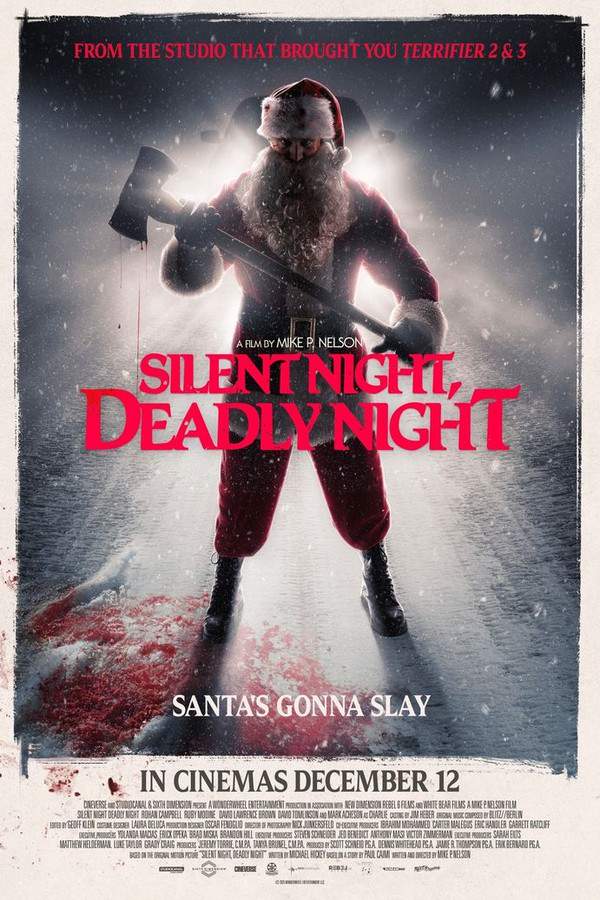
Silent Night, Deadly Night (2025) Review: A Divisive Holiday Slasher Revival
As the festive season rolls around each year, horror fans eagerly anticipate new entries in the holiday slasher genre. The 2025 revival of Silent Night, Deadly Night arrives with considerable baggage—the weight of a controversial 1984 original that sparked parental outrage, a franchise history of diminishing returns, and the challenge of satisfying both nostalgic fans and modern horror audiences. At What’s After the Movie, we specialize in diving deep into movie receptions, and the critical and user consensus for this Christmas horror film presents a fascinating case study in franchise revival attempts.
Director Mike P. Nelson’s take on the material has polarized viewers from its December 2025 release. Unlike straightforward remakes, this reimagining incorporates supernatural elements, grindhouse aesthetics, and a moralistic killer premise that distinguishes it from previous iterations. Our comprehensive Silent Night, Deadly Night page at What’s After the Movie has been tracking all the reactions since the film’s premiere, and the data reveals a movie that defies easy categorization. The divided response suggests that Nelson aimed for something more ambitious than a simple slasher retread, though the execution has left some critics and viewers cold while others found it a delightfully twisted holiday treat.
This analysis will explore the spectrum of opinions surrounding Silent Night, Deadly Night (2025), examining what worked for supporters and what frustrated detractors. From the professional critic assessments on major platforms to the detailed user reviews from horror enthusiasts, we’ll break down the reception patterns and help you determine if this festive frightfest deserves a spot on your holiday watchlist. Whether you’re researching before watching or comparing notes after viewing, our movie wiki at What’s After the Movie provides additional context about this controversial entry in Christmas horror history.
Critical Reception of Silent Night, Deadly Night 2025: A Mixed Bag of Holiday Cheer and Coal
Professional critics have delivered a decidedly mixed verdict on Silent Night, Deadly Night (2025), with scores ranging from dismissive pans to qualified recommendations. The aggregate critical response suggests a film that attempts creative risks but doesn’t fully satisfy either as a faithful remake or as a groundbreaking new vision. IndieWire’s positive assessment stands out with a 75/100, calling the film “an audacious 2025 season capper for Cineverse and a solid achievement for Nelson, one that promises the director will give us more genre worth unwrapping down the line.” This perspective positions the film as a promising directional shift for both the franchise and the filmmaker, suggesting that despite its flaws, there’s genuine creative ambition worth celebrating.
On the more measured end of the spectrum, several publications settled on scores in the 50-60 range, indicating a film that works adequately as disposable seasonal entertainment without achieving greatness. Empire Magazine captured this middle-ground sentiment perfectly, describing it as “just the right recipe for a seasonal horror cocktail — gruesome kills, proper suspense, sly wit, likeable leads and a dose of just deserts for very, very bad boys and girls.” The Reveal offered similar tempered praise, noting that “though he still doles out kills in a thin broth, Nelson puts enough craft and spin on the material to make it better than it has any right to be.” These reviews position Silent Night, Deadly Night as competent holiday horror that meets modest expectations without exceeding them.
The negative critiques focused primarily on execution issues rather than conceptual problems. RogerEbert.com delivered one of the harshest assessments with a 38/100, arguing that “this new holiday chiller mostly idles when it should charge at its most unsound ideas.” The Guardian was similarly unimpressed, giving it 40/100 and criticizing Nelson’s “boringly flat direction, failing to justify why something so drab and cheap-looking would warrant the surprisingly wide theatrical release it’s receiving this weekend.” These reviews suggest that for some critics, the film’s ambitions outstripped its budgetary constraints and directorial execution.
When comparing these critical perspectives, a pattern emerges: critics responded more favorably to the film’s conceptual risks than its practical execution. The New York Times (70/100) acknowledged this tension, noting that “Nelson may be throwing too much at the wall, but he does manage to make you feel something beyond just gross-out thrills.” This divide between ambition and execution appears to be the central fault line in the critical reception of Silent Night, Deadly Night. For those tracking critical consensus across multiple films, our movie collections at What’s After the Movie allow you to compare reception patterns across similar holiday horror titles.
User Reviews and Audience Reactions to Silent Night, Deadly Night 2025
The audience response to Silent Night, Deadly Night (2025) reveals even greater division than the critical reception, with user ratings spanning the full spectrum from enthusiastic approval to disappointed rejection. This polarization suggests that the film’s specific blend of horror elements resonated strongly with some viewers while alienating others. User kannibalcorpsegrinder offered one of the most positive assessments (8/10), praising the film’s “wholly likable and enjoyable genre effort” and highlighting the “solid and generally enjoyable confrontations that focus on the wholly enjoyable series of slashing encounters.” This perspective represents viewers who appreciated the film’s balance between character development and horror action.
Several users settled in the middle range, acknowledging the film’s qualities while noting significant shortcomings. User nERDbOX_Dave (6/10) captured this balanced perspective well, observing that “Mike P. Nelson’s Silent Night, Deadly Night (2025) swings into the holiday slasher battlefield with a bloody wink and a bold pivot” while noting that “the film has energy. It has personality. It has ambition. What it doesn’t quite have is… iconic kills.” This assessment highlights how the film’s conceptual risks impressed some viewers even when the execution fell short of their slasher movie expectations.
The negative user reviews focused on specific narrative and structural issues. User jtindahouse (5/10) criticized the film’s pacing and exposition, noting that “most people aren’t going to realise what the film is about because the film waits until damn near the end to actually explain what is happening and why.” Similarly, user drownsoda90 (3/10) argued that the film “tries to do too many things, unfortunately to its own detriment,” specifically calling out the “increasingly outlandish” murder sequences and the “tedious element of Billy’s inner dialogue.” These criticisms suggest that for some horror enthusiasts, the film’s narrative choices undermined its potential as an effective slasher.
A fascinating pattern emerges when comparing user reactions: those familiar with the franchise history and slasher conventions tended to be more critical, while viewers approaching the film as standalone entertainment often responded more positively. User missastridjakobs (7/10) exemplified this latter perspective, noting “I didn’t go in expecting much. I was expecting just another bad remake. Was I ever delighted to see that the film had an interesting plot and tried to do some character building and camp (LOTS of it) done really well.” This divergence suggests that Silent Night, Deadly Night may work better for casual horror viewers than for franchise purists or slasher aficionados. For those interested in exploring more divided audience reactions, our movie lists at What’s After the Movie feature similar controversially received horror films.
Analyzing the Divide: Why Silent Night, Deadly Night 2025 Polarized Viewers
The sharply divided reception of Silent Night, Deadly Night (2025) stems from several key creative choices that worked brilliantly for some viewers while frustrating others. Understanding these fault lines helps explain why the film generated such conflicting reactions rather than a consensus opinion. The most significant divisive element appears to be the film’s narrative structure and pacing. As user jtindahouse noted, the film “waits until damn near the end to actually explain what is happening and why,” creating an experience that some found intriguingly mysterious while others found confusing and poorly structured.
The film’s approach to the killer’s motivation represents another major point of contention. Unlike the trauma-driven psychology of the original 1984 film, this version introduces supernatural elements with what user kevin_robbins described as “the concept of the ‘powers’” and “The Voice” that guides Billy’s actions. This shift from psychological horror to supernatural thriller fundamentally altered the franchise’s premise, appealing to viewers seeking something new while disappointing purists who preferred the original’s approach. User nERDbOX_Dave acknowledged this dramatic change, observing that “Gone is the trauma-driven, psychologically scarred Billy of 1984. This Billy is something different altogether: a December active, morality-obsessed serial killer who hunts the ‘naughty’ like a holiday-season Dexter.”
The film’s tonal balance between horror, comedy, and character drama also generated conflicting responses. Some reviewers praised this blend as effectively capturing the spirit of holiday slashers, with Next Best Picture describing it as enjoyable seasonal entertainment: “Silent Night, Deadly Night is no great piece of art, but in the same way that candy stuffed in a stocking is far from a five-star meal, it doesn’t matter to those seeking it out, and it’s enjoyable all the same.” However, other viewers found the tonal shifts jarring, with user drownsoda90 criticizing how the film “occasionally captures that spirit, but any attempts at reworking or honoring the source material come across as narratively anemic.”
The divide between expectations and reality appears to be a crucial factor in the polarized reception. The marketing positioning—including what jtindahouse noted as the “From the studio that brought you Terrifier 2 & 3” tagline—set certain expectations for graphic creativity that the film didn’t necessarily meet. Meanwhile, franchise fans brought preconceptions about what a Silent Night, Deadly Night movie should be, while newcomers had different reference points. This expectation-reality gap often determines whether viewers appreciate a film’s innovations or criticize its deviations from tradition. For more analysis of divisive film receptions, check out our quizzes and games section at What’s After the Movie, where we explore why certain movies split audiences so dramatically.
What Worked and What Didn’t: Strengths and Weaknesses in Silent Night, Deadly Night 2025
Examining the specific elements that consistently received praise or criticism reveals a clearer picture of Silent Night, Deadly Night’s execution. The aspects that worked successfully across most reviews provide insight into the film’s genuine qualities, while the frequently cited shortcomings highlight where the production stumbled. Starting with the strengths, the central performance by Rohan Campbell as Billy emerged as a near-universal positive. User nERDbOX_Dave praised how “Campbell does genuinely good work here,” suggesting it was “a chance for him to wash off the stink of being stuck in Halloween Ends.” This sentiment was echoed by multiple reviewers who found Campbell’s portrayal compelling despite narrative limitations.
The film’s conceptual ambition also received acknowledgment even from critics who found the execution flawed. The New York Times noted that “Nelson may be throwing too much at the wall, but he does manage to make you feel something beyond just gross-out thrills.” This suggests that the film succeeded at aiming for more substance than typical slasher fare, even if it didn’t fully achieve its aspirations. The incorporation of grindhouse aesthetics and moralistic themes distinguished it from more straightforward horror remakes, creating a distinctive identity that some viewers appreciated.
However, several weaknesses consistently emerged across reviews. The kill sequences—arguably the centerpiece of any slasher film—received mixed reactions at best. While user kannibalcorpsegrinder praised the “brutal deaths featuring the axe being used to elicit some solid splatter,” others found the violence lacking in creativity. User jtindahouse specifically criticized this aspect: “You can only see so many people chopped by an axe before it becomes very mundane.” This inconsistency in the horror elements proved problematic for a film positioning itself within the slasher tradition.
The film’s structural and pacing issues represented another frequently cited weakness. User kannibalcorpsegrinder noted the “jagged sense of pacing, where it’s hard to remain invested at points with what’s going on,” specifically pointing to extended sequences focused on Billy’s normal life that minimized the horror elements. The internal monologue device also divided viewers, with user drownsoda90 calling it “the most tedious element of the film” because it “telegraphs the action to come, and, thereby, acts as a vacuum for what little suspense is built into the story.” These narrative choices created significant hurdles for viewer engagement regardless of their appreciation for the film’s concepts.
The romantic subplot between Billy and Pam (Ruby Modine) generated particularly conflicting responses. Some viewers found it added worthwhile character dimension, while others felt it underdeveloped. User drownsoda90 criticized how “the romantic subplot between Billy and Pamela… is revisited throughout” with “overwrought implications that Pam has her own issues with mental instability, but this never truly amounts to anything compelling.” This pattern suggests that the film’s attempts at character development sometimes came at the expense of narrative momentum and horror effectiveness. For more analysis of what makes horror films successful, explore our summary pages at What’s After the Movie, where we break down the essential elements of effective scary movies.
Final Verdict: Who Should Watch Silent Night, Deadly Night 2025?
Based on the comprehensive analysis of critical and user reviews, Silent Night, Deadly Night (2025) emerges as a film with specific appeal rather than broad entertainment value. The divided reception suggests that your enjoyment will largely depend on what you expect from a holiday horror film and how you approach this particular franchise revival. For viewers seeking a straightforward slasher with creative kills and straightforward horror, the film may disappoint. As user jtindahouse observed, the marketing comparison to Terrifier films set expectations for kill creativity that the film doesn’t prioritize, leading to potential disappointment for gorehounds.
However, for viewers interested in horror films that attempt character development and thematic exploration beyond the usual slasher conventions, Silent Night, Deadly Night offers rewarding elements. The film’s attempt to blend grindhouse aesthetics with moralistic themes and character drama represents an ambitious approach that will resonate with viewers who appreciate horror with substance. User missastridjakobs captured this perspective perfectly: “I was expecting just another bad remake. Was I ever delighted to see that the film had an interesting plot and tried to do some character building and camp (LOTS of it) done really well.”
Franchise purists should approach with adjusted expectations, as this reimagining significantly deviates from the original films in tone, concept, and execution. As user nERDbOX_Dave noted, “This isn’t a shot-for-shot redo of the 1984 cult classic, nor a spiritual successor to the 2012 remake. Instead, Nelson stitches together a gnarly, grindhouse infused Christmas nightmare that plays fast, loose, and occasionally paranormal with its source material.” Viewers attached to the specific qualities of the original may find these changes jarring, while those open to reinterpretation may appreciate the fresh approach.
Ultimately, Silent Night, Deadly Night (2025) works best as holiday-season entertainment for viewers who prioritize conceptual ambition over flawless execution. As Next Best Picture aptly summarized, the film serves as seasonal “candy stuffed in a stocking” rather than a “five-star meal”—enjoyable for what it is rather than what it might have been. The film’s strengths in performance and atmosphere compensate for its narrative weaknesses for viewers able to meet it on its own terms. For those who enjoy analyzing film receptions, our box office section at What’s After the Movie tracks how divided critical responses often translate to commercial performance for horror films.
Whether Silent Night, Deadly Night becomes a new holiday tradition or a forgettable entry in the Christmas horror canon remains to be seen. The film’s ambition and distinctive approach suggest it may develop a cult following over time, particularly among viewers who appreciate its specific blend of horror elements. As with many divisive films, subsequent viewings and historical perspective may shift the reception, potentially elevating what currently appears as flaws into distinctive qualities. For now, it stands as a fascinating case study in franchise revival attempts and the challenges of satisfying diverse audience expectations within the horror genre.
| Resource | Link |
|---|---|
| IMDb | Silent Night, Deadly Night IMDb |
| TMDb | Silent Night, Deadly Night TMDb |
| Wikipedia | Silent Night, Deadly Night Wikipedia |
| Rotten Tomatoes | Silent Night, Deadly Night Rotten Tomatoes |
| Metacritic | Silent Night, Deadly Night Metacritic |
| JustWatch | Silent Night, Deadly Night JustWatch |
| Box Office Mojo | Silent Night, Deadly Night Box Office Mojo |
| Letterboxd | Silent Night, Deadly Night Letterboxd |
Continue reading


What's After the Movie?
Not sure whether to stay after the credits? Find out!
Check out our other apps:

SAT Sphere
Build confidence for the Digital SAT.

Mori Atlas
Discover wild places worth protecting.

Luntero
Search smarter for a home in Amsterdam.

Plot Explained
Unravel movie endings and hidden clues.

Pokechamp
Dive into Pokémon data and battle logic.

Driving Theory
Get ready for your European theory test.

Movie Dust
Plan your next cinema trip with ease.

Musemap
Find art and culture as you travel.

Selkobase
Compare credentials before committing.

Local Manual
Turn an unfamiliar country into practical next steps.

Lernavi
Compare school systems before your next move.

GymRoam
Find a workout stop wherever your plans take you.
Explore Our Movie Platform
New Movie Releases (2026)
Famous Movie Actors
Top Film Production Studios
Movie Plot Summaries & Endings
Major Movie Awards & Winners
Best Concert Films & Music Documentaries
Movie Collections and Curated Lists
© 2026 What's After the Movie. All rights reserved.
Privacy Policy