What's After the Blog?
casting • news • feature
Who Voices Sauron in The Lord of the Rings and The Hobbit Films
British actor Alan Howard provided the sinister vocals for Sauron in Peter Jackson's The Lord of the Rings trilogy, while Benedict Cumberbatch later voiced the Necromancer incarnation in The Hobbit films. The character's terrifying vocal presence draws from Tolkien's Black Speech, a constructed language designed to convey pure menace through harsh, guttural sounds.
May 19, 2026
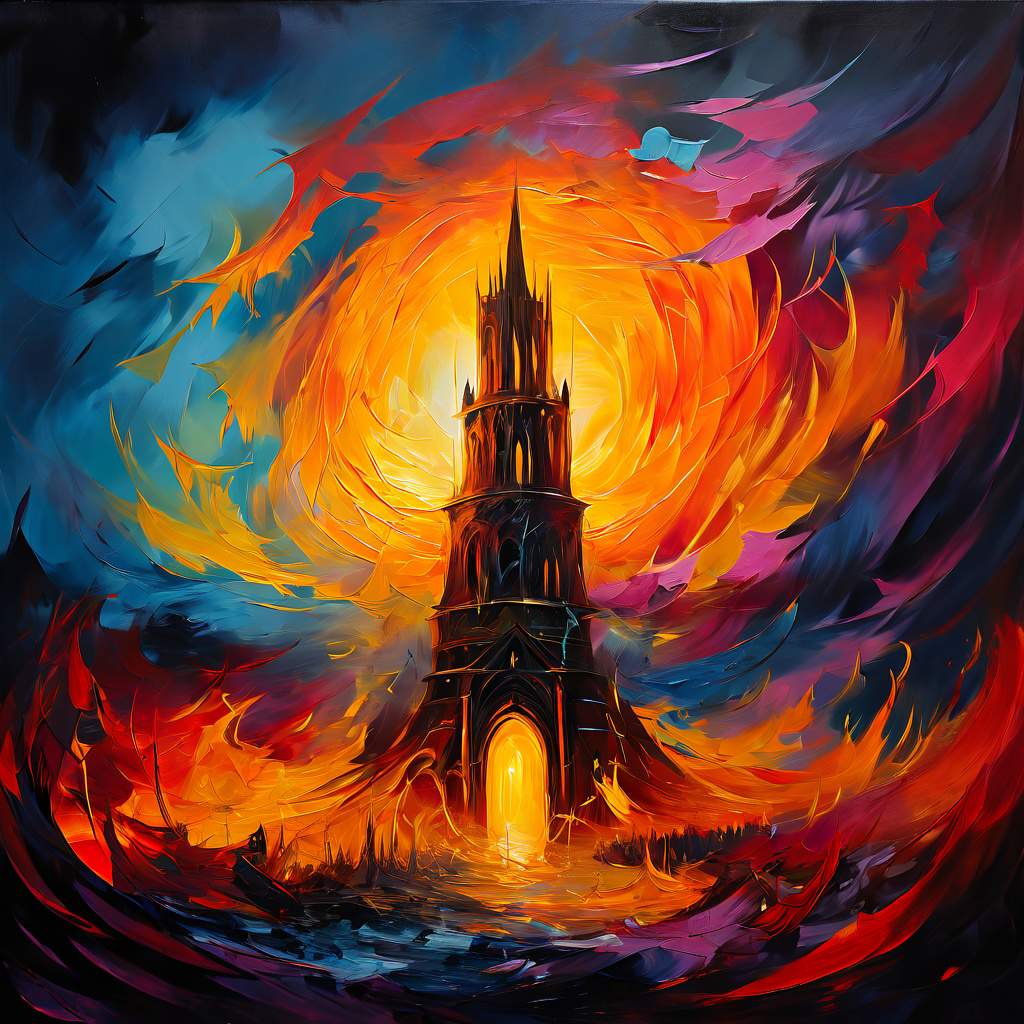
Who Voices Sauron in The Lord of the Rings and The Hobbit Films
While Peter Jackson’s Middle-earth adaptations cemented Sauron’s visual identity as a flaming eye and shadowy necromancer, the Dark Lord’s auditory dimension required carefully selected vocal talent to convey ancient malice across two distinct trilogies. The auditory portrayal of Middle-earth’s greatest antagonist spans from whispered temptations through the One Ring to booming pronouncements in the Black Speech, with two British performers delivering performances that shaped how audiences hear evil itself.
The voice acting behind Sauron represents a unique challenge in fantasy cinema: creating an audible presence for a character rarely seen in physical form, yet whose spoken words carry apocalyptic weight. This examination breaks down the performers who brought vocal life to the Dark Lord, the linguistic foundations that informed their performances, and how these audio interpretations connect to Tolkien’s broader mythos.
Alan Howard’s Iconic Performance in The Lord of the Rings
British theater veteran Alan Howard established the sonic template for Sauron throughout Jackson’s original trilogy, voicing the Dark Lord’s communications primarily through the medium of the One Ring itself. Rather than appearing as a speaking character in traditional scenes, Howard’s vocal work manifested as a disembodied presence—menacing, authoritative, and filtered through the artifact that contained the bulk of Sauron’s native power.
Howard’s performance arrived during the early 2000s heyday of the franchise, providing the auditory backbone for the antagonist during the War of the Ring’s climactic phases. The actor’s theatrical background likely informed the classical gravitas he brought to lines delivered in the films’ darkest moments, creating a vocal texture that suggested millennia of corruption and dominion without resorting to cartoonish villainy.
Tragically, Howard passed away in 2015, the same year that claimed fellow Middle-earth alumnus Christopher Lee, who portrayed Saruman. While Lee famously returned to the franchise for The Hobbit trilogy, Howard’s death precluded any reprisal of his role. This circumstance necessitated a new approach to Sauron’s vocalization when production shifted to the earlier timeline of the prequel films, creating a natural break between the two trilogies’ interpretations of the character’s voice.
Benedict Cumberbatch and The Hobbit’s Shadowy Antagonist
When Jackson’s production turned to The Hobbit trilogy, Benedict Cumberbatch assumed vocal duties for Sauron’s Necromancer incarnation—a form the Dark Lord adopted during his subtle return to power before openly declaring himself. This version required a different vocal approach than Howard’s ring-bound utterances, demanding a performance that suggested gathering strength and physical presence despite the character’s largely spectral depiction.
Cumberbatch’s involvement extended beyond mere voice work; the actor also portrayed Smaug the dragon through motion capture performance, donning specialized suits and crawling on all fours to capture the reptilian creature’s physicality. This commitment to embodied performance informed his approach to Sauron as well, bringing a kinetic energy to the vocalization that distinguished the Necromancer from the static Eye of the later trilogy.
The transition between Howard and Cumberbatch marks a rare instance of major vocal recasting within a continuous cinematic universe, necessitated by real-world circumstances rather than creative disagreement. Cumberbatch’s interpretation offered a younger, more agile vocal presence appropriate for a Sauron still rebuilding physical form and influence, contrasting with Howard’s weighty finality suggesting an enemy already entrenched in his fortress.
The Black Speech: Tolkien’s Linguistic Foundation for Terror
Understanding Sauron’s vocal presence requires examining the Black Speech, the constructed language Tolkien specifically designed as a tool of domination and fear. According to the author’s appendices and the volume The Peoples of Middle-earth, Sauron personally forged this tongue for his servants’ exclusive use, filling it with “harsh and hideous sounds and vile words” that proved difficult for other beings to pronounce or endure.
The visceral reaction to this language manifests most memorably during the Council of Elrond sequence, when Gandalf recites the One Ring’s inscription. The text describes a profound atmospheric shift accompanying these words: the wizard’s voice transforming into something “menacing, powerful, harsh as stone,” accompanied by a passing shadow and sunlight dimming despite clear skies. Elves present physically shield their ears from the sound, demonstrating that the Black Speech carries innate corruption beyond mere semantics.
This linguistic context provided the foundation for both Howard and Cumberbatch’s performances:
- Phonetic Structure: The language deliberately incorporates gutturals and harsh consonants impossible to speak softly
- Psychological Weight: Words in Black Speech carry Sauron’s will even when spoken by others, suggesting the language itself serves as an extension of his voice
- Physical Reaction: The text describes bodily discomfort experienced by listeners, requiring voice actors to convey vocal qualities that suggest genuine pain in hearers
The distinction between Gandalf’s Common Speech translation and his Black Speech recitation proves crucial—only the original language triggers supernatural phenomena, indicating that Sauron’s voice carries metaphysical properties beyond ordinary communication.
Evolution of Evil: From Annatar to the Eye
Tolkien’s legendarium presents Sauron not as static in appearance or voice, but as a shapeshifter who assumed various forms across Middle-earth’s ages. During the First and Second Ages, the Dark Lord operated as “Annatar,” the Lord of Gifts, presenting himself in fair, angelic, and even beautiful forms that presumably accompanied a more melodious vocal register designed to deceive the Elves.
This historical vocal versatility receives modern exploration in The Rings of Power, where actor Charlie Vickers portrays a pre-armor Sauron utilizing charisma and persuasion rather than overt threat. The contrast between this appealing presentation and the guttural terror of Howard and Cumberbatch’s film performances illustrates the character’s adaptability—his voice serves as another tool of manipulation, shifting from seductive to terrifying as his plans progress.
The films necessarily focus on Sauron’s final, most diminished form as the Eye and the Necromancer, presenting voices stripped of beauty and reduced to pure intimidation. This narrowing of vocal range reflects the character’s metaphysical diminishment across the Ages: each defeat costs him the ability to assume fair forms, eventually restricting him to terrifying but limited expressions of will.
Production Techniques and Vocal Performance
The technical execution of Sauron’s voice required substantial audio processing to achieve otherworldly qualities while maintaining intelligibility. Howard’s lines, delivered through the Ring, underwent filtering to suggest transmission through a metaphysical artifact, creating a distant yet immediate presence that seemed to originate inside the listener’s mind.
Cumberbatch’s performance benefited from advances in motion-capture technology that allowed vocal recording to sync with physical movement. The actor’s full-body performance as Smaug demonstrated Jackson’s preference for integrated vocal-physical acting, suggesting that Sauron’s Necromancer voice likely incorporated similar physical commitment despite the character’s shadowy appearance.
The voice acting choices across both trilogies ultimately prioritized coherence with Tolkien’s thematic concerns regarding language as power. By treating Sauron’s voice as dangerous in itself—capable of carrying corruption and fear independent of specific words—the films honor the source material’s treatment of the Black Speech as a technology of domination.
Track Your Middle-earth Journey with What’s After the Movie
Whether you’re revisiting the Peter Jackson trilogies or diving deep into the lore behind the Dark Lord’s many forms, What’s After the Movie provides comprehensive coverage of the films that defined fantasy cinema. Explore our detailed movie collections, check box office milestones for the franchise, and discover spoiler-free summaries to enhance your next viewing of these epic adaptations.
Visit What’s After the Movie for complete filmographies, ending explanations, and the latest industry news covering both classic fantasy adaptations and upcoming streaming releases.
Continue reading

What's After the Movie?
Not sure whether to stay after the credits? Find out!
Check out our other apps:

SAT Sphere
Build confidence for the Digital SAT.

Mori Atlas
Discover wild places worth protecting.

Luntero
Search smarter for a home in Amsterdam.

Plot Explained
Unravel movie endings and hidden clues.

Pokechamp
Dive into Pokémon data and battle logic.

Driving Theory
Get ready for your European theory test.

Movie Dust
Plan your next cinema trip with ease.

Musemap
Find art and culture as you travel.

Selkobase
Compare credentials before committing.

Local Manual
Turn an unfamiliar country into practical next steps.

Lernavi
Compare school systems before your next move.

GymRoam
Find a workout stop wherever your plans take you.
Explore Our Movie Platform
New Movie Releases (2026)
Famous Movie Actors
Top Film Production Studios
Movie Plot Summaries & Endings
Major Movie Awards & Winners
Best Concert Films & Music Documentaries
Movie Collections and Curated Lists
© 2026 What's After the Movie. All rights reserved.
Privacy Policy