What's After the Blog?
news • box office • industry
Markiplier's Iron Lung Sets New Horror Record With 80,000 Gallons of Blood
Markiplier's horror feature "Iron Lung" has set a new cinematic record by using nearly 80,000 gallons of fake blood during production, surpassing the previous record held by 2013's "Evil Dead." The $3 million YouTuber-directed film has also become a commercial success, grossing over $51 million and demonstrating the viability of digital-native creators transitioning to theatrical features.
June 14, 2026
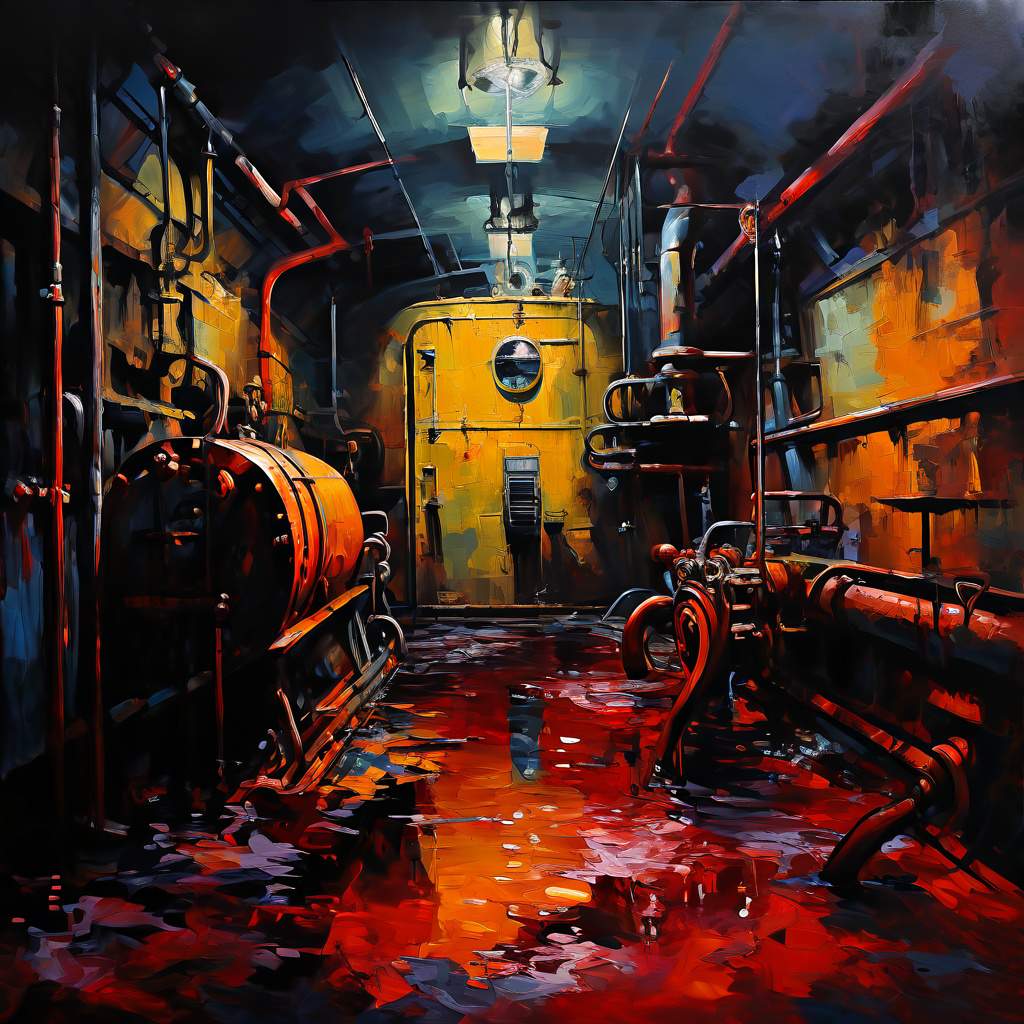
Markiplier’s Iron Lung Sets New Horror Record With 80,000 Gallons of Blood
Mark Fischbach, the creator known globally as Markiplier, has achieved an unprecedented milestone with his feature directorial debut “Iron Lung.” The low-budget horror adaptation has officially broken the cinematic record for on-camera blood usage, utilizing approximately 79,800 gallons of stage blood during production. This figure eclipses the previous record established by the 2013 “Evil Dead” remake. Beyond this production superlative, the film has emerged as a commercial triumph, generating $51.2 million in global box office receipts against a modest $3 million production budget, further validating the migration of digital-native creators into theatrical filmmaking.
The Blood Volume Record
The claustrophobic submarine thriller, based on David Szymanski’s indie video game sensation, required extraordinary quantities of artificial blood to realize its central visual premise: an entire ocean composed of blood on a distant alien world. According to production records detailed by Fischbach in a Deadline interview, “Iron Lung” employed 79,800 gallons of the viscous fluid, establishing a new benchmark for cinematic bloodshed. This total surpasses the previous estimated record of 70,000 gallons set by Fede Álvarez’s 2013 “Evil Dead” remake during its climactic blood-rain sequence.
The achievement represents not merely a production footnote but a logistical feat involving industrial-scale fluid management, with the substance requiring delivery via semi-trucks and significant dilution before cameras could roll. The sheer volume required specialized pumping systems and continuous filtration to maintain consistency across the week-long filming period, creating a controlled hazardous environment that demanded strict safety protocols despite the artificial nature of the substance.
Engineering the Blood Flow: Technical Methodology
Rather than relying on shipment invoices to estimate usage, Fischbach employed a calculation methodology based on hydraulic engineering principles and set volume capacity. The production utilized two Honda WH20 pumps, each rated for 119 gallons per minute output. Accounting for real-world variables affecting flow rates, the director applied a conservative 80% efficiency calculation, yielding an operational rate of 190 gallons per minute across both units.
The blood-flooding sequences were captured during the final week of principal photography, with pumping operations running for approximately eight hours total. In subsequent interviews, Fischbach noted his decision to further conservative estimates by calculating the duration as seven hours rather than eight. The mathematical breakdown reveals the record total: 420 minutes of operation multiplied by 190 gallons per minute produces the final 79,800-gallon figure. This approach required careful documentation of behind-the-scenes footage showing each basin filling and draining cycle, providing empirical verification of the volumes achieved.
The physical handling of the blood presented unique manufacturing challenges. The substance arrived on set in semi-trucks and required dilution to achieve usable viscosity levels for pumping and on-camera appearance. The production design centered on a rusty, single-person submarine set that required continuous flooding and draining operations, with lead actor portrayal involving extended sequences standing in pools of the substance as blood leaked into the hold.
Box Office Performance and Industry Implications
The financial trajectory of “Iron Lung” signals a significant shift in horror film economics and distribution patterns away from legacy studio franchises. With production costs contained to $3 million and current earnings exceeding $51.2 million, the feature demonstrates the profitability potential of micro-budget horror when combined with established digital-native audiences. This success aligns with a broader theatrical trend encompassing other creator-driven projects including “Skinamarink,” “Obsession,” “Backrooms,” and “The Amazing Digital Circus: The Last Act.”
These productions collectively suggest a diminishing reliance on decades-old intellectual property for genre success, potentially marking a generational transition in horror filmmaking leadership. While current observations note that this emerging wave has been predominantly led by male creators—with notable exceptions including “Digital Circus” director Gooseworx—the commercial viability demonstrated by these projects suggests expanding opportunities for diverse voices in the micro-budget space. The film’s performance serves as empirical evidence that 2010s-era studio franchise dependency may be yielding to independently financed, creator-driven horror that leverages built-in online audiences for theatrical marketing.
Cinema’s Bloodiest Moments: Historical Context
The quantity of fluid deployed in “Iron Lung” dwarfs previous cinematic achievements in artificial blood usage. For scale comparison, an Olympic-sized swimming pool holds approximately 660,000 gallons, placing the film’s blood usage at roughly 12% of that volume—an immense quantity for a single set.
Historical comparisons reveal the exponential growth of practical blood effects in contemporary horror:
- “Evil Dead” (2013): 70,000 gallons (previous record holder), with 50,000 gallons dedicated solely to the climactic blood-rain sequence
- “It: Chapter Two” (2019): 5,000 gallons for the bathroom flooding scene featuring Jessica Chastain’s character
- “Evil Dead Rise” (2023): Approximately 1,700 gallons according to director Lee Cronin
- “The Shining” (1980): 300 gallons for the iconic elevator blood sequence
- “The Evil Dead” (1981): 200–300 gallons for Sam Raimi’s original production
The disparity between the 2013 “Evil Dead” and its 2023 sequel “Evil Dead Rise” illustrates how specific narrative requirements drive fluid volume rather than simple competitive escalation. However, “Iron Lung” represents a new magnitude entirely, appropriate to its narrative premise of a blood ocean containing mysterious leviathans.
What’s After the Movie?
Looking for more insights on groundbreaking horror productions and box office surprises? What’s After the Movie delivers comprehensive coverage of industry news, financial performance data, and production deep-dives for film enthusiasts and industry observers alike. Explore our complete database of movie summaries, ending explanations, and theatrical performance metrics at https://www.whatsafterthemovie.com, browse current box office trends at https://www.whatsafterthemovie.com/box-office, or dive into our latest industry analysis at https://www.whatsafterthemovie.com/blog.
Continue reading




What's After the Movie?
Not sure whether to stay after the credits? Find out!
Check out our other apps:

SAT Sphere
Build confidence for the Digital SAT.

Mori Atlas
Discover wild places worth protecting.

Luntero
Search smarter for a home in Amsterdam.

Plot Explained
Unravel movie endings and hidden clues.

Pokechamp
Dive into Pokémon data and battle logic.

Driving Theory
Get ready for your European theory test.

Movie Dust
Plan your next cinema trip with ease.

Musemap
Find art and culture as you travel.

Selkobase
Compare credentials before committing.

Local Manual
Turn an unfamiliar country into practical next steps.

Lernavi
Compare school systems before your next move.

GymRoam
Find a workout stop wherever your plans take you.
Explore Our Movie Platform
New Movie Releases (2026)
Famous Movie Actors
Top Film Production Studios
Movie Plot Summaries & Endings
Major Movie Awards & Winners
Best Concert Films & Music Documentaries
Movie Collections and Curated Lists
© 2026 What's After the Movie. All rights reserved.
Privacy Policy