What's After the Blog?
review • release date
Exit 8 Review: Japanese Liminal Horror Trapped in Repetitive Loops
Genki Kawamura directs this adaptation of the viral walking simulator video game "The Exit 8," starring Kazunari Ninomiya as a man caught in an endless underground corridor. While the film captures the claustrophobic dread of liminal spaces with a theatrical release set for April 10, 2026, its video game structure proves too monotonous for feature-length storytelling.
April 10, 2026
Exit 8 Review: Japanese Liminal Horror Trapped in Repetitive Loops
Japanese horror cinema continues probing the unease of transitional spaces with “Exit 8,” a theatrical adaptation attempting to translate viral gaming aesthetics to feature-length storytelling. Directed by Genki Kawamura and starring Kazunari Ninomiya, this atmospheric thriller follows a man trapped in an underground corridor nightmare, capturing the specific dread of liminal environments while wrestling with the structural limitations inherent to its source material. The film, which opens in theaters on April 10, 2026, arrives as part of a broader cultural fascination with “liminal horror”—the genre subset exploiting sparse hallways and abandoned locations that trigger both nostalgia and existential anxiety. While Keisuke Imamura’s cinematography creates a suffocating visual experience, the adaptation struggles to expand its thirty-minute walking simulator premise into satisfying narrative cinema, resulting in a mixed reception that highlights the challenges of interactive-to-linear translation.
From Viral Game to Theatrical Release: The Adaptation Challenge
The production emerges at a moment when liminal space horror dominates online discourse, driven by viral phenomena like the “Backrooms” trailer adaptation and atmospheric projects such as the podcast-based “Undertone.” “The Exit 8,” the video game source material, gained traction precisely for its minimalist approach to terror—stripping away complex narrative in favor of pure environmental anxiety. Players navigate an endless Japanese subway corridor, identifying subtle visual inconsistencies that determine whether they progress toward Exit 8 or remain trapped in infinite recursion. This gameplay loop, satisfying in short interactive bursts, presents significant adaptation challenges for traditional cinema, where passive viewing cannot replicate the agency of player decision-making. Kawamura faces the task of maintaining the game’s creeping dread while introducing narrative elements—character backstories, emotional stakes, and thematic resonance—sufficient to sustain ninety-plus minutes of screen time.
Plot and Character Dynamics: Fatherhood Fears in Looping Hallways
The narrative framework centers on a nameless protagonist identified only as The Lost Man, portrayed by Kazunari Ninomiya with a mounting desperation that anchors the surreal premise. The opening establishes his psychological vulnerability through domestic tension: a phone call from his girlfriend (Nana Komatsu) reveals an unexpected pregnancy, forcing immediate confrontation with his unreadiness for fatherhood. This emotional anchor provides the film’s metaphorical foundation, with the subsequent supernatural entrapment serving as externalization of his internal anxiety about responsibility and repetition.
Upon exiting the subway train, The Lost Man enters what initially appears to be a standard underground station corridor, only to discover the architecture loops infinitely with no apparent exit. A posted sign establishes the rules governing his prison: he must observe his surroundings carefully, identify any “anomalies” (objects or details that appear slightly or extremely wrong), and immediately turn around to restart the sequence. Success promises eventual escape through Exit 8; failure means continuing the loop indefinitely until physical or mental collapse.
The screenplay gradually expands beyond the solitary experience, introducing additional trapped souls who complicate the protagonist’s understanding of his predicament:
- The Walking Man (Yamato Kochi): A perpetually grinning figure who wanders the corridors with ambiguous intentions, eventually revealing his own parallel narrative
- The Boy (Naru Asanuma): A silent child whose presence suggests innocence corrupted by the environment
- The Teenage Girl (Kotone Hanase): A threatening presence who adds interpersonal danger to the environmental horror
Cinematography and Atmospheric Design
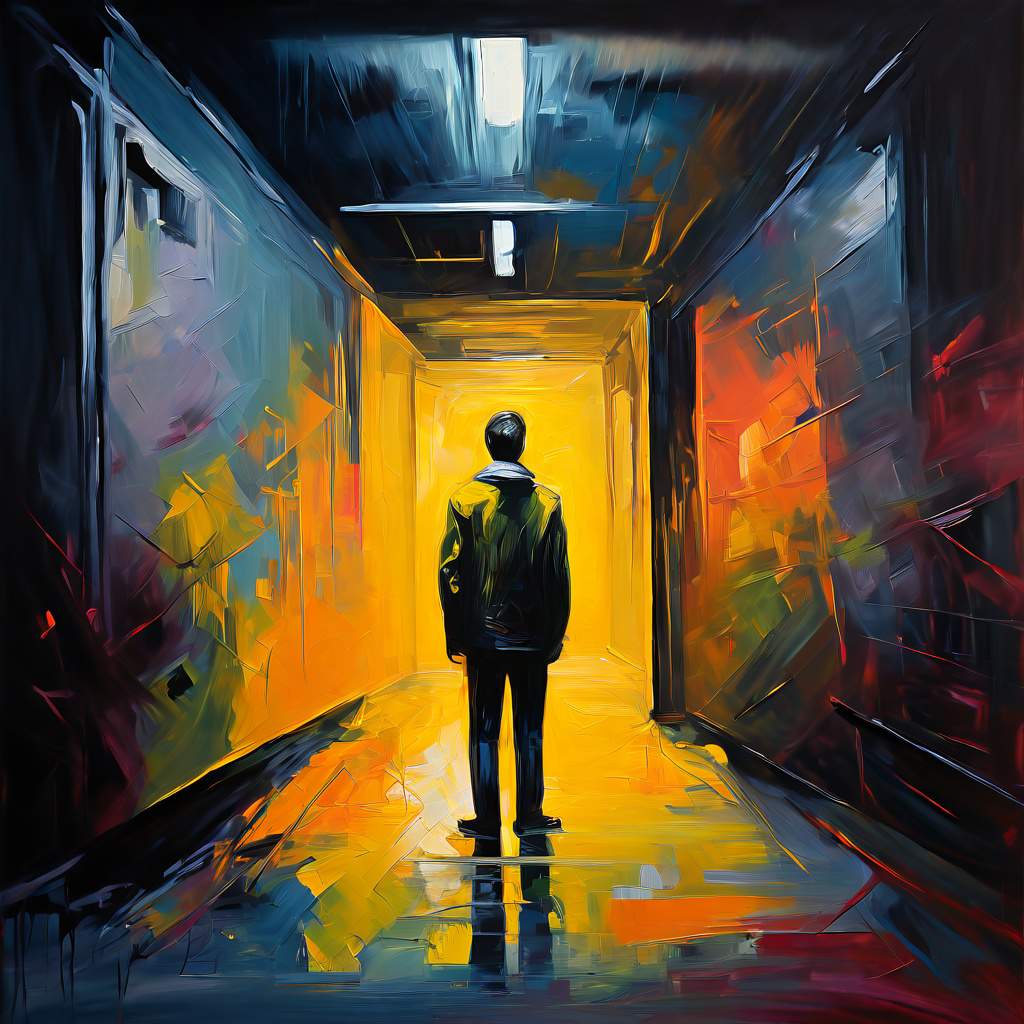
Technically, the production excels in atmosphere even when narrative momentum stalls. Cinematographer Keisuke Imamura transforms the simple corridor set into a suffocating psychological space, utilizing sterile fluorescent lighting and repetitive yellow walls to generate immediate claustrophobia. The visual approach emphasizes the “liminal” quality—spaces that exist between destinations, familiar yet alien, clean yet contaminated by unseen history.
The opening sequence employs an extended first-person POV perspective, initially suggesting the entire narrative might unfold through subjective camera work reminiscent of “Hardcore Henry” or the experimental approach of “Nickel Boys.” Though the film eventually shifts to traditional third-person coverage, this early choice establishes the protagonist’s disoriented perspective and isolation.
Horror elements manifest through environmental details rather than traditional scares:
- Station posters containing images that animate or shift when observed peripherally
- The auditory torture of unseen infants crying, linking to the pregnancy subplot
- Architectural bleeding—blood seeping from concrete walls and ceiling tiles
- Vermin infestations that suggest the supposedly clean space hides biological decay
These elements collectively create what reviewers describe as “bad vibes”—an overwhelming sense that the environment itself operates on hostile logic designed to erode sanity through subtle wrongness rather than overt threat.
Critical Reception: When Faithfulness Becomes Monotony
Critical assessment reveals significant tension between concept and execution. The film receives a 5.5 out of 10 rating from /Film, reflecting the divide between its atmospheric achievements and narrative frustrations. The central problem involves the very fidelity that might please game fans: the repetitive structure, engaging during thirty-minute gameplay sessions, becomes monotonous when stretched across feature runtime. Each loop through the corridor, while slightly varied through anomalies, fundamentally covers identical geography with increasingly diminishing returns.
Character behavior compounds these issues. Despite clear establishment of the rules—turn immediately upon spotting anomalies—The Lost Man repeatedly delays his retreats to examine details or engage in conversation, choices that strain credibility even when interpreted metaphorically. The screenplay attempts to justify this through thematic resonance, suggesting the protagonist’s inability to break destructive cycles mirrors self-sabotaging patterns in real life, particularly regarding the fear of fatherhood and responsibility. However, intellectual justification does not prevent the viewing experience from feeling, as one assessment notes, “tedious to watch.”
The fatherhood metaphor proves particularly heavy-handed, with the corridor functioning as both literal trap and psychological manifestation of commitment anxiety. While effective in theory, the on-the-nose symbolism combined with the protagonist’s slow comprehension creates narrative drag that undermines the visual tension Imamura’s camera work establishes.
Theatrical Release Details and Final Assessment
“Exit 8” receives its theatrical release on April 10, 2026, positioning the film for audiences specifically drawn to internet-native horror aesthetics. The marketing likely targets viewers familiar with the “Backrooms” phenomenon and similar viral creepypasta content—audiences who value atmospheric dread over narrative propulsion. For this demographic, the film offers exactly the kind of visual content suited to social media dissemination: spooky screenshots, GIFs of moving posters, and clips emphasizing the uncanny valley of the corridor lighting.
However, mainstream horror audiences may find the deliberate pacing and repetitive structure challenging. The film functions best as a mood piece—an experience prioritizing aesthetic immersion over traditional storytelling satisfaction. Liminal horror enthusiasts will likely appreciate the commitment to the specific subgenre’s visual language, even as they acknowledge the narrative limitations.
Ultimately, Kawamura’s adaptation succeeds in capturing the existential dread of its source material while failing to solve the fundamental translation problem between interactive and passive media. The result is a film that genuinely “gives you the creeps,” as promotional materials suggest, but potentially leaves viewers feeling as trapped as the protagonist—cycling through beautiful but monotonous imagery hoping for a narrative payoff that arrives too late to fully satisfy.
What’s After the Movie?
Looking for more atmospheric horror coverage and release date tracking? What’s After the Movie is your all-around destination for movie information, box office data, spoiler-free summaries, and industry news. Whether you’re researching upcoming theatrical releases or diving deep into film analysis on our blog, we provide comprehensive coverage of the titles you care about. Check out our movie collections to discover similar liminal horror films and track which genre entries are worth your time.
Continue reading




What's After the Movie?
Not sure whether to stay after the credits? Find out!
Check out our other apps:

SAT Sphere
Build confidence for the Digital SAT.

Mori Atlas
Discover wild places worth protecting.

Luntero
Search smarter for a home in Amsterdam.

Plot Explained
Unravel movie endings and hidden clues.

Pokechamp
Dive into Pokémon data and battle logic.

Driving Theory
Get ready for your European theory test.

Movie Dust
Plan your next cinema trip with ease.

Musemap
Find art and culture as you travel.

Selkobase
Compare credentials before committing.

Local Manual
Turn an unfamiliar country into practical next steps.

Lernavi
Compare school systems before your next move.

GymRoam
Find a workout stop wherever your plans take you.
Explore Our Movie Platform
New Movie Releases (2026)
Famous Movie Actors
Top Film Production Studios
Movie Plot Summaries & Endings
Major Movie Awards & Winners
Best Concert Films & Music Documentaries
Movie Collections and Curated Lists
© 2026 What's After the Movie. All rights reserved.
Privacy Policy