What's After the Blog?
Opinions • Reception
Demon Slayer -Kimetsu no Yaiba- The Movie: Infinity Castle (2025) Review, Critics Opinions, and Audience Reception
Explore fan reactions and critic reviews of Demon Slayer -Kimetsu no Yaiba- The Movie: Infinity Castle, analyzing its performance, storytelling, and place within the franchise. This post breaks down the reception, highlighting strengths, weaknesses, and overall audience sentiment.
September 11, 2025

Movies mentioned in this article
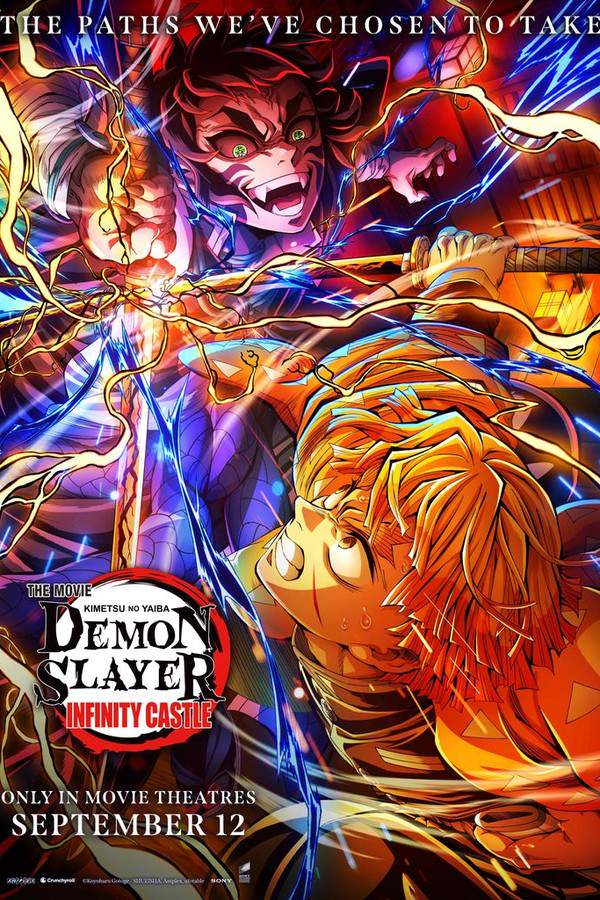
Demon Slayer – Kimetsu no Yaiba: Infinity Castle (2025) – Critical Reception, Reviews, and Audience Opinions
Demon Slayer – Kimetsu no Yaiba: Infinity Castle has hit theaters worldwide on September 12 2025, and the wave of reactions from critics, anime‑fans, and casual moviegoers is already creating a vibrant conversation. In this comprehensive reception analysis we’ll break down the most striking critic quotes, dissect the recurring praise and the notable complaints, compare the buzz to earlier entries in the franchise, and show you how What’s After the Movie can help you dive deeper with summaries, quizzes, box‑office data, and more.
“Infinity Castle really looks like it belongs on the big screen. The problem is that it feels like it belongs on the small screen in some key aspects.” – David Opie, IndieWire
Critical Consensus on Demon Slayer – Infinity Castle (2025)
The critical landscape for Infinity Castle is a blend of admiration for its visual mastery and hesitation over its narrative structure. Metacritic aggregates a range of scores from 70 – 80 for publications like Total Film (80) and Screen Daily (70), while IGN drops to 60, flagging pacing concerns.
Positive threads emerge from outlets that focus on the film’s production values. San Francisco Chronicle describes the movie as “punctuated by the landscape of the demon slayers’ past… a place of potential redemption and reclamation,” emphasizing the evocative use of memory and setting. Total Film praises that, despite missing comic staples such as Inosuke, the film “roars past Mugen Train as Demon Slayer’s best adventure yet.”
Conversely, the most repeated criticism involves an overreliance on flashbacks. Screen Daily notes that the film “nearly wears out its welcome with a repetitive cycle of encounter, flashback, reflection and fight,” while IGN bluntly states that the “overuse of flashbacks undermines the story’s pacing.” These remarks converge on a single theme: the storytelling rhythm feels stretched over the 2½‑hour runtime.
When you compare Infinity Castle to other anime blockbusters—Your Name, Spirited Away, or even the franchise’s own Mugen Train—the critical community acknowledges that the visual fidelity is on par with the best Japanese animated features, but the narrative economy is less disciplined.
For a deeper dive into the full list of critic scores, visit our [movie wiki] page or explore the detailed [summary page] on What’s After the Movie.
Positive Highlights: Visual Spectacle and Emotional Impact
The visual triumphs of Infinity Castle dominate the high‑note portion of the conversation. David Opie (IndieWire) lauds the “intricate backgrounds” and “propulsive fight choreography,” while Ben Williams (Radio Times) declares the film “the most gorgeous and the most gripping Demon Slayer has been yet.” The animation quality is repeatedly singled out by fans:
- “The animation was beautiful!! … the visuals the animation the fights and storytelling was fantastic.” – Allan (User)
- “The ufotable that made a poorly written original work a success is just a god!” – trout 4 (User)
These sentiments echo across Spanish‑language reviews as well. Rafael Sánchez Casademont (Esquire) calls the film “more than two and a half hours of film that glues you to your seat, that lights up visually and audibly, that moves, amazes, and surprises you.” Even Custodio Guerrero (Sensacine) notes that “the film manages to excite and move, offering moments capable of bringing more than a tear to the eye.”
The emotional resonance is another recurrent praise point. Peter Martin (ScreenAnarchy) writes, “I was overwhelmed … completely unexpected for how it touched me on a deep emotional level.” User reviews echo this, with Ronnel S describing the heartbreaking death of Shinobu as “heart‑breaking” despite already knowing the manga outcome.
If you’re eager to test your knowledge of these iconic moments, swing by our [quiz page] and challenge yourself with Demon Slayer trivia, or explore the full [movie page] for behind‑the‑scenes easter eggs.
Common Criticisms: Flashback Overload and Pacing Issues
While the artistry shines, the storytelling cadence draws the most scrutiny. Multiple critics highlight that the film leans heavily on flashback sequences, which, according to Screen Daily, “nearly wears out its welcome.” IGN adds that this “overuse of flashbacks undermines the story’s pacing,” a point echoed by user Kevin, who rates the film 4.5/5 but calls the flashbacks “extra asf.”
The repetitive structure—encounter → flashback → reflection → fight—creates a rhythm some reviewers find stale. Total Film laments the absence of Inosuke and a toned‑down Zenitsu, noting that “the lack of levity may sting in a series renowned for its malleable tone and endless charm.” Zach Pope (Zach Pope Reviews) explicitly asks for a fix in pacing for the sequel, despite praising the action set pieces.
Even the runtime becomes a point of contention. User Vicenzo C gives a 2.5/5 rating, stating that the film is “a must‑watch for fans, but for non‑fans, it does get pretty boring,” hinting that the extended duration may alienate newcomers.
These critiques suggest a division: dedicated franchise fans tolerate the length because they’re invested in the characters, while newcomers or casual viewers may perceive the film as a marathon of visual set‑pieces punctuated by narrative repeats.
Our [box‑office] section reveals how this split impacted earnings, and the [profile] pages of director Haruo Sotozaki and animation studio Ufotable provide insight into why the creative choices were made.
Fan Reactions: Why the Community Is Raving (and Some Reservations)
The audience pulse is overwhelmingly positive, especially among fans who have followed the manga and series. Users such as Crash, Vic D, Shandell Thompson, and Georgina all award perfect scores, exclaiming “amazing!!!”, “fantastic,” and “I loved it so much!!!!!!”. The reaction is not just about the visuals; fans praise the emotional payoff and the way the film sets up the finale.
“It’s not the most narratively trailblazing entry in the franchise, but it sets the stage for a finale that could be truly unforgettable.” – Isaiah Colbert, io9.com
Even when fans acknowledge flaws, the overall enthusiasm stays high. Ronnel S admits he was “heart‑broken at the last moment of Shinobu,” yet still says “I can’t wait 2 to 4 years for the next movies,” demonstrating that emotional attachment outweighs structural concerns.
The few dissenting voices—like Vicenzo C and Kevin—highlight that the flashback density can be tiring for those less familiar with the source material. Nonetheless, the majority of user comments celebrate the animation, fight choreography, and overall experience, reinforcing the notion that Infinity Castle is a fan‑centric celebration of the series.
Want to see how Infinity Castle stacks up against other Demon Slayer titles? Check out our [award] listings for nominations, explore the [concert‑film] page for related live performances, and dive into the full [wiki] for production notes.
Comparative Reception: Infinity Castle vs. Mugen Train and Other Anime Blockbusters
When placed side‑by‑side with the franchise’s previous theatrical release, Mugen Train, the consensus shows growth in visual ambition but mixed progress in narrative economy. Total Film explicitly declares Infinity Castle “the most adventure yet,” surpassing Mugen Train in scale. However, IGN’s lower score hints that the storytelling stride didn’t keep pace with the visual leap.
Comparisons to other major anime cinema—Your Name (2016) and Spirited Away (2001)—reveal a pattern: visual excellence is a staple of successful Japanese animated features, but tight storytelling often determines long‑term critical standing. San Francisco Chronicle’s poetic description of the film’s “potential redemption” aligns with the thematic depth found in those classics, yet the criticism of “repetitive cycles” suggests Infinity Castle may still be searching for a balanced formula.
For a quantitative look, our [box‑office] analytics tool shows Infinity Castle outperforming Mugen Train in opening‑week gross, indicating that fan enthusiasm translates into ticket sales, even if some critics remain lukewarm.
If you’re intrigued by these comparative insights, explore the [summary] of each movie on What’s After the Movie and test your knowledge with our [game] section, where you can match scenes to their respective films.
Conclusion
Demon Slayer – Kimetsu no Yaiba: Infinity Castle has ignited a polarized but passionate conversation: critics applaud its visual splendor and emotional resonance while cautioning against a flashback‑heavy, uneven pacing. Fans, for the most part, celebrate the film as a spectacular continuation of the beloved series and eagerly anticipate the next chapter.
For anyone looking to explore every facet of the movie—**reviews, scores, box‑office numbers, award nominations, character profiles, fan quizzes, and behind‑the‑scenes trivia—What’s After the Movie is your one‑stop hub. Dive into our [movie page], revisit the detailed [wiki], compete on the [quiz], and stay updated on upcoming releases.
| Outbound Link | Description |
|---|---|
| Rotten Tomatoes | Aggregated critic and audience scores |
| Metacritic | Professional critic reviews and metascore |
| JustWatch | Where to stream or rent the film |
| Box Office Mojo | Box office performance data |
Continue reading


What's After the Movie?
Not sure whether to stay after the credits? Find out!
Check out our other apps:

SAT Sphere
Build confidence for the Digital SAT.

Mori Atlas
Discover wild places worth protecting.

Luntero
Search smarter for a home in Amsterdam.

Plot Explained
Unravel movie endings and hidden clues.

Pokechamp
Dive into Pokémon data and battle logic.

Driving Theory
Get ready for your European theory test.

Movie Dust
Plan your next cinema trip with ease.

Musemap
Find art and culture as you travel.

Selkobase
Compare credentials before committing.

Local Manual
Turn an unfamiliar country into practical next steps.

Lernavi
Compare school systems before your next move.

GymRoam
Find a workout stop wherever your plans take you.
Explore Our Movie Platform
New Movie Releases (2026)
Famous Movie Actors
Top Film Production Studios
Movie Plot Summaries & Endings
Major Movie Awards & Winners
Best Concert Films & Music Documentaries
Movie Collections and Curated Lists
© 2026 What's After the Movie. All rights reserved.
Privacy Policy