What's After the Blog?
review • news
The Death of Robin Hood Review: Hugh Jackman Leads Violent Medieval Drama
The Death of Robin Hood reimagines the legendary outlaw as a haunted killer in his final days. Hugh Jackman stars in Michael Sarnoski's violent, melancholic deconstruction set for theatrical release on June 19, 2026.
June 13, 2026
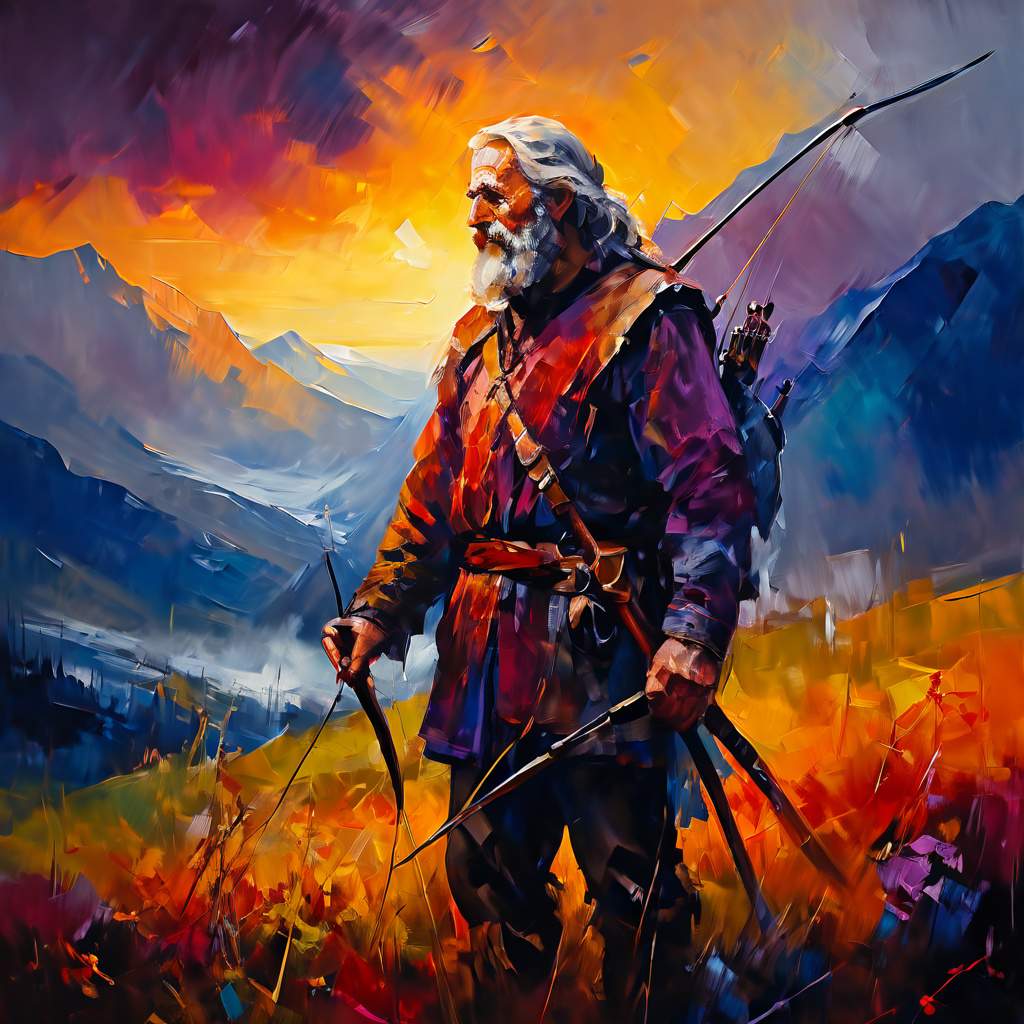
The Death of Robin Hood Review: Hugh Jackman Leads Violent Medieval Drama
Six centuries after the legend first took root, the tale of Robin Hood receives its most somber interpretation yet. The Death of Robin Hood, directed by Michael Sarnoski, presents Hugh Jackman as an aged outlaw consumed by regret and violence, offering a stark counterpoint to the swashbuckling heroism of previous adaptations. The film trades romantic adventure for a blood-drenched meditation on mortality, positioning Robin not as a noble thief but as a self-proclaimed monster living in seclusion during 1247 A.D.
This latest iteration arrives as studios continue mining public domain characters for fresh perspectives. While earlier versions emphasized heroism or revolutionary charm, Sarnoski’s vision focuses entirely on finality and consequence. The result is a deliberately paced, grief-stricken character study that bears closer resemblance to revisionist Westerns than to traditional medieval adventures.
Reimagining a 600-Year-Old Legend
The film immediately establishes its grim tone through its opening sequence. Jackman’s Robin, sporting long white hair and a feral beard, brutally murders a young woman who attempts to assassinate him. This is no case of self-defense against tyranny; the body joins others buried in a field outside his hermitage, implying a long history of lethal encounters. The narrative posits that the heroic ballads circulating throughout England are pure fiction. The real Robin Hood is a thief and killer who has spent decades eliminating anyone who crosses his path, including the descendants of his original victims.
Sarnoski, who previously subverted action expectations with Pig and elevated franchise material with A Quiet Place: Day One, structures the film as an examination of perpetual violence. Robin exists within a cycle he cannot escape—attackers arrive seeking glory or vengeance, and he responds with ruthless efficiency. The screenplay draws comparisons to Richard Lester’s 1976 film Robin and Marian, which similarly examined aging outlaws, but replaces that film’s romantic adventure with nihilistic bloodshed. Critics note parallels to James Mangold’s Logan, another portrait of an aging warrior haunted by his legacy.
The film references numerous previous adaptations that have shaped popular understanding of the character:
- Errol Flynn in the 1938 swashbuckling classic The Adventures of Robin Hood
- Disney’s 1973 animated version, featuring Robin as an anthropomorphic fox
- Kevin Costner in the 1990s blockbuster Robin Hood: Prince of Thieves
- Mel Brooks’ parody Robin Hood: Men in Tights
- Russell Crowe in Ridley Scott’s 2010 action-oriented Robin Hood
- Taron Egerton in the 2018 reboot that failed to find an audience
Plot and Thematic Resonance
The narrative divides roughly into two distinct movements. The first comprises shockingly violent action sequences where Robin and Little John massacre targets with brutal efficiency. The violence is explicit—faces are pounded into pulp, jaws are ripped from skulls, and the sound design emphasizes every squelching, crunchy detail. This section serves as a deception on Sarnoski’s part, establishing expectations for an action film that the remainder of the runtime systematically dismantles.
After Robin suffers grave wounds, Little John deposits him on a mysterious island where a castle priory serves as a respite for the sick and dying. Here, the film transitions into a slow-burning meditation on legacy and remorse. Robin, fevered and delirious, initially begged his caretaker to let him die—a revelation that haunts him as he recovers. The island becomes a purgatorial space where the aging outlaw must confront whether his survival instinct has become indistinguishable from his death drive.
The screenplay explores whether Robin feels genuine remorse or simply exhaustion. Jackman plays the character as intentionally difficult to read, a man who kills because it is all he knows. His entire existence has been devoted to death, leaving him unprepared for the kindness shown by those nursing him back to health.
Cast and Character Dynamics
The ensemble surrounds Jackman’s central performance with distinct personalities that reflect various responses to trauma:
- Bill Skarsgård as Little John, delivering a physically demanding performance characterized by gruff vocal textures and moral ambiguity
- Jodie Comer as Sister Brigid, the kindly nun who oversees the island sanctuary and serves as the film’s primary source of warmth
- Murray Bartlett as a mysterious leper hiding secrets about Robin’s past, appearing nearly unrecognizable under prosthetics
- Noah Jupe as a young man with apparent ulterior motives that Robin immediately recognizes
- Faith Delaney as Margaret, a traumatized young girl who befriends Robin and requests he make her an archer’s bow
The relationship between Robin and Margaret reinforces the Logan comparisons, as an aging killer’s frozen heart begins thawing through connection with an innocent. Meanwhile, Comer’s Sister Brigid fascinates Robin not through romantic attraction but through simple kindness—a quality foreign to his experience. Their dynamic provides the film’s emotional core, suggesting that redemption might be possible even for those who have committed unforgivable acts.
Visual Style and Atmospheric Direction
Sarnoski collaborated with cinematographer Pat Scola to create a visual language that mirrors Robin’s psychological constriction. The film opens with a wide, classical aspect ratio emphasizing the vastness of the English landscape, only to shift toward a more boxed-in format once Robin reaches the island priory. This technical choice reinforces the narrative’s turn from external action to internal reckoning.
Shooting locations across Northern Ireland provide the film with its tactile sense of place. Images of rippling seas against wide-open fields and looming mountains create a world that feels simultaneously beautiful and indifferent to human suffering. The environment’s mud and blood frequently coat Jackman’s costume, grounding the medieval setting in physical reality rather than Hollywood gloss.
Composer Jim Ghedi contributes a score that blends traditional folk songs with low, sorrowful string arrangements. The music emphasizes longing and regret rather than excitement, supporting the film’s status as what reviewers describe as an “ultra-violent, melancholy myth deconstruction.”
Critical Reception and Release Information
Early reviews suggest the film succeeds more as an atmospheric mood piece than as an action blockbuster. /Film awarded the movie a 7 out of 10, praising its ability to generate “pensive sadness” through accumulated detail rather than through traditional emotional beats. Critics acknowledge that the deliberate pacing may test viewers expecting conventional adventure, but find the slow-burn approach appropriate for the subject matter.
The review notes that while this interpretation is unlikely to supplant more popular versions of the character in public memory—specifically observing that most audiences would still choose Disney’s 1973 animated fox as their preferred Robin Hood—it represents a legitimate attempt to find new territory within exhausted material.
The film is scheduled for theatrical release on June 19, 2026. This positions the movie as a mid-summer counter-programming option, offering adult-oriented drama distinct from typical seasonal blockbusters.
What’s After the Movie
Looking for more insights on upcoming releases and critical reactions? What’s After the Movie provides comprehensive coverage of theatrical releases, box office analysis, and spoiler-free summaries for films like The Death of Robin Hood. Explore our review section for additional perspectives on major releases, or browse our movie database to discover similar medieval dramas and Hugh Jackman classics.
Continue reading


What's After the Movie?
Not sure whether to stay after the credits? Find out!
Check out our other apps:

SAT Sphere
Build confidence for the Digital SAT.

Mori Atlas
Discover wild places worth protecting.

Luntero
Search smarter for a home in Amsterdam.

Plot Explained
Unravel movie endings and hidden clues.

Pokechamp
Dive into Pokémon data and battle logic.

Driving Theory
Get ready for your European theory test.

Movie Dust
Plan your next cinema trip with ease.

Musemap
Find art and culture as you travel.

Selkobase
Compare credentials before committing.

Local Manual
Turn an unfamiliar country into practical next steps.

Lernavi
Compare school systems before your next move.

GymRoam
Find a workout stop wherever your plans take you.
Explore Our Movie Platform
New Movie Releases (2026)
Famous Movie Actors
Top Film Production Studios
Movie Plot Summaries & Endings
Major Movie Awards & Winners
Best Concert Films & Music Documentaries
Movie Collections and Curated Lists
© 2026 What's After the Movie. All rights reserved.
Privacy Policy