What's After the Blog?
analysis • feature
Cop Land Revisited: Stallone's 1997 Modern Western Thriller
James Mangold's 1997 police thriller 'Cop Land' stands as a pivotal modern Western, featuring Sylvester Stallone in a transformative, against-type performance as a small-town sheriff. Despite generating significant pre-release Oscar buzz and assembling a powerhouse cast of Scorsese regulars, the August 1997 release underperformed commercially before earning critical reappraisal as a 'High Noon' for the contemporary era.
May 16, 2026
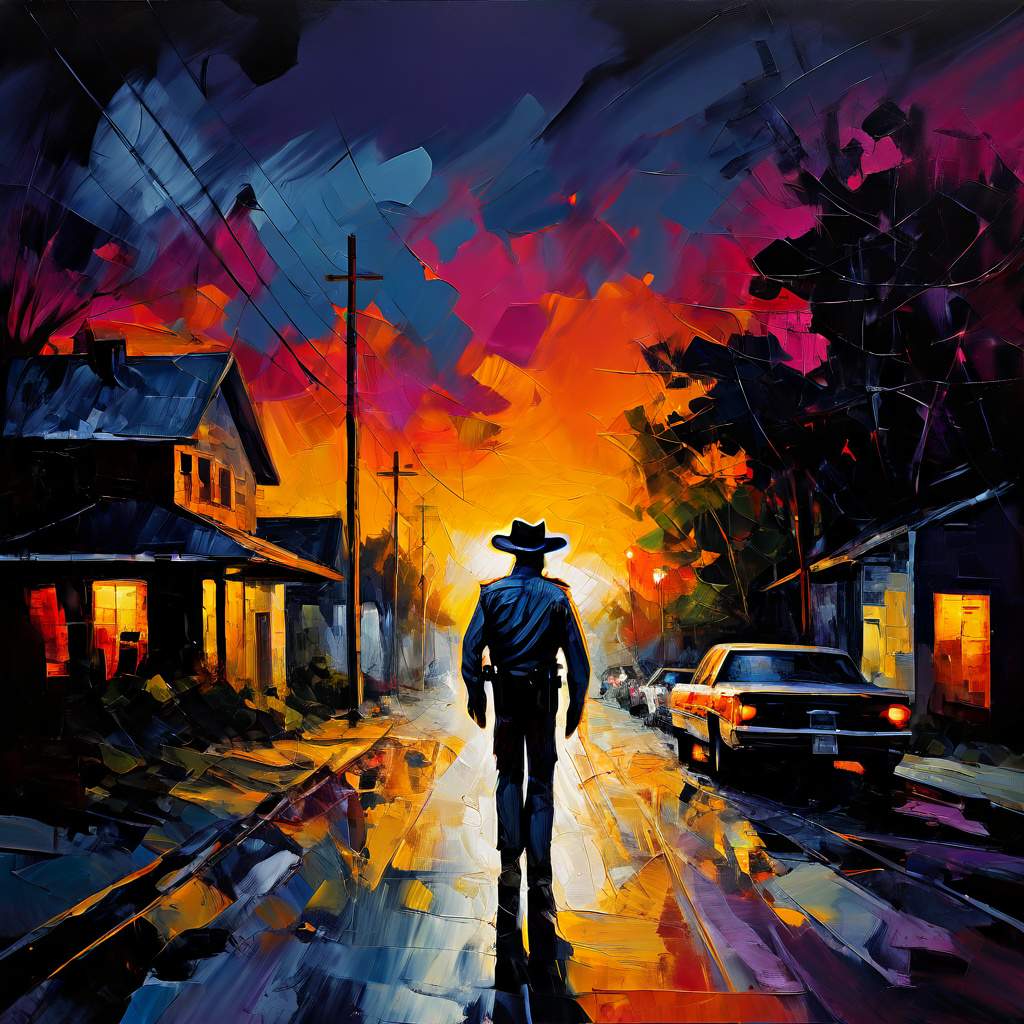
Cop Land Revisited: Stallone’s 1997 Modern Western Thriller
Long before Taylor Sheridan’s “Yellowstone” empire redefined the Western for contemporary audiences, director James Mangold was quietly perfecting the modern-day iteration of the genre. His 1997 thriller Cop Land arrived at a unique intersection of police procedural and classic Western tropes, offering a gritty, character-driven examination of corruption and redemption set against the unlikely backdrop of a small New Jersey town. While the film has spent decades flying under the radar following a lukewarm theatrical run, recent reassessments have positioned it as an essential entry in the Western canon—a bruised, working-class answer to the mythic frontier tales of Hollywood’s golden age.
Mangold’s Early Western Vision
The Western genre has always operated in cycles, flourishing between the 1940s and 1950s before retreating into niche status, only to resurface when cultural winds shift. While Sheridan currently dominates the conversation with his ever-expanding slate of Montana-based dramas, Mangold established his Western credentials years earlier. His remake of 3:10 to Yuma and the neo-Western stylings of Logan—which explicitly channeled the influence of Shane—demonstrated his affinity for morally complex landscapes and weathered protagonists.
However, Cop Land marked Mangold’s first successful synthesis of these elements. Released in August 1997, the film transplanted the isolation and moral ambiguity of frontier towns to a bedroom community populated by corrupt New York City police officers. This setting allowed Mangold to explore classic Western themes—the lone lawman, institutional corruption, and personal redemption—through the lens of 1990s urban anxiety and post-industrial decay. The result was a film that felt both immediate and timeless, grounded in the specific cultural moment yet resonant with the eternal Western preoccupation with justice and conscience.
The Casting Gamble: From Sinise to Stallone
The production history of Cop Land reveals a fascinating tension between intimate indie origins and star-driven studio expectations. Mangold originally envisioned the project as a significantly smaller film, reportedly hoping Gary Sinise would assume the lead role of Sheriff Freddy Heflin. When Sylvester Stallone became attached to the project, the director harbored serious reservations, going so far as to provide the action star with a strict list of behaviors to avoid during production.
To Stallone’s credit, he adhered to Mangold’s restrictions without deviation. The director later confirmed that Stallone “never suggested a change to the script, he never told me how I should shoot him, he never interfered in the movie production at all.” This professional discipline allowed Stallone to deliver a genuinely transformative performance, packing on weight to portray Freddy as a weary, beaten-down figure bearing the “small-town energy of a character from a Bruce Springsteen song.”
The supporting cast assembled around Stallone reads like a roll call of Martin Scorsese’s regular collaborators, lending the production instant cinematic gravitas:
- Robert De Niro as Internal Affairs officer Moe Tilden
- Ray Liotta as the twitchy, substance-abusing cop Figgsy
- Harvey Keitel as the smirking, corrupt Ray Donlan
- Michael Rapaport as Donlan’s trigger-happy nephew
- Annabella Sciorra as the love interest who got away
August 1997: Expectations Versus Reality
The lead-up to Cop Land’s release generated substantial industry buzz, particularly regarding Stallone’s dramatic physical transformation and against-type casting. Industry observers and critics speculated widely about potential Oscar recognition for the actor’s willingness to abandon his action-hero persona in favor of vulnerable, character-driven work. The combination of Mangold’s rising reputation, the Scorsese-adjacent cast, and Stallone’s physical commitment created a perfect storm of anticipation.
When the film hit theaters in August 1997, however, the reality proved more complicated. Cop Land avoided the indignity of being labeled an outright box office flop, yet it failed to meet the lofty expectations set by its own pre-release hype. The film quickly faded from pop-culture consciousness, in part because it fell victim to the very star-driven marketing that had positioned it as a prestige picture. Mangold himself admitted in a 2017 interview that the film’s underwhelming reception stemmed partly from audience expectations shaped by Stallone’s involvement, which overshadowed the movie’s more modest, character-study ambitions.
Springsteen, Scorsese, and Small-Town Decay
Beyond its narrative mechanics, Cop Land derives much of its power from its specific cultural texture. The film’s atmosphere draws heavily from the working-class poetics of Bruce Springsteen, with two of the artist’s songs featured prominently on the soundtrack. Critics have noted the film’s affinity with the low-key, melancholic Springsteen of The River and Nebraska rather than the stadium-rocking anthems of his commercial peak—a sonic choice that reinforces the film’s themes of dashed dreams and quiet desperation.
Ray Liotta’s performance as Figgsy deserves particular recognition for its raw, twitchy intensity. Mangold and critics alike have drawn comparisons between Liotta’s portrayal of a substance-abusing officer and Dean Martin’s drunken gunfighter in Howard Hawks’ Rio Bravo. This connection to classic Western archetypes extends throughout the film, creating a dialogue between the genre’s past and its urban present. De Niro’s appearance as an Internal Affairs investigator adds another layer of institutional tension, representing the external threat to the closed society of corrupt cops that mirrors the approaching killers in High Noon.
High Noon in the Garden State
At its structural core, Cop Land follows the High Noon template with remarkable fidelity while transposing the action from a dusty frontier to the streets of suburban New Jersey. Sylvester Stallone’s Freddy Heflin serves as the Gary Cooper figure—a lawman who has spent years looking the other way while his town became a haven for corrupt NYC cops led by Keitel’s Ray Donlan. When Donlan conspires to protect his nephew after the younger man guns down a car full of unarmed Black men, Freddy must choose between loyalty to his community and his dormant sense of justice.
The film builds toward a climax that explicitly honors its Western heritage: Sheriff Freddy stalks through empty streets armed with nothing but his sense of duty, engaging in a shocking, bloody shootout that serves as the film’s most overtly genre-inspired moment. This sequence delivers the “heart-pounding, fist-pumping” catharsis Western fans crave while maintaining the grounded, gritty realism that distinguishes the film from both classic Westerns and contemporary action cinema. Freddy’s arc—from complicit bystander to active agent of justice—recalls the classic Western redemption narrative, updated for an era skeptical of heroes and institutions alike.
From Underperformer to Cult Classic
Twenty-seven years after its release, Cop Land has undergone a significant critical rehabilitation. Removed from the burden of 1997’s Oscar expectations and Stallone’s action-hero baggage, the film now reads as a prescient examination of police corruption and moral compromise that feels increasingly relevant. Mangold’s direction—restrained, character-focused, and visually precise—points toward the acclaimed career that would follow, while the ensemble cast represents a snapshot of 1990s cinematic talent at its peak.
For viewers discovering the film today or revisiting it after decades, Cop Land offers a unique hybrid: the moral clarity and structural satisfaction of classic Westerns filtered through the gray, compromised world of 1990s urban crime cinema. It stands as proof that the Western never truly disappeared—it simply moved east, traded horses for police cruisers, and learned to see the frontier in the spaces between cities.
Discover More with What’s After the Movie
If you’re exploring the intersections of classic genres and modern cinema, What’s After the Movie offers comprehensive coverage of film history, box office analysis, and hidden gems worth rediscovering. From spoiler-free summaries to ending explanations for complex thrillers like Cop Land, our database helps you navigate everything from 1990s cult classics to today’s streaming releases. Visit our movies collection to explore similar modern Westerns and police procedurals that bridge the gap between historical genres and contemporary storytelling.
Continue reading




What's After the Movie?
Not sure whether to stay after the credits? Find out!
Check out our other apps:

SAT Sphere
Build confidence for the Digital SAT.

Mori Atlas
Discover wild places worth protecting.

Luntero
Search smarter for a home in Amsterdam.

Plot Explained
Unravel movie endings and hidden clues.

Pokechamp
Dive into Pokémon data and battle logic.

Driving Theory
Get ready for your European theory test.

Movie Dust
Plan your next cinema trip with ease.

Musemap
Find art and culture as you travel.

Selkobase
Compare credentials before committing.

Local Manual
Turn an unfamiliar country into practical next steps.

Lernavi
Compare school systems before your next move.

GymRoam
Find a workout stop wherever your plans take you.
Explore Our Movie Platform
New Movie Releases (2026)
Famous Movie Actors
Top Film Production Studios
Movie Plot Summaries & Endings
Major Movie Awards & Winners
Best Concert Films & Music Documentaries
Movie Collections and Curated Lists
© 2026 What's After the Movie. All rights reserved.
Privacy Policy