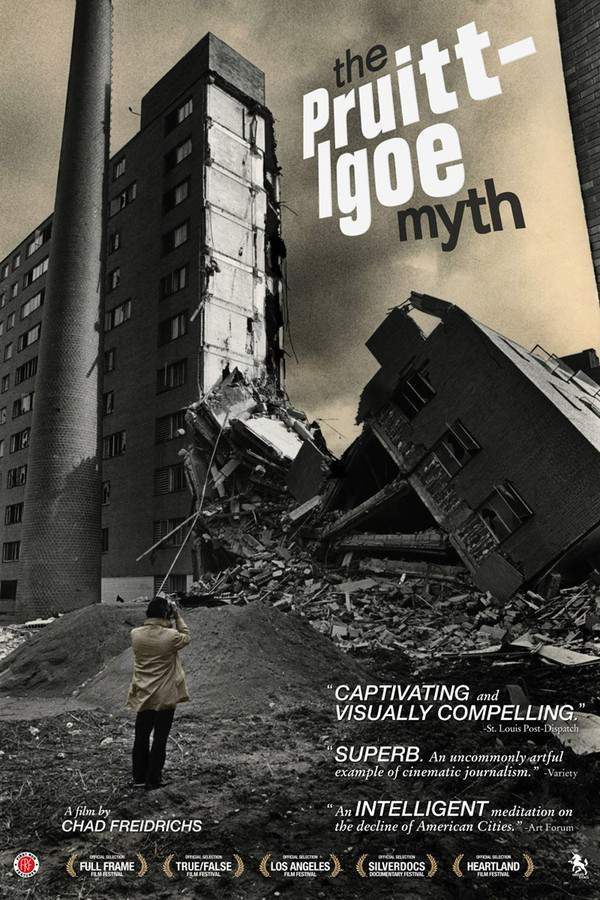
What Happens in The Pruitt-Igoe Myth?
The complete story of The Pruitt-Igoe Myth, from the first scene to the last, in 254 words (about 1 minute). Spoilers throughout.
Spoilers ahead
The film begins with a former resident of the Pruitt–Igoe public housing complex returning to the site of the buildings in the north side of St. Louis, and noting that in spite of the decades since the planned demolition of the buildings, the site remains largely vacant. It continues by detailing the decision by the city to replace 19th century tenement housing with high-rise public housing, ultimately designed by Minoru Yamasaki (later the famed designer of the World Trade Center) in the modernist style as thirty-three 11-floor buildings.
Interviews with former residents, archival images, and film are used to tell first impressions about moving into Pruitt–Igoe and the steady deterioration of living conditions during the 1960s and early 1970s before the destruction by planned implosion between 1972 and 1976.
The film takes issue with the various explanations for the failure of the Pruitt–Igoe complex that have developed since its demolition, including that it was the fault of the modernist theory of architecture itself (an explanation developed by architectural historian Charles Jencks)
or of the general concept of public housing.
Instead, the explanation offered is that the fate of the Pruitt–Igoe project was determined by the declining population and industrial base in St. Louis after World War II.
The documentary argues that this process left few jobs for the remaining residents, thus reducing funds available for maintenance and security of the buildings, which were planned to be paid for by tenant rents even as residents grew poorer and the living conditions in the project deteriorated.