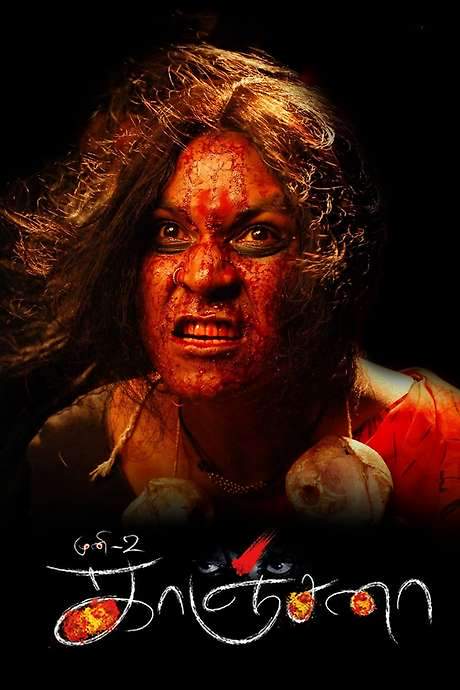
What Is Kanchana About?
The premise of Kanchana in 390 words, with nothing given away. The full story follows below.
In a modest neighbourhood where everyday chores mingle with whispered superstitions, Raghava lives a life defined by an irrational dread of the unseen. His fear is so acute that he clings to his widowed mother Sarala’s side, refusing to stay alone after nightfall and even sharing a bedroom to keep the darkness at bay. Though unemployed, he finds joy in the simple rhythm of cricket, gathering friends for impromptu matches that momentarily lift the weight of his anxieties. A budding romance with Priya, the spirited younger sister of his sister‑in‑law, adds a tender counterpoint to his otherwise nervous existence, hinting at a future that could finally ease his apprehensions.
When construction forces the gang to abandon their usual playing field, they stumble upon a neglected plot of land long rumored to be haunted. The eerie ambience of the site, coupled with an unsettling shift in the weather, suggests that the ground holds secrets darker than its overgrown weeds. Unbeknownst to the group, the very act of setting up a makeshift pitch awakens something that begins to linger in Raghava’s home, turning ordinary creaks and cold drafts into a persistent sense of being watched. The family, uneasy but hopeful, turn to the familiar comfort of ritual, inviting priests to probe the unseen and restore peace.
As strange disturbances grow, Raghava finds himself behaving in ways that feel alien—his temperament softens, his gestures become oddly graceful, and the line between his personality and an unfamiliar presence blurs. The once‑lighthearted household is thrust into a delicate balance of love, fear, and curiosity, as relatives scramble to comprehend the nature of the intrusion while Sarala and Kamakshi cling to their protective instincts. The atmosphere swells with a mix of comic relief and creeping dread, inviting the audience to wonder how far the unseen will push a man already terrified of the night.
The film weaves a distinctive blend of horror and humor, using the familiar setting of a close‑knit family to explore larger questions about fear, identity, and the unseen forces that linger behind ordinary lives. Its tone oscillates between laugh‑inducing mishaps and spine‑tingling suspense, ensuring that each moment feels both relatable and oddly otherworldly. This delicate dance of emotions keeps viewers on edge, eager to see whether Raghava can unravel the mystery that haunts his home without surrendering the very humanity he cherishes.
What Happens in Kanchana?
The complete story of Kanchana, from the first scene to the last, in 831 words (about 4 minutes). Spoilers throughout.
Spoilers ahead
Raghava, an unemployed young man, struggles with a severe case of phasmophobia, an irrational fear of ghosts, which causes him to avoid leaving his house after sunset. He prefers to sleep in his mother Sarala’s room and insists on her accompanying him to the restroom at night, disrupting the peace of their family. His family includes his widowed mother Sarala, his elder brother Prasad, Prasad’s wife Kamakshi, and their children.
One day, Raghava and his friends, who usually play cricket on a nearby ground, are forced to find a new location because construction work is taking place on their usual grounds. Accidentally, they choose an abandoned land that is believed to be haunted by supernatural entities. While attempting to set up a cricket pitch, a strange weather change causes them to abandon the site, but Raghava fails to notice that his cricket wickets have pierced the graves of buried corpses beneath the land, staining them with blood. This event hints at the dark history lurking beneath the land, which later ties into the supernatural happenings.
Meanwhile, Raghava develops feelings for Kamakshi’s younger sister Priya, who has come to stay with them. Their growing relationship faces complications as strange supernatural occurrences begin to disturb the family’s everyday life. Sarala and Kamakshi, worried about these bizarre events, secretly consult a priest. The priest suggests performing three rituals to test if a spirit resides in their home. To keep Raghava, Priya, and the children safe from the possible danger, they send them to Kamakshi’s maternal home under the pretense of checking on her ill father — a ruse to keep them away during the rituals.
When Sarala and Kamakshi conduct the rituals, their suspicions are confirmed: a ghost indeed haunts their house. They hire two supposed priests to rid the house of the spirit; however, these men are scammers and flee the scene after being chased away, falsely claiming they have exorcised the ghost. Despite their deception, Sarala and Kamakshi believe the spirit has been banished after paying the con men.
Raghava, Priya, and the children return home the next day, only to experience a chilling turn of events that culminate in Raghava becoming possessed by the very spirit haunting their house. His behavior changes drastically — he begins acting effeminate, becomes emotionally detached from Priya, and exhibits increasingly bizarre and unmanly conduct. One night, he is seen wearing a saree and women’s jewelry in public, embarrassing Sarala, who scolds him for his feminine acts. Things take a darker turn when Raghava strangulates a woman named Madhavi to death and unknowingly disposes of her body, which deepens the family’s confusion and fear.
Kamakshi eventually witnesses Raghava wearing her bangles and other possessions, leading her to confront him and reveal his disturbing transformation to her family. It becomes clear that Raghava is possessed by three spirits: a woman, an Urdu-speaking Muslim man, and an autistic man. In a panic, the family seeks help from a Muslim exorcist, who manages to expel the spirits from Raghava’s body. The exorcist forces the woman spirit, who identifies herself as Kanchana, to reveal her identity.
Kanchana’s tragic story unfolds as she discloses herself as a transgender woman, formerly named Karthik, who faced rejection from her parents because of her homosexuality. She was later adopted by a Muslim man named Akbar Bhai, who had an autistic son. Despite her own hardships, Kanchana pursued her dream of becoming a doctor, and her adopted daughter Geetha succeeded in earning a scholarship abroad for her postgraduate studies. Kanchana bought land intending to build a hospital for the poor, but her dreams were shattered when an influential MLA named Shankar unlawfully seized her land out of his own desire for Madhavi, a woman he loved. Shankar murdered Kanchana, Akbar Bhai, and his autistic son to cover his crime, burying their bodies beneath her land.
Moved by her story, the exorcist sympathizes with Kanchana but feels bound by duty to capture her spirit. Raghava, understanding Kanchana’s good intentions, decides to allow her to possess him so she can seek justice. In their combined form, Raghava/Kanchana confronts Shankar and his henchmen, who seek refuge in a Narasimha temple—an inviolable sanctuary where spirits cannot enter. Kanchana prays to Lord Narasimha to grant her permission to enter the temple, so she can eliminate Shankar for his heinous crimes. Her prayer is answered as she enters the temple and kills Shankar in a manner reminiscent of Narasimha killing Hiranyakashipu.
Several years later, the family celebrates the inauguration of a hospital built on the very land where Kanchana’s spirit had suffered so much. The hospital stands as a testament to her efforts and hopes for a better future. However, the story ends with a warning note: a few local goons arrive to threaten the family, asking for money for Kanchana, implying that her spirit will return whenever her aid is needed. This ongoing threat keeps her story alive, blending her quest for justice with the supernatural legend she left behind.
Kanchana Timeline: Every Key Event in Order
11 key events in the order they happen, from “Raghava develops phasmophobia” to “Threats and the return of Kanchana”. 5 events name a place, across 4 locations.
- 1
Raghava develops phasmophobia
Raghava, an unemployed young man, develops an irrational fear of ghosts, which leads him to refuse stepping out of his house after sunset. He prefers sleeping in his mother's room and insists she accompanies him to the restroom at night, disrupting the family's peace. His fearful behavior causes concern among his family members, including his widowed mother Sarala and brother Prasad.
- 2
Searching for a cricket ground
Raghava and his friends go in search of a new cricket ground since their usual one is under construction. They unwittingly choose an abandoned land believed to be haunted, and during setup, strange weather causes them to abandon the site temporarily. Unbeknownst to them, their cricket wickets pierce buried corpses stained with blood.
Where:Abandoned land
- 3
Supernatural disturbances begin
Back at home, Sarala and Kamakshi start experiencing strange supernatural occurrences, which terrify the family. To understand the phenomena, they consult a priest who suggests performing rituals to detect the presence of spirits in their house. The family becomes increasingly anxious as these events escalate.
Where:Family house
- 4
Rituals to detect spirits
Sarala and Kamakshi perform three rituals to test for spirits in their home. They then hire two conmen priests to perform an exorcism, believing they have successfully captured the ghost, though the priests are fraudulent. The family, unaware of the deception, continues to live in fear of the lurking supernatural entity.
Where:Family house
- 5
Raghava becomes possessed
After returning from a trip, Raghava falls under the influence of the spirits and begins to act uncharacteristically effeminate. He starts wearing women's jewelry and clothing, which embarrasses his family. His behavior worsens, leading to violent acts, including the strangulation and disposal of a woman named Madhavi.
- 6
Family confronts Raghava
Kamakshi and Prasad notice Raghava's strange behavior and realize he is possessed by three spirits—a woman, a Muslim man, and an autistic man. They are frightened and seek help from a Muslim exorcist, who successfully drives out the spirits from Raghava's body.
- 7
Revelation of Kanchana's past
The exorcist reveals Kanchana, the spirit possessing Raghava, is a transgender woman named Kanchana who was disowned by her family for her sexuality. She was adopted by Muslim family Akbar Bhai, who also had an autistic son. Kanchana's regret over her unfulfilled dreams and her fight to build a hospital for the poor form the core of her tragic past.
- 8
Kanchana's revenge and death
Kanchana and Akbar Bhai confront the corrupt MLA Shankar, who had seized Kanchana's land unlawfully. Shankar murders them and forces Akbar's autistic son to commit suicide, burying their bodies on Kanchana's land. Her spirit becomes restless, seeking justice for her wrongful death.
- 9
Kanchana fights for justice
Raghava, now possessed by Kanchana, fights Shankar and his henchmen. She prays to Lord Narasimha to grant her entry into the temple, where she kills Shankar in a manner akin to Narasimha killing Hiranyakashipu, seeking to deliver justice for her and her family's plight.
Where:Narasimha temple
- 10
Foundation of the hospital
Years later, Raghava, Priya, and their family participate in the inauguration of a hospital built on Kanchana's land, fulfilling her last wish. The event signifies her resolution of her past grievances and her hopes for helping the poor.
Where:Hospital site
- 11
Threats and the return of Kanchana
Despite the hospital's inauguration, local goons threaten the family demanding bribe money, indicating that Kanchana's spirit may return when needed. This suggests that her presence remains a protective force or that her unresolved story still affects the family.
Who Are the Main Characters in Kanchana?
5 characters, among them Raghava (Raghava Lawrence), Kanchana / Karthik (Kanchana) and Priya (Raai Laxmi): who each one is and the part they play in the story. 3 of them link to the actor’s page.
- R(
Raghava (Raghava Lawrence)
Played by Raghava Lawrence
Raghava starts as an unemployed youth with irrational fears but transforms into a vessel for spiritual justice. His possession by spirits unlocks his true strength, revealing inner resilience. His character symbolizes courage and the fight against injustice.
- 💪 Strong
- 🤔 Conflicted
- 👹 Possessed
- K/
Kanchana / Karthik (Kanchana)
Kanchana is a transgender woman seeking justice for her wrongful murder and land seizure. Her spirit's possession of Raghava drives the revenge against the villain, embodying themes of resilience and righteousness. She is a symbol of marginalized voices seeking justice.
- 🔥 Vengeful
- 💖 Compassionate
- 👩⚕️ Heroic
- P(
Priya (Raai Laxmi)
Played by Raai Laxmi
Priya is Raghava’s love interest who supports him and becomes distressed by the supernatural happenings. Her character embodies caring and concern for her family, while her relationship with Raghava is tested by his possession.
- 💓 Supportive
- 👩♀️ Caring
- 🧩 Loyal
- S(
Sarala (Kovai Sarala)
Played by Kovai Sarala
Sarala is Raghava’s widowed mother, deeply concerned for her family’s safety. She is pragmatic yet becomes embroiled in the supernatural events, ultimately seeking to protect her loved ones from evil spirits.
- 👵 Caring
- 😰 Anxious
- 🛡️ Protective
- S(
Shankar (unnamed antagonist)
Shankar is the ruthless MLA who unlawfully seizes Kanchana’s land for his illicit interests, leading to her murder. His corrupt actions and brutality make him the primary villain, embodying greed and cruelty.
- 🏛️ Corrupt
- 💰 Greedy
- 👹 Villain
Where and When Is Kanchana Set?
Kanchana is set in Raghava's family home, abandoned land, Muslim shrine and Narasimha temple (Contemporary era, likely early 21st century). Here is why the time and place matter to the story.
When
Contemporary era, likely early 21st century
The events take place in the present day, reflecting modern settings and social dynamics. The inclusion of contemporary clothing, technology, and social practices indicate a current time period, around the early 2000s to 2010s.
Where
Raghava's family home, abandoned land, Muslim shrine, Narasimha temple
The story predominantly unfolds within Raghava's family residence, which experiences supernatural disturbances. The abandoned land, believed to be haunted, becomes central to the haunting, as underground graves are discovered. Key events occur at a Muslim shrine where the exorcist operates and at the Narasimha temple where the final confrontation takes place, highlighting spiritual and religious sites integral to the plot.
- 🏡 Domestic
- 🌳 Haunted
- 🕌 Spiritual
- 🕉️ Sacred
What Are the Themes of Kanchana?
2 ideas the story keeps returning to, among them Supernatural and Justice.
-
01
Supernatural
The film explores supernatural elements such as spirits, hauntings, possession, and exorcism. It delves into traditional beliefs about spirits and the supernatural's influence on the living. The story emphasizes justice and truth through paranormal occurrences and spiritual battles.
-
02
Justice
A central theme is seeking justice for wrongful acts, especially those committed against Kanchana and her loved ones. The narrative highlights overcoming cruelty and corruption, ultimately leading to the punishment of the antagonist through supernatural justice.
What Kind of Film Is Kanchana?
Dark in tone, with variable pacing and a moderate story, going by the plot summary.
- Tone
- Dark
- Pacing
- Variable
- Story
- Moderate
- Intensity
- High
- Ending
- Mixed
An intense and disturbing supernatural horror that begins with eerie build-up, escalates into graphic possession and murder, and culminates in a vengeful but emotionally taxing quest for justice.
- eerie
- tense
- supernatural horror
- vengeful
- disturbing
- emotionally draining
- ghost possession
- revenge
- transgender identity
- murder
Content notes: murder, graphic violence, hate crime, discrimination, supernatural horror, possession.
Quiz
How well do you remember Kanchana? Test yourself on the story.