The Wheel 2022


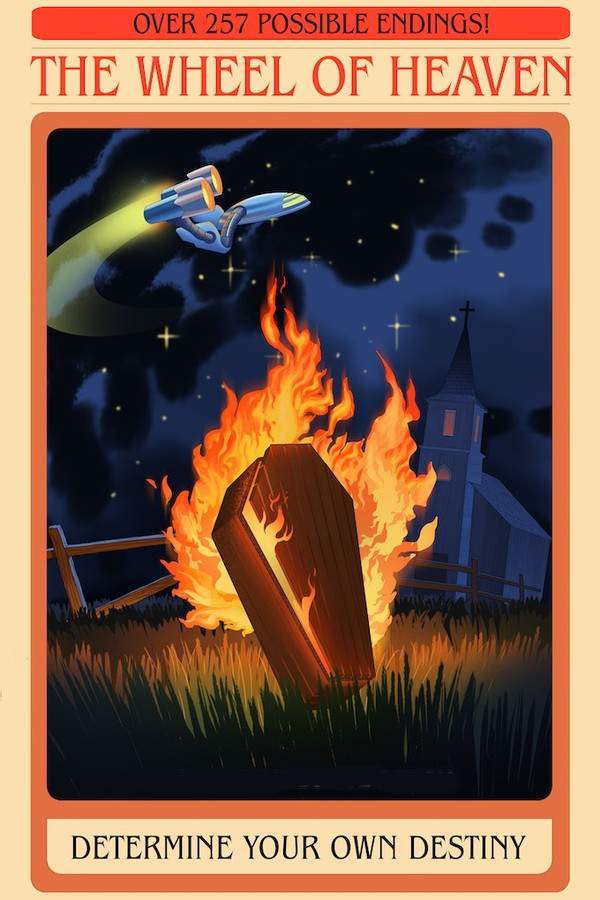
Walker and Albee have been inseparable since childhood, but their marriage, entered into at sixteen to overcome difficult circumstances, is now strained after eight years. Seeking to mend their relationship, Walker participates in an Airbnb retreat, using a self-help guide as his roadmap. He hopes to rekindle the love with Albee, who has become disillusioned with their shared future and the challenges they face.

Does The Wheel have end credit scenes?
No!
The Wheel does not have end credit scenes. You can leave when the credits roll.
Where to Watch The Wheel
See current US streaming, rental, and purchase options for The Wheel (2022) via JustWatch.

Amazon Prime Video
HD
Amazon Prime Video with Ads
HD
Fawesome
HD
Hoopla
SD
Kanopy
HD
Amazon Prime Video Free with Ads
HD
Plex
HD
Plex Channel
HD
Tubi TV
SD
YouTube Free
HD
Amazon Video
SD
Apple TV Store
HD
Fandango At Home
SD
Google Play Movies
SD
YouTube
SD Streaming availability powered by 
Meet the Full Cast and Actors of The Wheel
Explore the complete cast of The Wheel, including both lead and supporting actors. Learn who plays each character, discover their past roles and achievements, and find out what makes this ensemble cast stand out in the world of film and television.




External Links and Streaming Options
Discover where to watch The Wheel online, including streaming platforms, rental options, and official sources. Compare reviews, ratings, and in-depth movie information across sites like IMDb, TMDb, Wikipedia or Rotten Tomatoes.








Ratings and Reviews for The Wheel
See how The Wheel is rated across major platforms like IMDb, Metacritic, and TMDb. Compare audience scores and critic reviews to understand where The Wheel stands among top-rated movies in its genre.

The Movie Echo Score
The Wheel presents a mixed but generally engaging experience, with its strongest elements lying in performances and rewatch appeal while its direction and narrative cohesion falter at times. Critics commend the lead actors’ depth and the film’s inventive visual flair, yet note uneven pacing and occasional clumsy technical choices. The cumulative effect yields a film that intrigues viewers despite its structural imperfections, resulting in a solid but not spectacular overall impression.
The Movie Echo Score Breakdown for The Wheel

Art & Craft
Direction and technical execution exhibit inconsistency. Variety highlights the director’s limited intuition for blocking and the jarring insertion of music, while Screen Rant notes a struggling first half. Conversely, positive commentary praises the film’s daring visual imagination, describing it as hallucinatory. The mixed feedback points to a craft profile that oscillates between creative ambition and uneven execution.

Character & Emotion
Performances emerge as the film’s principal strength. Multiple critics commend the nuanced portrayals of Amber Midthunder and the supporting cast, noting vulnerability and compelling chemistry. Even Variety, while critiquing direction, acknowledges the actors’ strong, vulnerable work. The consistent praise across reviews indicates a high level of character depth and emotional resonance throughout the piece.

Story & Flow
Narrative structure receives varied reactions. Critics acknowledge the film’s ambitious thematic aims and moments of astute insight into relational dynamics, yet several point to formulaic faults, convoluted plotting, and uneven pacing, especially in the opening portion. While the concluding sections are praised for their emotional payoff, overall storytelling is perceived as uneven, yielding a mixed assessment.

Sensory Experience
Audio‑visual choices generate both commendation and criticism. Variety’s note on ill‑timed musical inserts underscores a lapse in sound design, whereas reviewers such as The Stranger celebrate the film’s hallucinatory visual palette and inventive style. The sensory experience therefore balances striking, imaginative moments with occasional technical missteps, resulting in a moderately positive overall impression.

Rewatch Factor
Rewatch potential is highlighted by several critics who describe the film as original, chaotic yet cohesive, and emotionally resonant, suggesting lasting appeal. Positive remarks about its idiosyncratic storytelling and surprising emotional depth imply that subsequent viewings could uncover additional layers. Despite the single strongly negative user comment, the broader critical consensus points to a film that rewards repeat engagements.

65
Metascore
tbd
User Score


100%
TOMATOMETER

0%
User Score

6.3 /10
IMDb Rating
77
%
User Score

4.50/5
From 4 fan ratings
Take the Ultimate The Wheel Movie Quiz
Challenge your knowledge of The Wheel with this fun and interactive movie quiz. Test yourself on key plot points, iconic characters, hidden details, and memorable moments to see how well you really know the film.
The Wheel Quiz: Test your knowledge of the 2022 film *The Wheel*, its characters, plot points, and themes.
What is the name of the self‑help book the couple uses during their weekend?
Full Plot Summary and Ending Explained for The Wheel
Read the complete plot summary of The Wheel, including all major events, twists, and the full ending explained in detail. Explore key characters, themes, hidden meanings, and everything you need to understand the story from beginning to end.
Albee Amber Midthunder and Walker Taylor Gray head to a lakeside Airbnb for a weekend designed to repair their strained relationship with the help of a self‑help book called Seven Questions to Save Your Marriage. Their drive and the quiet tension between them set the tone: Walker makes earnest attempts to connect, while Albee remains wary and unsettled, unwilling to dig into the deeper wounds that have pushed them to this point.
The cabin by the water introduces Carly [Bethany Anne Lind], the warm host, whose own wedding plans with Ben [Nelson Lee] loom in the background. Carly’s openness contrasts with Albee’s careful guard, and Ben’s easygoing humor hints at a gentler future that might be possible elsewhere. The moment Carly and Ben appear is a reminder that not everyone’s relationship is broken in the same way, and that support systems can come from unexpected places.
“I’m not there.”
Albee’s clipped honesty after a fight lands like a bolt, signaling that even small gestures—like Walker offering a glass of champagne—are loaded with history and caution. The couple’s attempt to use the book to guide their conversations is interrupted by real life, by past traumas, and by the steady pull of the people around them who are also navigating love in imperfect lights.
As the morning unfolds, Walker’s quiet longing for closeness clashes with Albee’s need for space. The scene between Carly and Ben at the woodshed—where talk of an altar and a wedding is mingled with Ben’s skepticism about inviting guests to a fragile moment—highlights a central tension: good intentions aren’t always enough when trust is frayed. Ben’s blunt stance—“Bad relationships are contagious”—lands with a sting, even as he tries to help.
The group lunch becomes a turning point. Albee reveals the lingering ache that the book can’t easily fix, while Walker’s increasingly tense demeanor suggests he’s ready to break the hospital strictures of their story and admit what hurts. The moment when Ben overhears and calls Albee a monster lands with a sharp jolt, pushing everyone to confront how hurt and defensiveness can masquerade as truth. Carly pushes back, insisting that this is exactly the kind of honesty the weekend needs.
With the book back in the center stage, the four of them move through the next questions, the atmosphere alternating between play and pressure. When the page asks about the first time you felt wounded by your partner, each person’s memory surfaces in blunt, painful honesty. Albee recalls not a grand betrayal but a long pattern of hurt that shaped how she loves, while Walker confronts his own fear of not being enough. The moment when Walker takes Albee’s buzzing phone and tosses it into the lake becomes a symbol: the couple must decide whether to drain the noise or let it drown out what matters most.
By nightfall, the couple’s dynamics have shifted. Albee discovers Walker’s notes tucked in the book—reminders to be patient and kind, hints of a better version of themselves that he wanted to offer her. The next morning, Walker’s progress on a wooden altar—an emblem of rebuilding and commitment—signals a different possibility for their relationship, even as the two remain wary.
The day intensifies as Albee and Walker each try to reach a place where vulnerability doesn’t feel like a risk, and where love can be spoken without fear. Carly, after a breakfast tray delivery, reads the room and weighs in on how far Ben’s still from the life they imagine together. The trio’s attempts to stay together for the sake of the weekend collide with the reality that someone must change first.
A pivotal moment comes at the ferris wheel, where the couple finally allows real, hurtful truths to surface and then to soften. On the ride, Albee opens up about her trauma and the fear of being unlovable, while Walker forgives enough to be honest about his own need to feel seen. Their exchange shifts from defense to care: they acknowledge the ugliness and the tenderness that coexist in their love. She admits to loving him, even if she has trouble expressing it well, and he offers the quiet, generous gesture of fries from a nearby vendor—an ordinary act that signals ordinary, lasting connection. The ride slows, the tension eases, and the two choose to stay connected rather than walk away.
In the end, the film returns to the core idea that healing isn’t a single decision, but a continuing choice to show up for one another. The credits roll on a scene of renewed, fragile hope: a couple who have survived a volatile weekend find a way to keep talking, keep listening, and keep choosing each other through the fears that still live inside them. The book remains a device—a catalyst rather than a cure—and what remains most clear is that truth, patience, and acts of everyday care are what ultimately bind two people who have learned to love each other through the long work of being seen.

Coming soon on iOS and Android
The Plot Explained Mobile App
From blockbusters to hidden gems — dive into movie stories anytime, anywhere. Save your favorites, discover plots faster, and never miss a twist again.
Sign up to be the first to know when we launch. Your email stays private — always.
Explore the mobile appWatch Trailers, Clips & Behind-the-Scenes for The Wheel
Watch official trailers, exclusive clips, cast interviews, and behind-the-scenes footage from The Wheel. Dive deeper into the making of the film, its standout moments, and key production insights.

Unlock the World of Movies with Our Comprehensive Wiki
Dive into our Movie Wiki for in-depth film encyclopedia entries, including cast biographies, production trivia, plot synopses, behind-the-scenes facts, and thematic analyses. Whether you’re researching iconic directors, exploring genre histories, or discovering hidden easter eggs, our expertly curated movie database has everything you need to fuel your cinematic passion.

Quick Links: Summary, Cast, Ratings, More

What's After the Movie?
Not sure whether to stay after the credits? Find out!
Check out our other apps:

SAT Sphere
Build confidence for the Digital SAT.

Mori Atlas
Discover wild places worth protecting.

Luntero
Search smarter for a home in Amsterdam.

Plot Explained
Unravel movie endings and hidden clues.

Pokechamp
Dive into Pokémon data and battle logic.

Driving Theory
Get ready for your European theory test.

Movie Dust
Plan your next cinema trip with ease.

Musemap
Find art and culture as you travel.

Selkobase
Compare credentials before committing.

Local Manual
Turn an unfamiliar country into practical next steps.

Lernavi
Compare school systems before your next move.

GymRoam
Find a workout stop wherever your plans take you.
Explore Our Movie Platform
New Movie Releases (2026)
Famous Movie Actors
Top Film Production Studios
Movie Plot Summaries & Endings
Major Movie Awards & Winners
Best Concert Films & Music Documentaries
Movie Collections and Curated Lists
© 2026 What's After the Movie. All rights reserved.
Privacy Policy