What's After the Blog?
box office • analysis • industry
Upside Down Retrospective: Kirsten Dunst's $50M Sci-Fi Box Office Bomb
Juan Diego Solanas' 2012 science fiction romance "Upside Down" paired Kirsten Dunst and Jim Sturgess in a gravity-defying Romeo & Juliet story set across twin planets. Despite inventive visual sequences and a notable cast, the $50 million production earned only $22 million worldwide and holds a 29% Rotten Tomatoes approval rating.
April 8, 2026
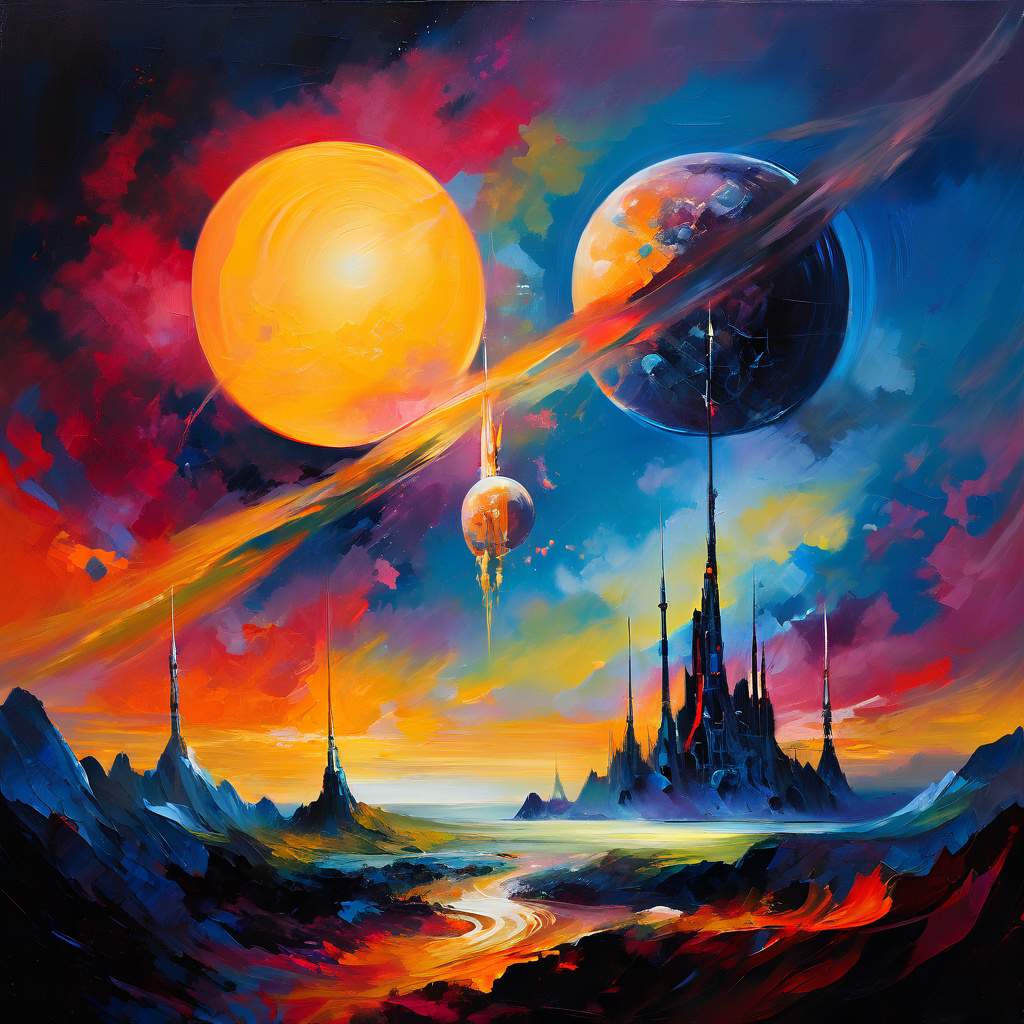
Upside Down Retrospective: Kirsten Dunst’s $50M Sci-Fi Box Office Bomb
Juan Diego Solanas’ 2012 science fiction romance “Upside Down” remains one of the most visually ambitious financial failures in recent cinema history. The film transposes Shakespeare’s Romeo & Juliet to a twin-planet system where gravity works in reverse, pairing Kirsten Dunst and Jim Sturgess as star-crossed lovers separated by both physics and rigid class structures. Despite inventive visuals, an original premise, and contributions from Icelandic band Sigur Rós, the $50 million production became a cautionary tale about the gap between creative ambition and commercial viability, earning just $22 million globally and receiving scathing reviews for its scientific liberties.
A Gravity-Defying Premise and World Building
The narrative centers on Adam (Jim Sturgess), a resident of the impoverished “Down Below” planet, and Eden (Kirsten Dunst), a wealthy citizen of the affluent “Up Top” world. In this universe, two planets orbit so closely that a single tower connects them, yet each world maintains its own independent gravitational pull. Objects and people remain perpetually bound to their native planet’s gravity regardless of physical location, requiring visitors from Down Below to wear weighted “inverse matter” belts to avoid floating upward when visiting the upper world.
The social stratification is literal and enforced by physics: Up Top houses the wealthy elite, while Down Below contains the working poor who toil under the eternal gaze of their planetary superiors. A corporate entity controls the connecting tower, maintaining an exploitative economic relationship by extracting oil from the lower world while selling electricity back at inflated prices. This arrangement forces the lower class into dependency while the upper class literally looks down on them from above.
The world building extends into surreal biological and economic details that further distance the narrative from hard science fiction. The film introduces a subplot involving rare pink bumblebees that produce a magical pink pollen with anti-aging properties, which Adam utilizes to create a skincare cream that defies the aging process. Additionally, citizens from Up Top regularly visit Down Below specifically to dance on ceilings, treating the inverted gravity as a tourist attraction, while Down Below residents face strict prohibitions against mingling with the upper class. The story also incorporates amnesia as a plot device, adding narrative complication to the already complex central romance.
Cast, Crew, and Production Details
Director Juan Diego Solanas assembled an international cast to bring this fantastical romance to life, blending recognizable stars with respected character actors. The principal ensemble includes:
- Jim Sturgess as Adam, the Down Below protagonist who infiltrates the upper world
- Kirsten Dunst as Eden, the Up Top love interest and daughter of privilege
- Timothy Spall in a supporting role that grounds the fantastical material
- Sigur Rós providing musical contributions to the film’s atmospheric score
The casting of Dunst carried particular meta-textual resonance for audiences familiar with her blockbuster history. Having performed the iconic upside-down kiss with Spider-Man in Sam Raimi’s 2002 film, Dunst returned to inverted romance a decade later, albeit in a radically different context. The source material notes that Dunst reportedly hated filming the original Spider-Man scene, making her return to gravitational absurdity a curious career choice that bookends a decade of her work in fantastical cinema.
The production leaned heavily into the visual implications of its premise, creating sequences where characters interact across gravitational divides. Notable set pieces include a mountain-top kiss where Eden adheres to rock above Adam’s head while he stands on the ground below, and a breakfast scene where pancake ingredients smuggled from the opposing world float through the air between divergent gravitational fields. These sequences required genuine creative problem-solving to stage, demonstrating a commitment to visual spectacle even when the underlying physics defied scientific reality.
Critical Reception and Scientific Criticism
Critics largely rejected the film’s fundamental physics, resulting in a 29% approval rating on Rotten Tomatoes based on 52 reviews. The critical consensus centered on the impossibility of the gravitational concepts, which violated basic scientific understanding taught at the elementary level. Reviewers noted that objects traveling to another planet would naturally adapt to the new world’s gravity rather than remaining tethered to their origin world’s pull.
Specific critical reactions ranged from dismissal to qualified appreciation:
- Anton Bitel (Sight & Sound): Called the physics “patently ridiculous” and unable to suspend disbelief
- Frank Scheck (The Hollywood Reporter): Enjoyed the bizarro visual concepts but found the central love story “pedestrian”
- Science Community: The article notes that even “Moonfall”—which astronomer Neil deGrasse Tyson called the least scientifically accurate sci-fi film ever made—understood gravity better than “Upside Down”
However, some critics defended the film as operating in a fairytale or fantasy mode rather than hard science fiction. These reviewers appreciated the creativity required to visualize such impossible scenarios, arguing that once viewers accept the premise as pure fantasy, the visual inventiveness becomes genuinely entertaining. The surreal imagery of floating food and perpendicular romance sequences, while scientifically dubious, demonstrated a commitment to visual spectacle that separated the film from generic romantic dramas.
Box Office Performance and Financial Failure
The theatrical performance of “Upside Down” qualified as a catastrophic failure by industry standards, with the financial metrics revealing the extent of its commercial isolation:
- Production Budget: $50 million
- Worldwide Gross: Approximately $22 million
- Domestic U.S. Gross: $105,095 (per Box Office Mojo)
These figures represent a loss of roughly $28 million before accounting for marketing costs, distribution fees, and exhibition splits, which typically require a film to earn 2.5 to 3 times its production budget to reach profitability. The minuscule domestic performance suggests the film found virtually no theatrical audience in North America, while the international gross, while stronger, remained insufficient to justify the production costs.
The $50 million budget figure suggests studio-level ambitions for a film that ultimately performed like an art-house obscurity. With only $105,095 earned in the United States across its theatrical run, the film failed to register with American audiences whatsoever. The international gross suggests stronger performance in foreign markets, particularly in territories where the French-Canadian production may have held greater cultural relevance or where the visual spectacle translated better across language barriers. Nevertheless, the film stands as a significant financial loss for its backers and a reminder that star power and visual effects cannot guarantee commercial success.
Streaming Availability and Contemporary Legacy
More than a decade after its theatrical run, “Upside Down” has found a second life through digital platforms. The film is currently available to stream on Prime Video, where its unique visual style and absurd premise have attracted curious viewers willing to overlook the scientific liberties for the sake of spectacle.
While not achieving cult classic status, the film remains a reference point for discussions about ambitious visual effects in service of questionable narratives. It serves as a case study in the risks of high-concept science fiction romance and the fine line between inventive world building and narrative incoherence. For viewers interested in practical effects-driven fantasy or unusual romantic premises, the film offers a visually distinct experience that, while flawed, demonstrates genuine creative ambition rarely seen in contemporary studio productions.
What’s After the Movie?
Looking for more deep dives into box office bombs, hidden gems, and the stories behind your favorite films? What’s After the Movie is your destination for comprehensive film coverage. We track industry news, analyze financial performance, and provide spoiler-free summaries alongside detailed ending explanations. Visit our box office section for more financial breakdowns, or browse our movie database to discover streaming options for films like “Upside Down” and other ambitious failures that found second lives on digital platforms.
Continue reading




What's After the Movie?
Not sure whether to stay after the credits? Find out!
Check out our other apps:

SAT Sphere
Build confidence for the Digital SAT.

Mori Atlas
Discover wild places worth protecting.

Luntero
Search smarter for a home in Amsterdam.

Plot Explained
Unravel movie endings and hidden clues.

Pokechamp
Dive into Pokémon data and battle logic.

Driving Theory
Get ready for your European theory test.

Movie Dust
Plan your next cinema trip with ease.

Musemap
Find art and culture as you travel.

Selkobase
Compare credentials before committing.

Local Manual
Turn an unfamiliar country into practical next steps.

Lernavi
Compare school systems before your next move.

GymRoam
Find a workout stop wherever your plans take you.
Explore Our Movie Platform
New Movie Releases (2026)
Famous Movie Actors
Top Film Production Studios
Movie Plot Summaries & Endings
Major Movie Awards & Winners
Best Concert Films & Music Documentaries
Movie Collections and Curated Lists
© 2026 What's After the Movie. All rights reserved.
Privacy Policy