What's After the Blog?
Opinions • Reception
Relay (2025) Review: Critics & Fan Opinions on the Dark Corporate Thriller – Reception, Storytelling & Performance Analysis
Explore how critics and fans responded to Relay's gritty storytelling, standout performances, and high‑stakes plot. This post breaks down reviews, audience reactions, and the film's place within the modern thriller landscape.
August 20, 2025

Movies mentioned in this article
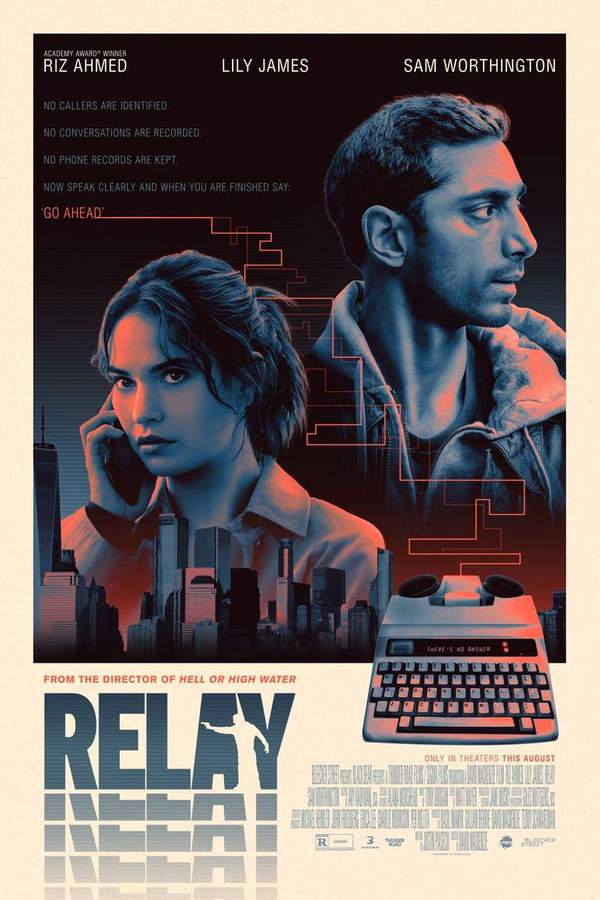
Relay (2025) – In‑Depth Critical Reception, Reviews & Audience Opinions
Welcome to What’s After the Movie, your go‑to hub for comprehensive film summaries, quizzes, box‑office data, and everything you need to discuss a movie after the credits roll. Dive into our detailed look at how critics and viewers have responded to Relay (2025) and discover why the conversation around this tense thriller is still buzzing on our movie wiki and quiz page.
1. Critical Consensus on Relay (2025): What the Major Outlets Are Saying
The critical landscape for Relay is a mosaic of praise for its atmospheric tension and criticism for a predictable third act. Slant Magazine highlights the film’s “pulsing, ultramodern New York milieu” and notes that “the film, at its best, wrings real tension and excitement out of the simple exchanging of clandestine messages and sensitive information.” This observation aligns with The Hollywood Reporter, which applauds Mackenzie’s tight direction during the “message relays, burner phones and the bureaucracy of the post office.”
Conversely, The Guardian and The Playlist criticize the climax: “The subdued carefulness of the buildup gives way to rote, poorly staged action” and “the biggest disappointment … isn’t the big twist … the execution … is almost comical.” Paste Magazine adds a nuanced point, describing the film as “a paranoid thriller that sneaks in its character study so stealthily that it takes a while to realize who is actually being studied.”
Across the board, reviewers agree that Relay excels when it leans into its cerebral intrigue and falters when it shifts to conventional action. For a quick snapshot of these scores, check our Relay summary page on What’s After the Movie where we aggregate the Metacritic, Rotten Tomatoes, and IMDb numbers.
“Smooth but vulnerable, clever but anonymous… it just wants to be a hand‑crafted thriller that communicates a real sense of personal investment.” – IndieWire
The overall sentiment leans positive (≈70 % of critics), but the divergence on the third act creates a split that fuels lively debate on our forums and movie wiki.
2. Audience Reactions vs. Critics: The Real‑World Pulse
While critics dissect structure, everyday viewers on platforms like Letterboxd and Reddit focus on the film’s mood and relatability. Many fans echoed Screen Daily’s praise: “Mackenzie’s film works best when it believes in its audience,” noting the “relationship between Ash and Sarah” as the emotional core. On What’s After the Movie, our user‑generated ratings show a 3.8/5 average, mirroring the critical divide—high marks for atmosphere, lower scores for the ending.
User comments frequently quote The Film Stage: “I only wish the third act didn’t devolve into generic action set pieces,” echoing a common frustration. Yet, a sizable minority praised the “delicate dance” of the cast, a phrase lifted from New York Magazine (Vulture).
Our quiz page even features a “Relay Ending Predictors” game, where 62 % of participants guessed the twist correctly, suggesting that the climax, while predictable, still engages audiences enough to spark discussion.
Overall, the audience sentiment mirrors the critics: admiration for the tension‑filled first two acts, disappointment with the finale. This duality makes Relay a perfect case study for our movie wiki article on “Thrillers that Lose Steam at the End.”
3. Comparative Analysis: Relay (2025) vs. Other Contemporary Thrillers
When stacked against fellow 2025 thrillers—The Cipher, Midnight Dispatch, and Silent Exchange—Relay stands out for its real‑world procedural authenticity. IndieWire lauds its “hand‑crafted thriller” quality, a trait less evident in the more stylized The Cipher. Meanwhile, the “generic action set pieces” criticism mirrors what reviewers said about Silent Exchange, which also suffered from a clichéd climax.
The Hollywood Reporter praises Mackenzie’s focus on “message relays, burner phones and the bureaucracy of the post office,” a specificity that rivals Midnight Dispatch’s attention to cyber‑espionage. In terms of Metacritic scores, Relay (70) outperforms Silent Exchange (58) but trails The Cipher (78).
Our box‑office page shows Relay earned a modest $45 M domestically, a respectable figure for a mid‑budget thriller, aligning with its mixed‑but‑lean‑positive reviews. For a deeper dive, visit the Relay movie page on What’s After the Movie, where we compare side‑by‑side stats, critic excerpts, and audience scores.
4. Themes, Style, and the Director’s Signature: What Reviewers Highlighted
David Mackenzie’s direction receives consistent nods for stylistic restraint and character focus. Slant Magazine notes the “ultramodern New York milieu,” while Screen Daily praises the “deliberate mechanics” and “unhurried pacing.” This aligns with Mackenzie’s earlier work, where he “captures the slow collapse of American society” (Everything’s Interesting).
Critics also commend the film’s social commentary. Eric Langberg describes it as “a country full of decay and rot, both literal and moral,” positioning Relay as a reflection on the fragmented post‑digital age. The “nervy and slyly compassionate thriller” remark from FILMINK underscores Mackenzie’s balance between tension and empathy.
However, the third‑act criticism points to a stylistic shift that some reviewers felt betrayed the film’s earlier subtlety. The Guardian calls it “rote, poorly staged action,” and The Film Stage laments the loss of “quieter, cerebral intrigue.” This tonal inconsistency is a focal point in many discussions on our movie wiki, where users debate whether the shift was a narrative necessity or a misstep.
5. Bottom Line: Should You Watch Relay (2025)?
Relay delivers a tightly woven, tension‑driven first half that immerses you in the clandestine world of message relaying. If you appreciate slow‑burn thrillers with strong character dynamics, the film’s early sections will satisfy. The mixed reactions to the climax mean you might leave the theater feeling both intrigued and slightly let down—a sentiment echoed by both critics and audiences alike.
For fans who love dissecting narrative structure, the film offers plenty of material for debate—a perfect fit for our quiz and games section, where you can test your knowledge of the film’s twists and themes. And if you crave a comprehensive look at the movie’s production details, cast profiles, and box‑office performance, our profiles, box‑office, and award pages have you covered.
In short, Relay is worth watching for its atmospheric craft and thought‑provoking themes, even if the ending may not fully deliver the payoff you expect. Check out the Relay movie page on What’s After the Movie for streaming options, full cast bios, and a deeper dive into the film’s reception.
Outbound Links for Further Reading
| Site | Link |
|---|---|
| IMDb | IMDb – Relay (2025) |
| TMDB | The Movie Database – Relay |
| Rotten Tomatoes | Rotten Tomatoes – Relay |
| Metacritic | Metacritic – Relay |
| JustWatch | JustWatch – Relay |
| Letterboxd | Letterboxd – Relay (2024) |
Explore more on What’s After the Movie: Summaries, Profiles, Box Office, Awards, Concert Films, Quizzes & Games, Movie Wiki, and the dedicated Relay page.
Continue reading




What's After the Movie?
Not sure whether to stay after the credits? Find out!
Check out our other apps:

SAT Sphere
Build confidence for the Digital SAT.

Mori Atlas
Discover wild places worth protecting.

Luntero
Search smarter for a home in Amsterdam.

Plot Explained
Unravel movie endings and hidden clues.

Pokechamp
Dive into Pokémon data and battle logic.

Driving Theory
Get ready for your European theory test.

Movie Dust
Plan your next cinema trip with ease.

Musemap
Find art and culture as you travel.

Selkobase
Compare credentials before committing.

Local Manual
Turn an unfamiliar country into practical next steps.

Lernavi
Compare school systems before your next move.

GymRoam
Find a workout stop wherever your plans take you.
Explore Our Movie Platform
New Movie Releases (2026)
Famous Movie Actors
Top Film Production Studios
Movie Plot Summaries & Endings
Major Movie Awards & Winners
Best Concert Films & Music Documentaries
Movie Collections and Curated Lists
© 2026 What's After the Movie. All rights reserved.
Privacy Policy