What's After the Blog?
Opinions • Reception
Mr. Nobody Against Putin (2026) Review, Critics Opinions, and Audience Reception – In-Depth Analysis
Explore fan reactions and critic reviews of Mr. Nobody Against Putin (2026), examining performance, storytelling, and its place in the political thriller franchise. This post breaks down the reception, highlighting praise, criticism, and audience sentiment.
February 9, 2026

Movies mentioned in this article
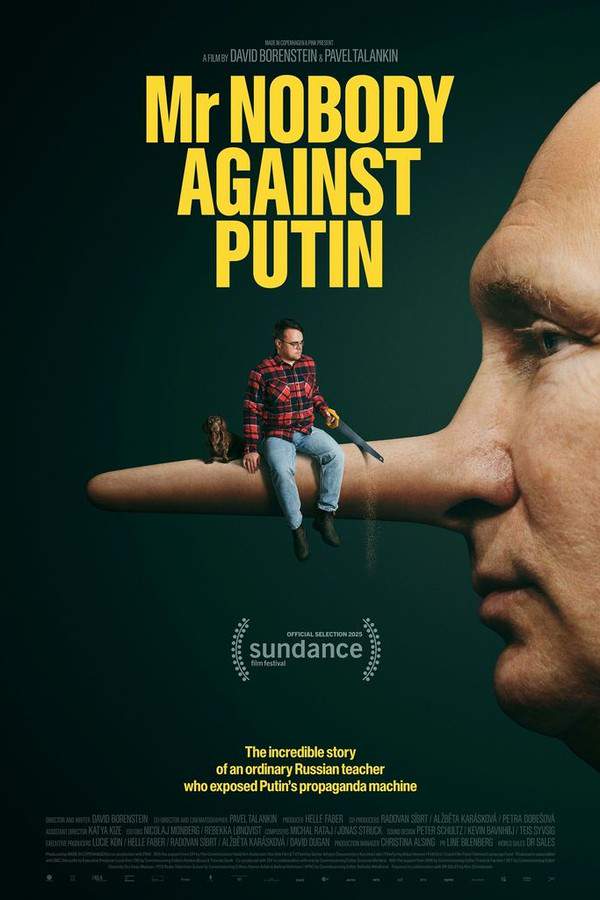
Mr. Nobody Against Putin Review: Critical Consensus, Audience Reactions, and Documentary Reception Analysis
In an era where documentary cinema has become saturated with urgent, often harrowing coverage of the Russia-Ukraine conflict, Mr. Nobody Against Putin emerges as a singular, contentious, and undeniably gripping entry that has sparked intense debate among critics and viewers alike. For audiences searching for an authoritative Mr. Nobody Against Putin review, analyzing the film’s critical consensus alongside raw viewer reactions reveals a complex portrait of modern documentary ethics, the mechanics of authoritarian propaganda, and the extraordinary courage required to film inside a surveillance state. Whether you’re looking for spoiler-free reviews to determine if Mr. Nobody Against Putin is worth watching, or seeking deeper film analysis regarding its reception across platforms like Metacritic and Rotten Tomatoes, this comprehensive breakdown synthesizes genuine critic and user sentiments to guide your viewing decision. At What’s After the Movie, we specialize in curating these essential film reception insights, offering detailed movie summaries and comprehensive wiki entries to complement your understanding of challenging cinema like this. For specific details about this title’s performance metrics and cast information, visit our dedicated Mr. Nobody Against Putin movie page, where you can explore how this documentary fits into broader collections of political cinema and curated lists of essential war documentaries.
Critical Reception and Metacritic Consensus: How Reviewers Rate the Documentary Craft
The critical reception of Mr. Nobody Against Putin presents a fascinating study in critical values, with critic reviews ranging from near-universal acclaim to measured skepticism, ultimately landing on a generally positive critical consensus that averages around 80/100 on major aggregators. At the pinnacle of praise, IndieWire awarded the film a remarkable 91/100, declaring that “in the wave of documentaries about the Ukraine War that have come out over the past two years, there hasn’t been one that’s offered what David Borenstein’s Mr. Nobody Against Putin does — and certainly not with such wit, verve, and insight: The view inside Russia.” This sentiment is echoed by Variety, which scored it 90/100, praising the film as a “terrifying, revelatory and poignant exposé” that offers “an unseen human angle” through its “delightfully brave, yet utterly relatable subject.”
RogerEbert.com (88/100) focuses intensively on the documentary’s technical execution, noting that “purely on a craft level, Mr. Nobody Against Putin is skillful and engrossing, never more so than when it captures wrenchingly painful moments in people’s lives with a detachment that keeps the focus on the subjects rather than shifting to Talankin.” This film analysis of cinematic technique highlights how the documentary balances intimate portraiture with political exposé. The Guardian (80/100) similarly champions the work as “both an act of service and a tribute – to a school that once was, to students whose lives were and will be irrevocably changed for the worse by the regime,” ultimately concluding that director Pasha Talankin has produced a “must-watch, indelible document of ideological warfare.”
However, the critical consensus is not without fissures. The A.V. Club offered a more qualified 58/100, acknowledging that “plenty of the film feels vital—its observations of a nation’s shifting attitude towards war, towards hate, is crushing and familiar,” yet suggesting the execution doesn’t fully cohere. The New York Times (70/100) critiques specific directorial choices, arguing that “the documentary tries to heighten the stakes of Talankin’s story by casting his efforts under a pall of danger, dread or distress. But these bids for drama are far less persuasive than the horrifying raw footage Talankin captures.” This division between critic reviews centers on whether the film’s cinematic style—which The New Yorker (80/100) describes as “exemplary work of cinematic modernism, a reflexive film that turns its genesis into its subject”—enhances or occasionally obscures the documentary’s truth claims. For viewers tracking Mr. Nobody Against Putin awards potential and industry recognition, our dedicated awards tracking page provides real-time updates on festival circuit honors and critical prize nominations that this polarizing yet acclaimed documentary may capture.
Viewer Reactions and Audience Sentiment: Emotional Impact and the Russian Diaspora Experience
While critical consensus offers valuable film reception metrics, the audience reactions to Mr. Nobody Against Putin reveal an even more emotionally charged and personally invested response landscape, particularly among Russian expatriates and global viewers concerned with authoritarian creep. User Vera N provides one of the most detailed viewer reactions, awarding the film 5/5 stars and sharing a deeply personal connection: “I cried quite a bit watching this film. I graduated from a high school in 1995 in what I thought was the most polluted city - Norilsk in Siberia - and left Russia shortly after. The scenes of the town and the school are just like everything looked back then. It’s like the entire country is frozen in time and nothing ever gets better - in a country with massive natural resources. That’s a result of corruption on an unprecedented scale.” This fan opinion underscores how the documentary functions as both political testimony and nostalgic, painful memoir for those who escaped the Soviet and post-Soviet condition.
Similarly, Ulrik T (5/5 stars) expands the film reception beyond immediate geopolitics, noting that “this almost apocalyptic documentary from a dictatorship is, on one hand, incredibly life-affirming, and on the other, incomprehensibly sad and tragic. Unfortunately, the film remains perpetually relevant — not only in relation to the Russia-Ukraine conflict, but equally with regard to current developments in the United States and the state of other countries around the world.” This perspective positions Mr. Nobody Against Putin as essential viewing for anyone monitoring global democratic backsliding, a sentiment echoed by Tara B (4/5 stars), who describes the work as “a gripping and sobering documentary that examines the power of propaganda, the price of dissent, and the courage it takes for one person to stand up against an authoritarian system… a reminder that freedom doesn’t vanish overnight. It erodes when enough people decide it’s someone else’s problem to protect.”
Festival attendees have similarly contributed passionate audience reactions, with Dan J (4.5/5 stars, noting “if I can be more specific… 4.8/5”) describing the film as “an absolute gem” and “a beautiful treat” that is “expertly threaded together in a cohesive story.” He emphasizes the emotional complexity: “It is told with so many moments of humour, of lightness, of innocence, and of beauty. This unique balance make the whole film, which is all documentary, feels like a cinematic masterpiece.” Meanwhile, Me0123 (10/10) provides a succinct spoiler-free review sentiment: “This film creates a rollercoaster of different emotions. We should be grateful that we live in a free country. A must see for everyone!”
However, audience reactions are not uniformly positive, revealing important fault lines in viewer reception. Daria K (2.5/5 stars) critiques the film as “poorly camouflaged self-promotion without any coherent message,” while Dave C (0.5/5 stars) delivers a scathing assessment of the documentary’s authenticity: “Many of the scenes were too stagey for a documentary. It felt like the directors decided how a scene should look — how it should play out. Then they rehearsed the scene, and shot it like a fictional film drama.” These fan opinions mirror the critical skepticism found in professional critic reviews, suggesting that questions about the film’s construction significantly impact whether Mr. Nobody Against Putin is worth watching for viewers prioritizing cinema verité over composed documentary narrative. To explore the background of the courageous subject Pasha Talankin and director David Borenstein, visit our person profiles section for comprehensive biographical information and filmographies.
Documentary Ethics and Cinematic Style: Analyzing the “Staging” Controversy
The most contentious aspect of Mr. Nobody Against Putin film reception centers on debates regarding documentary ethics and the extent to which the film employs cinematic construction versus raw observation—a tension that significantly influences critical consensus and audience reactions alike. The controversy crystallizes around user Dave C’s assertion that the filmmaking feels “dishonest in the style of the filmmaking,” describing “shots of the town of Karabash” as potentially superficial compensation for staged interior scenes. This viewer reaction aligns with The New York Times’s critique regarding “bids for drama” that attempt to heighten stakes through “a pall of danger, dread or distress” rather than allowing the inherent risk of the footage to speak for itself.
The A.V. Club’s mixed review (58/100) similarly suggests that while the film’s observations are “crushing and familiar,” the execution occasionally undermines its own urgency. User Leaburn O (4/5 stars) offers a balanced audience reaction that acknowledges this tension: “Slightly let down by a bit of self indulgence from the film maker but generally a brave man for daring to record and flee with this material.” This “self-indulgence” critique finds its harshest expression from Daria K, who views the project as “self-promotion,” suggesting that for some viewers, Talankin’s dual role as protagonist and cinematographer creates uncomfortable questions about agency and performance.
Defenders of the film, however, argue that these cinematic style choices constitute deliberate modernist strategy rather than ethical lapses. The New Yorker’s praise for “cinematic modernism” and “reflexive film that turns its genesis into its subject” reframes potential staging as meta-commentary on the impossibility of neutral observation within totalitarian contexts. RogerEbert.com’s appreciation for “detachment that keeps the focus on the subjects” suggests that the film’s apparent construction actually serves to highlight the subjects rather than the director’s peril. This film analysis interpretation posits that Mr. Nobody Against Putin knowingly interrogates the boundaries between observer and observed, making its formal qualities part of its moral essence rather than distractions from it.
For viewers engaging with these complex documentary reception questions, What’s After the Movie offers resources to contextualize the debate. Our movie wiki provides production background that may illuminate intended stylistic choices, while our game section includes quizzes testing your knowledge of documentary history and ethics—perfect for viewers who want to deepen their understanding of cinema verité conventions before forming their own opinions on this controversial work.
Propaganda, Militarization, and Societal Decay: Thematic Analysis of Reception
Beyond questions of form, the critical consensus and audience reactions to Mr. Nobody Against Putin converge powerfully on the film’s thematic substance: the terrifying militarization of childhood and the insidious mechanics of state propaganda. Slant Magazine (75/100) summarizes this focus succinctly, noting that “the film starkly reveals the toll propaganda takes on everyday individuals and communities.” This film analysis thread runs through nearly every positive review, with Collider (80/100) expanding the scope to emphasize that while “the plight of Ukraine is undeniably horrific, Mr. Nobody Against Putin shows a very real cost and the damaging ripple effect this invasion will have on Russian civilians.”
The most haunting viewer reactions center on specific imagery of indoctrination. The New York Times highlights “one scene in which young students are coached to march down a hallway, as if preparing for battle,” describing it as “horrifying raw footage” that outshines the film’s more constructed dramatic elements. User Kathryn R (5/5 stars) provides a succinct spoiler-free review of this thematic core: “A fascinating and chilling look at how Putin indoctrinates Russian children to accept his version of reality.” Similarly, Leaburn O describes the film as “a pretty frightening look at the militarisation of Russian schools… It is scary how Russian schools are being used to train unthinking youth into joining an awful inhumane cause.”
User Valeriya K (5/5 stars) offers a nuanced audience reaction that distinguishes this approach from typical dissident cinema: “It is not a loud opposition by known figures, it is a picture from an almost ordinary person feeling growing resentment toward evil power. Gradual surreal transformation of society targeting children ..one can’t hate enough how people in power destroying life.” This fan opinion highlights why many critic reviews consider the film essential—its focus on the “gradual surreal transformation” rather than explicit political activism captures the banality of authoritarian evil more effectively than overt polemics. Tara B’s review extends this analysis to universal warning: “What begins as a portrait of an ordinary Russian citizen daring to question Putin’s regime evolves into a broader reflection on how societies can be slowly conditioned to accept control as stability, and silence as safety.”
For educators and students analyzing these themes, What’s After the Movie provides curated collections of films exploring similar subject matter, from historical propaganda documentaries to contemporary political cinema. Unlike the escapist entertainment found in our concert film listings—which offer pure audiovisual spectacle—Mr. Nobody Against Putin demands active intellectual engagement with its disturbing content, placing it alongside the most serious entries in our documentary lists.
Unique Perspective: Inside Russia vs. Ukraine War Documentary Trends
A recurring theme across critic reviews and audience reactions positions Mr. Nobody Against Putin as a crucial corrective to the dominant visual narrative of the ongoing conflict. IndieWire’s emphatic statement that no previous documentary offered “the view inside Russia” with such “wit, verve, and insight” establishes the film’s unique market position. User Dean E (3.5/5 stars) confirms this distinction in his viewer reaction: “Another documentary about the war in Ukraine, but this one from the other side. A Russian teacher risks his safety documenting the Russian propaganda machine… fascinating to see this from the other point of view.”
This “other side” perspective—focusing on the propagandist rather than the victim, the indoctrinator rather than the refugee—generates complex film reception dynamics. Screen Daily (80/100) carefully navigates this, noting that the film is “not seeking to paint all Russians as ‘victims’ and explicitly acknowledging the situation is far worse for Ukranians,” while still presenting “children as the innocent victims of war.” This ethical balancing act resonates with audience reactions from Western viewers seeking to understand Russian civilian complicity and resistance simultaneously.
The “nobody” of the title—Pasha Talankin—represents a specific archetype that distinguishes this film from celebrity dissident narratives. Valeriya K’s review emphasizes this: “not loud opposition by known figures… an almost ordinary person.” This ordinary quality, combined with the extraordinary risk of filming, creates the tension that Dan J describes as making the film “feel like a cinematic masterpiece” despite its documentary status. The critical consensus suggests that this accessibility—viewing totalitarianism through the eyes of a schoolteacher rather than a politician—makes the abstract machinery of propaganda viscerally comprehensible.
Furthermore, Ulrik T’s audience reaction expands the film’s relevance beyond immediate geopolitics, suggesting that Mr. Nobody Against Putin serves as a warning for “current developments in the United States and the state of other countries around the world.” This interpretation elevates the film from specific war documentary review to universal parable about democratic erosion. For viewers tracking box office performance and international distribution of such politically urgent cinema, our box office data page provides analytics on how documentary films perform in limited theatrical release versus streaming platforms like BBC iPlayer, where this film has found significant viewership.
Is Mr. Nobody Against Putin Worth Watching? Final Verdict and Long-Term Reception
Synthesizing the diverse critic reviews, Metacritic scores (ranging from 58 to 91), and passionate audience reactions, the final verdict on whether Mr. Nobody Against Putin is worth watching depends largely on viewer priorities regarding documentary authenticity versus narrative cohesion. For those seeking unvarnished cinema verité, the concerns raised by The A.V. Club, The New York Times, and viewers like Dave C regarding “stagey” construction may warrant caution. However, for audiences prioritizing access, emotional resonance, and unique geopolitical perspective—the overwhelming majority of fan opinions represented by The Guardian’s “must-watch” designation and Variety’s praise for “unseen human angle”—the film constitutes essential viewing.
The critical consensus ultimately tilts positive, with the film’s high marks from RogerEbert.com, IndieWire, and Variety outweighing reservations about dramatic heightening. As Dan J’s near-perfect festival review (4.8/5) suggests, “those who watched it or will want to watch it, this is a beautiful treat… It really is something special.” The film’s lasting value likely resides in its documentation of the “gradual surreal transformation” (Valeriya K) of society—serving as a time capsule of ideological warfare that The Guardian correctly identifies as echoing “far beyond Russia.”
For definitive film reception data, prospective viewers should consult aggregated scores while considering the specific opinions that align with their viewing preferences. Whether you approach Mr. Nobody Against Putin as a political primer, an ethical case study in documentary filmmaking, or an emotional portrait of pedagogical resistance, the film demands engagement. Visit our dedicated movie page for updated audience reactions, streaming availability, and links to our interactive quiz games testing your knowledge of the film’s content. Additionally, explore our comprehensive summaries for detailed scene breakdowns that complement the spoiler-free reviews provided above.
Conclusion: The Divided Yet Vital Reception of Mr. Nobody Against Putin
The reception landscape for Mr. Nobody Against Putin ultimately reflects the impossible contradictions of filming truth under totalitarianism—earning both acclaim as a “cinematic masterpiece” (Dan J) and criticism as “self-promotion” (Daria K). This divergence in film reception speaks to the documentary’s success in provoking serious debate about the nature of observation, complicity, and resistance. While critical consensus acknowledges minor flaws in pacing and dramatic construction, the overwhelming majority of critic reviews and audience reactions affirm the film’s importance as a document of creeping authoritarianism and the courage required to resist it.
For viewers asking “is Mr. Nobody Against Putin worth watching?”, the answer resides in your tolerance for formal experimentation within nonfiction cinema and your interest in the specific “view inside Russia” that IndieWire correctly identifies as unprecedented. The film serves as both a warning and an inspiration—a rollercoaster of different emotions (Me0123) that captures how “freedom doesn’t vanish overnight” but erodes through the militarization of childhood and the normalization of hate. As Ulrik T warns, its relevance extends far beyond the current conflict, offering insight into democratic backsliding everywhere.
At What’s After the Movie, we maintain that understanding complex film reception requires engaging with both the high Metacritic scores and the skeptical viewer reactions that question a work’s authenticity. Whether you ultimately align with The Guardian’s assessment of Talankin as anything but a “nobody,” or share Dave C’s concerns about constructed drama, this documentary merits serious consideration. Explore our movie wiki, person profiles, and awards tracking to continue your research into this vital, controversial work of contemporary documentary cinema.
| Site | Link |
|---|---|
| Wikipedia | Mr. Nobody Against Putin Wikipedia |
| Rotten Tomatoes | Mr. Nobody Against Putin Rotten Tomatoes |
| Metacritic | Mr. Nobody Against Putin Metacritic |
| Box Office Mojo | Mr. Nobody Against Putin Box Office Mojo |
Continue reading




What's After the Movie?
Not sure whether to stay after the credits? Find out!
Check out our other apps:

SAT Sphere
Build confidence for the Digital SAT.

Mori Atlas
Discover wild places worth protecting.

Luntero
Search smarter for a home in Amsterdam.

Plot Explained
Unravel movie endings and hidden clues.

Pokechamp
Dive into Pokémon data and battle logic.

Driving Theory
Get ready for your European theory test.

Movie Dust
Plan your next cinema trip with ease.

Musemap
Find art and culture as you travel.

Selkobase
Compare credentials before committing.

Local Manual
Turn an unfamiliar country into practical next steps.

Lernavi
Compare school systems before your next move.

GymRoam
Find a workout stop wherever your plans take you.
Explore Our Movie Platform
New Movie Releases (2026)
Famous Movie Actors
Top Film Production Studios
Movie Plot Summaries & Endings
Major Movie Awards & Winners
Best Concert Films & Music Documentaries
Movie Collections and Curated Lists
© 2026 What's After the Movie. All rights reserved.
Privacy Policy