What's After the Blog?
Opinions • Reception
Backrooms (2026) Review & Reception: Critics, Fan Opinions, Storytelling & Performance Analysis
Explore how critics and fans have responded to Backrooms (2026), dissecting performances, storytelling, and its place in the creeping horror franchise. This post breaks down reviews, fan reactions, and overall reception to give a complete picture of the film’s impact.
June 2, 2026

Movies mentioned in this article
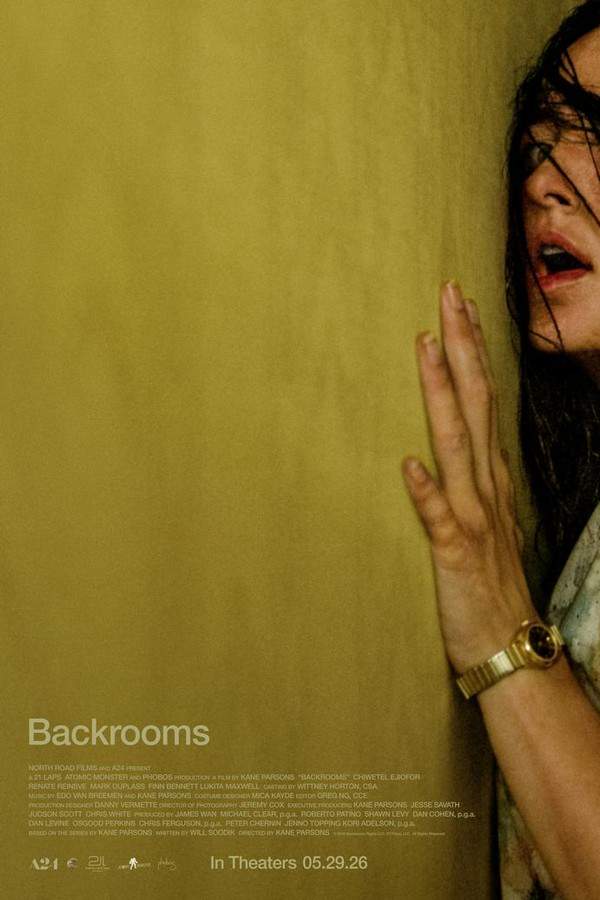
Backrooms 2026 Review: Critical Consensus, Audience Reactions, and Film Reception Analysis
When A24 announced the theatrical adaptation of the viral internet phenomenon known as the Backrooms, expectations were simultaneously sky-high and deeply skeptical. Could a 20-year-old YouTube creator successfully translate the fragmented, analog-horror aesthetic of web-native creepypasta into a feature-length cinematic experience? As Backrooms (2026) hit theaters on May 29, 2026, the film reception landscape revealed a fascinating schism between elite critical circles and mainstream moviegoers, between devoted lore enthusiasts and casual horror fans seeking traditional jump scares. This is precisely why searches for “Backrooms 2026 review”, “Backrooms film analysis”, and “is Backrooms worth watching” have dominated film discourse platforms since its release.
The movie represents a unique inflection point in modern horror cinema—a Generation Z auteur’s vision colliding with studio expectations, internet mythology, and the eternal debate between atmospheric dread and narrative coherence. At What’s After the Movie, we’ve analyzed hundreds of critic reviews and thousands of audience reactions to provide you with the definitive breakdown of how this controversial film landed with viewers. Whether you’re searching for spoiler-free reception analysis or wondering about the Backrooms 2026 critical consensus, this comprehensive examination covers everything from Kane Parsons’ directorial choices to the film’s meticulous 1990s production design.
Critical Reception: How Critics Analyzed Kane Parsons’ Directorial Debut
The critical response to Backrooms 2026 has been notably enthusiastic among prestige horror outlets, with particular praise centered on Kane Parsons’ sophisticated visual language and the film’s refusal to pander to conventional genre expectations. Peter Travers awarded the film an impressive 88/100, declaring it a “claustrophobic, let-me-outta-here groundbreaker” and memorably noting that “this dude is diabolical” in reference to the 20-year-old director’s unsettling command of tension. This sentiment reflects a broader critical consensus that positions Backrooms not merely as a viral-internet-culture cash-grab, but as a legitimate artistic statement within the existentialist horror tradition.
David Fear’s assessment (80/100) characterizes the film as “evocative in a way that suggests a whole other strain of 21st century existentialist horror,” a designation that separates it from the Conjuring Universe-style jump-scare factory output that dominates contemporary multiplexes. Critics consistently highlighted how Parsons, despite his youth and YouTube origins, demonstrated a mature understanding of cinematic patience. James Berardinelli (75/100) perhaps best articulated this approach, observing that Parsons “is not so much a conventional storyteller as a director who establishes a mood and sets the viewer adrift in a sea of moments.” This technique—frustrating to some but rewarding to others—allows Backrooms to distinguish itself in what Berardinelli calls the current “play it safe” era of big-screen entertainment.
Amy Nicholson’s perfect 100/100 score represents the pinnacle of critical enthusiasm, describing the film as “sparse yet gripping” with a “minimalist story [that] accommodate[s] the audience’s own free-ranging imagination.” This praise aligns with Brian Tallerico’s observation (75/100) about the film’s “effective visual language and strongly directed performances,” suggesting that Parsons’ background in short-form analog horror translated surprisingly well to feature-length storytelling requirements. Chase Hutchinson (75/000) went so far as to call it “a triumph of cinematography, editing, production design and visual effects,” humorously speculating whether Parsons “may have ventured into the real backrooms to shoot his film.”
However, the critical reception wasn’t universally ecstatic. Beatrice Loayza (60/100) offered a measured critique that would foreshadow audience divisions, noting that while “ambiguity is key to this style of horror,” the story becomes “filled out enough to break its own uncanny spell.” Richard Whittaker (67/000) identified the central tension of the film as the struggle “between mystery and explanation,” arguing that while the original web series thrived on Async-related lore ambiguity, “a film has to give at least some clarity,” leaving Backrooms “torn between its own enthralling enigma and that narrative necessity.” Keith Phipps (70/000) found this ambiguity productive rather than frustrating, noting that the film “feints at explaining what’s happening and why, then backs away,” using its “distorted vision of the recent past [to] provide a dark reflection of our present.”
For viewers researching Backrooms 2026 critic reviews, the professional consensus suggests this is a film that prioritizes atmospheric immersion over plot mechanics—a polarizing choice that critics largely celebrated but which would prove divisive among general audiences seeking concrete narrative satisfaction.
Audience Reactions: The Divide Between Lore Fans and Casual Viewers
Where the critical reception trended toward appreciation for formal experimentation, the audience reactions to Backrooms (2026) revealed a stark bifurcation between internet-culture natives intimately familiar with Kane Pixels’ original YouTube series and casual moviegoers expecting traditional horror mechanics. This division manifests most clearly in the extreme rating disparities across user-generated platforms—while some viewers awarded perfect scores calling it an “amazing and wonderful experience,” others dismissed it as “boring” and “joyless,” with several users giving the film the lowest possible ratings.
The devoted lore enthusiasts, represented by reviewers like Eclipsa_nova (10/10), celebrated the film’s fidelity to the original creepypasta aesthetic: “The atmosphere and production and lastly the sound design were done so perfectly. Kane parsons at the age of 20 showed us the amazing world he came up with from a single image and description.” This perspective values the film’s accuracy to the Backrooms mythology above traditional narrative satisfaction, with Berryre (10/10) simply noting it was “accurate to the original lore.” TheSpookyMan (9/10) represents the analytical fanbase, explaining that “After I saw the movie, I kept thinking about the movie on a deeper level. I connected it with the OG Kane Series and the more I thought about it, the more I realized how brilliant this movie is.”
Conversely, casual viewers and those unfamiliar with the source material often expressed bewilderment or outright hostility. Nawaf_NM (0/10) articulated a common complaint among disappointed moviegoers: “A boring, joyless movie. At first, it gave me the impression that it was a horror film with monsters and terrifying events, but in the end, it turned out to be about a person dealing with an internal conflict?” This reaction highlights a fundamental marketing disconnect—audiences expecting creature-feature thrills encountered instead a psychological character study about architectural dislocation and marital dissolution. User hrodi2007 (1/10) delivered a scathing critique of the character development, noting “Really poor character development, motivations in the movie make no sense” and comparing it unfavorably to other indie horror films like “Obsession,” concluding that “Performances were lackluster, but the actors did not have much to work with in the first place.”
The Spanish-language review from issacclarke115 (0/10) perhaps most colorfully represents the frustrated casual viewer: “no tiene una historia concreta” (it doesn’t have a concrete story), dismissing the film as boring and suggesting fans only praise it because of their familiarity with the game/lore (“ohhh yo me se todo por que lo juego”). This linguistic divide in criticism suggests the film’s reception varies not just by horror subgenre preference but by cultural context and expectation management.
Interestingly, the moderate scores often provided the most nuanced analysis. mipsu (9/10) acknowledged both strengths and limitations: “Loved it so so much. Perfectly eerie and some scenes really got my pulse up. Acting was beyond amazing! Only nitpick is that it that it somehow felt really short, even if it was almost 2hours.” TheNateNeale (7/10) captured the film’s appeal for analog horror aficionados while acknowledging its limitations: “Very fun is to be had with this analog-horror film. The film set is spectacular and very surprising considering the budget for this movie. Although character development is not this movie’s star feature, this movie just proves that we need more Youtubers directing and writing horror movies.”
For those browsing Backrooms 2026 viewer reactions, the takeaway is clear: your enjoyment depends heavily on your tolerance for slow-burn atmospheric horror and your familiarity with the source material. The film seems to function almost as a loyalty test for the Backrooms fandom, rewarding those who appreciate liminal space aesthetics while alienating viewers seeking concrete answers or traditional scare mechanics.
Visual Mastery and 90s Nostalgia: Production Design vs. Narrative Ambiguity
If there’s one aspect of Backrooms 2026 that achieved universal acclaim across the critical and audience spectrum, it’s the film’s extraordinary production design and visual composition. The movie’s recreation of 1990s American retail aesthetics has been described as nothing short of transportive, with several reviewers noting how the visual elements nearly compensate for narrative frustrations. This section of our film analysis examines how the movie’s stunning aesthetic achievements created a framework for both its greatest triumphs and its most significant criticisms.
Leithal’s detailed 5/10 review provides the most comprehensive examination of the visual craft, describing “a certain nostalgic dread baked into the fluorescent-lit, maze-like aisles of a 1990s American furniture store.” They elaborate: “On a purely visual level, Backrooms captures that atmosphere perfectly. The set design is undeniably gorgeous. Every meticulously crafted showroom and dimly lit corridor echoes a very specific point in time, completely immersing you in the look and feel of the era.” This observation aligns with Hutchinson’s critical praise regarding the film’s technical specifications—the cinematography, editing, and production design work in concert to create what feels like a genuine temporal displacement.
The film’s visual strategy deliberately leverages analog technology limitations to enhance its uncanny atmosphere. Leithal notes the “memory of VCR’s, personal computers with 3.5 inch hard disks and video cameras you had to rest on your shoulder,” elements that “all harken back to the start of digital technology.” This period-specific technological framework isn’t merely aesthetic nostalgia; it serves the film’s themes of liminality and forgotten spaces. The fluorescent lighting and “yellow and cream wallpaper that adorns every wall” invoke, as Leithal suggests, “the sensation of getting lost in your own mind, wandering through endless rooms.”
However, the visual excellence also highlights the film’s structural inconsistencies. Leithal’s memorable comparison—“Backrooms feels like Skinamarink at Ikea”—captures both the movie’s atmospheric ambition and its frustrating execution. While the visual elements suggest one type of film (an experimental, boundary-pushing horror experience), the narrative structure sometimes undermines these achievements. The shifting between traditional cinematography and found-footage sequences creates what several reviewers identified as a jarring tonal inconsistency. Leithal specifically addresses this: “When the movie shifts into found-footage mode, it actually works really well, tapping into the raw, claustrophobic dread that the ‘backrooms’ internet lore is known for. But the moment it flips back to a traditional main camera setup, it immediately loses what makes the premise special.”
This technical schizophrenia extends to the film’s approach to horror itself. Despite its marketing as a horror film, many viewers found the experience closer to psychological thriller or even avant-garde art installation. Leithal confirms: “There isn’t a single genuinely good scare to be found,” suggesting that the movie “isn’t scary in the slightest” despite its horrifying premise. Instead, the dread operates on a more subliminal level—the fear of infinite, meaningless space rather than monster attacks. This aligns with Berardinelli’s observation about Parsons establishing “a mood and sets the viewer adrift in a sea of moments.”
The tension between visual splendor and narrative opacity creates what might be called the “beautiful but empty” paradox that defines much of the audience discourse. As Leithal summarizes: “Ultimately, Backrooms is a masterclass in 90s set design trapped inside a deeply flawed, frustratingly disjointed horror film.” For viewers researching whether Backrooms 2026 is worth watching for its visual elements alone, the consensus suggests that cinematography enthusiasts and production design aficionados will find much to admire, even if the narrative fails to satisfy traditional horror expectations.
Genre Expectations: When Atmospheric Dread Replaces Jump Scares
The most contentious aspect of Backrooms 2026 reception revolves around its categorical identity—is this truly a horror film, or something closer to existential psychological fiction wearing horror’s clothing? This debate over genre classification has fueled much of the polarization in viewer reactions and represents a crucial consideration for anyone seeking spoiler-free guidance on what to expect from the theatrical experience.
The marketing materials positioned Backrooms firmly within the supernatural horror tradition, promising the monstrous entities and terrifying events associated with the internet mythos. However, as Nawaf_NM’s frustrated review indicates, many viewers discovered instead “a person dealing with an internal conflict” rather than creature-feature thrills. This disconnect between promise and delivery has generated significant discourse about truth-in-advertising and the responsibilities of A24’s brand identity, which has built its reputation on “taking risks with its releases” and leaning “heavily into the weird and wonderful,” as Leithal notes.
Richard Whittaker’s critical analysis identifies the core structural challenge: “The inner tension of Backrooms is between mystery and explanation.” While the original YouTube series could maintain indefinite ambiguity regarding the Async corporation and the metaphysical nature of the Backrooms, a feature film demands some narrative resolution. The movie’s struggle to balance these competing needs—satisfying lore fans who want answers while maintaining the uncanny atmosphere that makes the concept compelling—creates the sense of a film “torn between its own enthralling enigma and that narrative necessity.”
This ambiguity manifests in the film’s pacing and scare distribution. Unlike conventional horror films that operate on rhythmic tension-and-release cycles, Backrooms maintains a sustained atmospheric pressure that never fully resolves into traditional cathartic scares. Keith Phipps notes that the film “feints at explaining what’s happening and why, then backs away,” suggesting that the refusal to categorize itself—horror or thriller, supernatural or psychological—is actually a deliberate thematic choice. The “distorted vision of the recent past” serves as “a dark reflection of our present,” implying that the horror lies not in monsters but in the recognition of meaningless, endless consumption spaces.
For audiences accustomed to James Wan-style haunted house mechanics or Jordan Peele’s social thrillers, this approach proves challenging. hrodi2007’s criticism that the film missed “opportunities of comedy” and was “way too serious with no thematic reward” suggests that viewers expected a different emotional contract—perhaps something closer to the self-aware horror-comedy of the 2020s. Instead, Parsons delivers a film closer to the “slow cinema” tradition of directors like Apichatpong Weerasethakul, albeit filtered through 90s American retail aesthetics.
The critical consensus suggests that reorienting expectations is essential for appreciation. Beatrice Loayza’s observation that “ambiguity is key to this style of horror, where space and atmosphere do most of the heavy lifting” serves as guidance for prospective viewers. This isn’t a film about what happens; it’s about the feeling of being lost in liminal infinity. For those researching Backrooms 2026 film analysis, understanding this generic repositioning—from event-based horror to atmospheric dread—is crucial for calibrating expectations and potentially enjoying what the film actually offers rather than mourning what it withholds.
Character Development and Performances: Ejiofor and Reinsve in the Void
Amidst the discourse surrounding Backrooms 2026’s visual achievements and narrative ambiguity, the performances of Chiwetel Ejiofor and Renate Reinsve have generated particularly nuanced discussion. While some viewers found the human element “completely hollow,” others praised specific scenes between the leads as among the film’s most effective moments. This section examines how the acting functions within Parsons’ atmospheric framework and whether the character work supports or undermines the film’s thematic ambitions.
Leithal’s comprehensive review offers the most detailed assessment of the central performances, noting that Ejiofor “does the best with what he is served up here, a struggling wannabe architect who has lost his marriage and pushed everyone in his life away, constantly blaming everyone else and the world for the state that his life is in.” This character archetype—the failed masculine professional discovering metaphysical horror as an externalization of internal collapse—positions Backrooms within a tradition of midlife crisis horror that includes The Shining and Barton Fink. However, the reviewer notes that “there just wasn’t enough behind it to have that deeper connection you could feel the script was trying to force on you,” suggesting that the film’s commitment to atmospheric mystery occasionally sacrifices character interiority.
The relationship between Ejiofor’s Clark and Reinsve’s Mary—his therapist whose “muddled childhood may hide more secrets than she is letting on”—represents the film’s attempt to ground cosmic horror in intimate human psychology. Their therapy sessions, which Leithal describes as “recreating the marriage breakdown and discussing Clark’s discovery of the secret doorway,” provide exposition while attempting to maintain emotional authenticity. For some viewers, these scenes disrupt the uncanny atmosphere; for others, they provide necessary narrative anchor points within the infinite liminal spaces.
The criticism regarding “hollow” characters extends beyond individual performances to structural concerns about the film’s ensemble. hrodi2007’s harsh assessment that “the human element is completely hollow” and that “none of the characters manage to connect” reflects a broader sentiment among viewers who felt that the film prioritized concept over character. When “you can’t bring yourself to care about the people trapped in the nightmare,” as Leithal notes, “the stakes completely evaporate.” This creates a unique viewing experience where the audience’s engagement depends entirely on their intellectual or aesthetic interest in the Backrooms concept rather than emotional investment in survival outcomes.
Conversely, mipsu’s enthusiastic praise for the acting (“Acting was beyond amazing!”) suggests that viewers attuned to subtle, internalized performances found much to appreciate in the leads’ restrained approaches. The film asks its actors to convey existential dread through minimalist means—Ejiofor’s ability to suggest architectural obsession and marital grief while wandering through yellow hallways, Reinsve’s capacity to imply hidden knowledge behind professional composure. These are not showy performances but rather atmospheric contributions that blend into the film’s overall texture.
TheNateNeale’s observation that “character development is not this movie’s star feature” acknowledges this trade-off while contextualizing it within the director’s background. As a YouTube creator transitioning to feature filmmaking, Parsons prioritizes the visual and conceptual elements that made his short-form content successful, potentially at the expense of traditional dramatic development. For those browsing Backrooms 2026 reviews specifically interested in performance quality, the consensus indicates that while Ejiofor and Reinsve deliver professional, committed work, the screenplay’s prioritization of mystery over psychology may leave viewers wanting more substantial character arcs.
Conclusion: Synthesizing the Backrooms 2026 Reception Landscape
As the credits roll on Backrooms 2026, what emerges from the cacophony of critical praise and audience frustration is a film that functions as a Rorschach test for modern horror sensibilities. The reception analysis reveals a work that is simultaneously sophisticated and immature, visually breathtaking yet narratively frustrating, faithful to its internet origins yet struggling with the translation to cinematic grammar. For viewers wondering whether this film deserves their time and ticket price, the answer depends entirely on what they seek from the theatrical experience.
The data suggests that Backrooms 2026 rewards patience, visual literacy, and familiarity with the source material while punishing those seeking immediate gratification, traditional scare mechanics, or concrete narrative resolution. It’s a film that will likely grow in estimation over time, as its box office performance and subsequent streaming afterlife allow audiences to approach it with calibrated expectations rather than marketing-induced misconceptions. The critical consensus celebrating Parsons’ “diabolical” command of atmosphere and the “sophisticated” nature of the horror suggests that within academic and cinephile circles, Backrooms will be studied as a significant debut—a 20-year-old’s ambitious statement of intent that sometimes stumbles but never compromises its vision.
For casual viewers, however, the verdict remains mixed. The film’s refusal to explain itself, its “torn” nature between mystery and narrative necessity, and its substitution of existential dread for traditional horror beats create a challenging viewing experience. Yet even the harshest reviews acknowledge the “masterclass in 90s set design” and the “spectacular” visual achievements that suggest Parsons’ future projects may bridge the gap between artistic ambition and accessibility.
Ultimately, Backrooms 2026 stands as a testament to the growing legitimacy of internet-native storytelling and the expanding definition of what constitutes horror cinema. Whether you approach it through the quizzes and games that test your lore knowledge or simply as a curious moviegoer seeking something different from the multiplex offerings, this is a film that demands engagement on its own terms. Love it or loathe it, Backrooms refuses to be ignored—and in an era of algorithm-friendly content, that stubborn individuality may be its greatest achievement.
For more detailed analysis of film receptions, box office data, and comprehensive movie information, visit our movie wiki or explore our curated movie collections to discover similar films that match your preferred viewing experiences.
External Resources and Links
For additional information about Backrooms (2026), including cast details, production information, and aggregated scores, visit these trusted movie database sites:
| Site | Link |
|---|---|
| Backrooms IMDB | Backrooms IMDB |
| Backrooms TMDB | Backrooms TMDB |
| Backrooms Wikipedia | Backrooms Wikipedia |
| Backrooms Rotten Tomatoes | Backrooms Rotten Tomatoes |
| Backrooms Metacritic | Backrooms Metacritic |
| Backrooms JustWatch | Backrooms JustWatch |
| Backrooms Box Office Mojo | Backrooms Box Office Mojo |
| Backrooms Letterboxd | Backrooms Letterboxd |
| Backrooms IMCDB | Backrooms IMCDB |
Continue reading



What's After the Movie?
Not sure whether to stay after the credits? Find out!
Check out our other apps:

SAT Sphere
Build confidence for the Digital SAT.

Mori Atlas
Discover wild places worth protecting.

Luntero
Search smarter for a home in Amsterdam.

Plot Explained
Unravel movie endings and hidden clues.

Pokechamp
Dive into Pokémon data and battle logic.

Driving Theory
Get ready for your European theory test.

Movie Dust
Plan your next cinema trip with ease.

Musemap
Find art and culture as you travel.

Selkobase
Compare credentials before committing.

Local Manual
Turn an unfamiliar country into practical next steps.

Lernavi
Compare school systems before your next move.

GymRoam
Find a workout stop wherever your plans take you.
Explore Our Movie Platform
New Movie Releases (2026)
Famous Movie Actors
Top Film Production Studios
Movie Plot Summaries & Endings
Major Movie Awards & Winners
Best Concert Films & Music Documentaries
Movie Collections and Curated Lists
© 2026 What's After the Movie. All rights reserved.
Privacy Policy