What's After the Blog?
industry • news
Why Guillermo del Toro's At the Mountains of Madness Never Happened
Guillermo del Toro's ambitious adaptation of H.P. Lovecraft's "At the Mountains of Madness" was poised to be a landmark R-rated horror blockbuster with James Cameron producing and Tom Cruise starring. Despite a $150 million budget and years of development, Universal Pictures shelved the project in 2011, leaving the film in permanent development hell as del Toro recently deemed it "too big, too crazy, too R-rated" to revive.
April 14, 2026
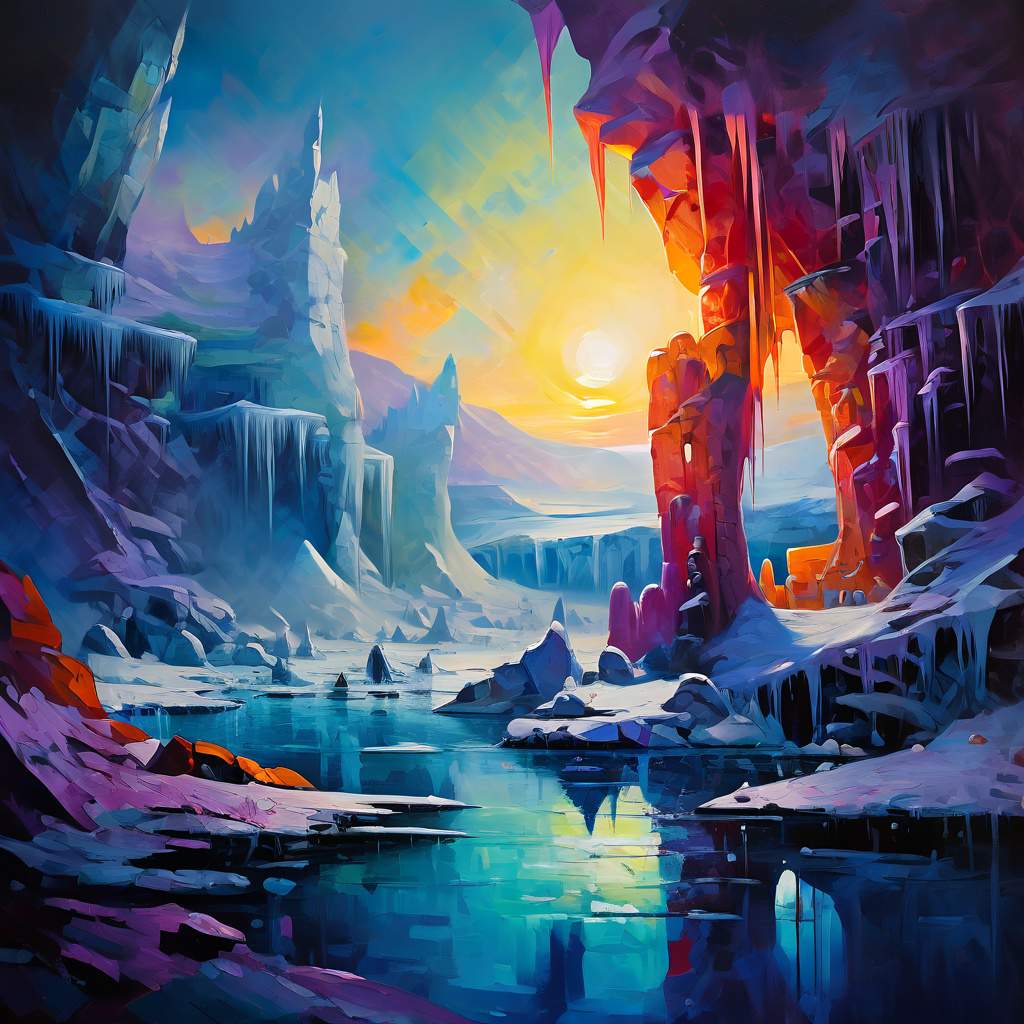
Why Guillermo del Toro’s At the Mountains of Madness Never Happened
For nearly three decades, Guillermo del Toro pursued his ultimate cinematic obsession: a lavish adaptation of H.P. Lovecraft’s “At the Mountains of Madness.” Positioned as a $150 million R-rated tentpole horror film with James Cameron producing and Tom Cruise attached to star, the project promised to merge prestige filmmaking with blockbuster scale. Yet despite impeccable pedigree and meticulous preparation, Universal Pictures pulled the plug in 2011, consigning what could have been a genre-defining epic to permanent development hell.
The cancellation devastated del Toro, who had envisioned the Antarctic tale as his first true blockbuster—a film that would combine the atmospheric dread of John Carpenter’s “The Thing” with the production value of “Avatar.” Recent statements suggest the director has finally accepted that this particular dream will never materialize, citing the project’s prohibitive scale and uncompromising adult content.
A Blockbuster Vision for Cosmic Horror
Del Toro conceived “At the Mountains of Madness” as a return to the era of R-rated tentpole horror exemplified by “Alien,” “The Shining,” and “The Exorcist.” Rather than relegating Lovecraftian terror to low-budget genre fare, he demanded studio-level resources to realize the novella’s incomprehensible cosmic entities and ancient Antarctic civilizations. The screenplay, co-written with longtime collaborator Matthew Robbins, reframed Lovecraft’s narrative as a 1930s-set action-packed horror epic without diluting the source material’s philosophical dread.
Their adaptation preserved the story’s structural bones: geologist William Dyer leads an expedition to investigate a missing Antarctic team led by Professor Lake. The discovery of Lake’s slaughtered crew kicks open the door to encounters with the “Old Ones” and the Shoggoths—shape-shifting cosmic entities that absorb human and animal prey, producing hideous biological distortions. The script also featured the novella’s infamous albino penguins and sprawling cyclopean cityscapes, all requiring sophisticated practical effects and location shooting.
Key visual elements del Toro developed included:
- The Shoggoths’ amorphous, tentacled forms designed through a combination of practical makeup effects and digital enhancement
- The ancient Antarctic city revealing humanity’s insignificant place in the cosmos
- Native 3D photography utilizing Cameron’s post-”Avatar” technological expertise
- Period-accurate 1930s expedition gear and brutal Antarctic environments
The director planned to shoot the film in native 3D, capitalizing on the format’s post-”Avatar” popularity to immerse audiences in the hostile, frozen environment where ancient horrors lay dormant. This commitment to technical innovation, combined with the requirement for rigorous location work and complex creature effects, drove the budget to $150 million—a figure that demanded PG-13 accessibility in Universal’s view.
The Creative Ensemble and Cast
The project attracted an A-list coalition that made its cancellation particularly stinging. James Cameron signed on to produce, bringing his technical authority and box office credibility to the ambitious venture. Tom Cruise committed to star as William Dyer, the geologist narrator who gradually unravels as he confronts evidence of humanity’s cosmic insignificance. This casting came as Cruise was rehabilitating his public image following his “Tropic Thunder” comeback, suggesting he was seeking challenging dramatic material.
Del Toro envisioned Ron Perlman as Larsen, the rugged dogsled captain who would provide physical counterpoint to Cruise’s intellectual protagonist. This pairing would have reunited del Toro with his frequent collaborator while giving Cruise a vehicle for emotional intensity the actor hadn’t explored since “Magnolia.” The creative team’s pedigree suggested commercial viability despite the mature rating, with del Toro having proven his blockbuster credentials on “Hellboy II: The Golden Army.”
Robbins and del Toro’s script gave the characters more personality than Lovecraft’s original, which often sacrificed character development for atmospheric dread. Their Dyer was “suitably dashing” but narrated from the present as a man “hanging onto his last shred of sanity,” suggesting a framing device that would allow Cruise to explore psychological disintegration.
The R-Rating Impasse That Doomed Production
The fatal obstacle remained del Toro’s non-negotiable demand for an R rating. Universal balked at committing $150 million to a horror film that would exclude teenage audiences, particularly given the studio’s recent experience with “Hellboy II” underperforming against “The Dark Knight.” The executives demanded PG-13; del Toro refused to compromise the visceral horror required by Lovecraft’s material, which he described as requiring “adult” treatment due to “really deep and disturbing” consequences.
In a 2010 interview, del Toro explained his artistic stance: “What I love about tentpole horror—which is not done much anymore, if at all—is that there was a time when you could see something like ‘Alien’ or ‘The Shining’ or ‘The Thing.’ Movies that came not as a B-movie product of a studio, but as an A, tentpole, big release, high-end production like ‘The Exorcist.’” He emphasized that the R rating wasn’t for gratuitous gore, but for the narrative weight of the cosmic revelations.
By 2012, Ridley Scott’s “Prometheus”—exploring similar ancient astronaut themes in an R-rated sci-fi framework—further diminished the project’s distinctiveness. Del Toro admitted the thematically similar release effectively put his film “on ice,” noting that Hollywood rarely accommodates multiple high-concept projects exploring comparable territory.
Development Hell and Final Declarations
The collapse of the Universal deal plunged del Toro into a depression he later described as nearly catastrophic. “Oh, you want to commit suicide! You never get over it,” he told interviewers regarding the cancellation. “The collapse of [‘At the Mountains of Madness’] really took the wind out of my sails.” The filmmaker admitted he could fall into “deep depression for a long time” when projects failed, and this particular cancellation “almost takes you out.”
In 2022, fans briefly hoped for revival when del Toro mentioned potential collaboration with stop-motion master Phil Tippett following “Mad God,” suggesting a radically different animated approach that might circumvent the budget concerns. However, no concrete development followed, and the project remained in stasis.
By 2025, del Toro effectively closed the door entirely. Speaking to Empire, he admitted, “It’s too big, too crazy, too R-rated, I guess.” While he has expressed desire to rewrite the screenplay, he appears unwilling to endure another “soul-crushing experience” with the material. The current horror landscape—where films like “Sinners” prove R-rated genre films can succeed—suggests the market may finally exist for del Toro’s vision, yet the director, having recently realized his “Frankenstein” adaptation to fill a similar gap in his filmography, seems content to leave the Mountains of Madness unclimbed.
What’s After the Movie?
If you’re fascinated by the films that almost were and the complex machinery of Hollywood development, explore more industry deep-dives and unmade project histories at What’s After the Movie. Our database tracks box office performance, production histories, and the intricate paths projects take from announcement to release—or cancellation. Discover comprehensive movie summaries, ending explanations, and the latest entertainment news to stay informed about the projects that manage to reach the screen and those that remain tantalizing what-ifs.
Check out our movies list for similar genre classics, or visit our blog for more features on legendary unmade films.
Continue reading


What's After the Movie?
Not sure whether to stay after the credits? Find out!
Check out our other apps:

SAT Sphere
Build confidence for the Digital SAT.

Mori Atlas
Discover wild places worth protecting.

Luntero
Search smarter for a home in Amsterdam.

Plot Explained
Unravel movie endings and hidden clues.

Pokechamp
Dive into Pokémon data and battle logic.

Driving Theory
Get ready for your European theory test.

Movie Dust
Plan your next cinema trip with ease.

Musemap
Find art and culture as you travel.

Selkobase
Compare credentials before committing.

Local Manual
Turn an unfamiliar country into practical next steps.

Lernavi
Compare school systems before your next move.

GymRoam
Find a workout stop wherever your plans take you.
Explore Our Movie Platform
New Movie Releases (2026)
Famous Movie Actors
Top Film Production Studios
Movie Plot Summaries & Endings
Major Movie Awards & Winners
Best Concert Films & Music Documentaries
Movie Collections and Curated Lists
© 2026 What's After the Movie. All rights reserved.
Privacy Policy