
What's After the Movie
Mikhail Romm
Mikhail Ilyich Romm was born on January 24, 1901, in Irkutsk into a family of mixed Russian Jewish and Russian German descent, a background that would shape his cosmopolitan worldview during the turbulent decades of the early Soviet Union. After graduating from gymnasium in 1917, he initially pursued visual arts at the Moscow College for Painting, Sculpture and Architecture, but his path was dramatically altered by the Russian Civil War, during which he served in the Red Army from 1918 to 1921, rising from signalman to inspector of the Special Commission of the Supreme Military Soviet. This experience exposed him to the vast diversity of Russian life across different regions, an education he later recalled with profound gratitude. Following his military service, Romm received a government scholarship and graduated in 1925 as a sculptor from the class of the renowned Anna Golubkina, working subsequently as both a sculptor and translator before turning his analytical mind to cinema theory between 1928 and 1930. His transition to filmmaking crystallized in 1931 when he joined the Mosfilm studio as an assistant and screenwriter, marking the beginning of a career that would span four decades and fundamentally influence Soviet cinematography.
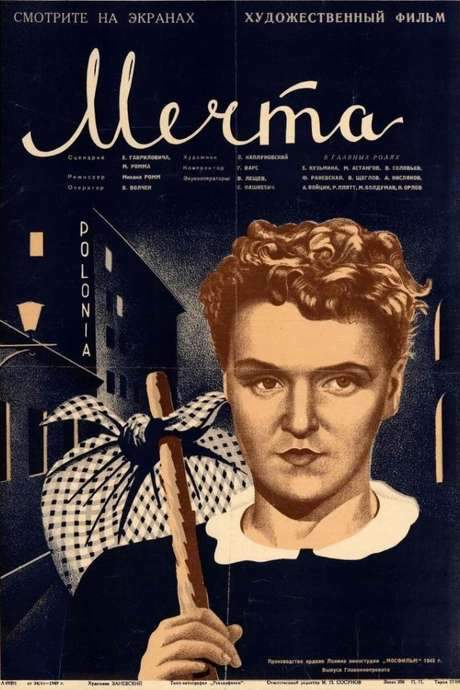
Romm's directorial debut came with Boule de Suif (1934), an adaptation of Guy de Maupassant's story, but he achieved monumental success with his subsequent works, particularly the hagiographic Lenin in October (1937), which he was ordered to complete in just four months for the 20th anniversary of the Bolshevik Revolution, and The Thirteen (1936), a Soviet reimagining of John Ford's The Lost Patrol shot in the Turkmenistan desert. His 1941 film Dream (Mechta), starring Faina Ranevskaya, explored profound spiritual crises and material misery, earning recognition from President Roosevelt as one of the greatest films in the world, while Nine Days in One Year (1962) captured the ethical complexities of young nuclear physicists. Beyond narrative cinema, his documentary Triumph Over Violence (1965), known internationally as Ordinary Fascism, became one of the most viewed historical documentaries ever made, attracting over forty million viewers with its chilling examination of the Third Reich. As a pedagogue, Romm's influence proved equally transformative; from 1948 until his death, he led the actor's-producer department at VGIK, where he mentored an entire generation of Soviet cinematic giants including Andrei Tarkovsky, Nikita Mikhalkov, Georgiy Daneliya, Vasily Shukshin, and Elem Klimov, cementing his legacy not only as a creator of enduring films but as the architect of Soviet cinema's intellectual future. He died in Moscow in 1971, leaving behind a body of work that earned him the title of People's Artist of the USSR and five Stalin Prizes, forever securing his place in the pantheon of Soviet film masters.
Biography, Career & Filmography
Learn more about Mikhail Romm, including a detailed biography, career timeline, personal life insights, and complete filmography. Discover how Mikhail Romm rose to fame, their major roles, industry impact, and personal milestones in the world of film.
Given Name: Mikhail Ilyich Romm
Born: Irkutsk, Russian Empire
Citizenship: Soviet Union
Birthday: January 24, 1901
Occupations: Film director, screenwriter, pedagogue
Years Active: 1931-1971
External Links and Streaming Options
Explore more about on trusted external platforms like Wikipedia. Find additional details, reviews, and related content to deepen your understanding.





Career Timeline
Track the complete movie timeline of Mikhail Romm, including all film releases, career breakthroughs, and notable roles. Follow their journey from early performances to recent blockbusters and upcoming projects.

Coming soon on iOS and Android
The Plot Explained Mobile App
From blockbusters to hidden gems — dive into movie stories anytime, anywhere. Save your favorites, discover plots faster, and never miss a twist again.
Sign up to be the first to know when we launch. Your email stays private — always.
Explore the mobile app
What's After the Movie?
Not sure whether to stay after the credits? Find out!
Check out our other apps:

SAT Sphere
Build confidence for the Digital SAT.

Mori Atlas
Discover wild places worth protecting.

Luntero
Search smarter for a home in Amsterdam.

Plot Explained
Unravel movie endings and hidden clues.

Pokechamp
Dive into Pokémon data and battle logic.

Driving Theory
Get ready for your European theory test.

Movie Dust
Plan your next cinema trip with ease.

Musemap
Find art and culture as you travel.

Selkobase
Compare credentials before committing.

Local Manual
Turn an unfamiliar country into practical next steps.

Lernavi
Compare school systems before your next move.

GymRoam
Find a workout stop wherever your plans take you.
Explore Our Movie Platform
New Movie Releases (2026)
Famous Movie Actors
Top Film Production Studios
Movie Plot Summaries & Endings
Major Movie Awards & Winners
Best Concert Films & Music Documentaries
Movie Collections and Curated Lists
© 2026 What's After the Movie. All rights reserved.
Privacy Policy