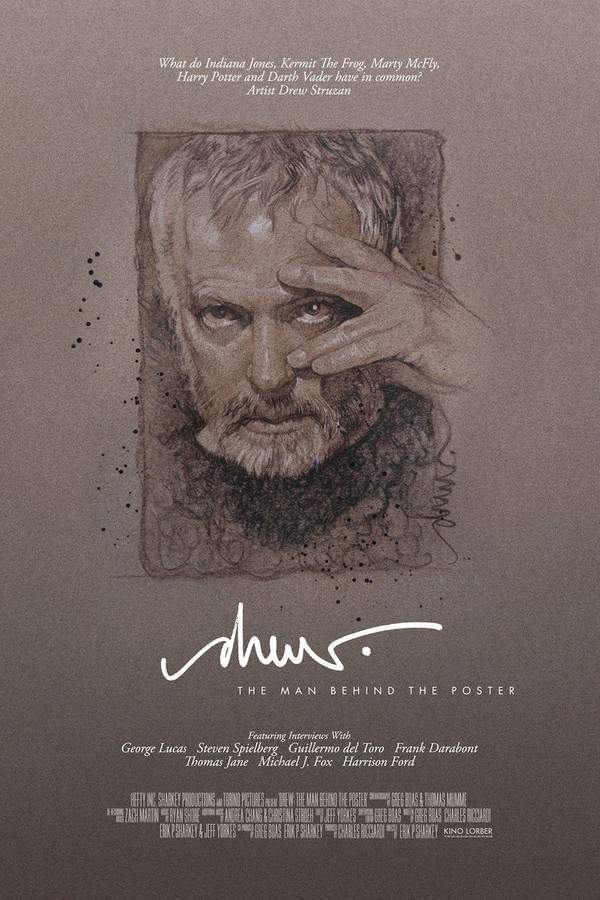
What Is Drew: The Man Behind the Poster About?
The premise of Drew: The Man Behind the Poster in 304 words, with nothing given away. The full story follows below.
This affectionate, visually rich documentary profiles Drew Struzan, the artist whose painted images have become among cinema’s most recognizable emblems of fantasy, adventure, and horror. Rather than treating his career as a simple catalogue of successes, the film presents a searching portrait of creativity, ambition, and the unusual balance between commercial work and personal expression. The camera invites viewers into a world where sketches, compositions, and visual ideas hold as much weight as the stories they promote.
Personal interviews with Struzan’s wife and sons, Dylan Struzan and Christian Struzan, reveal the family environment surrounding his life and work. The documentary also gathers insights from filmmakers and performers, including Steven Spielberg, Guillermo del Toro, George Lucas, Harrison Ford, and Michael J. Fox, each offering a different perspective on an artist whose images often seemed more memorable than the productions they advertised. Their recollections create a warm, conversational tone while keeping attention on Struzan’s distinctive creative process.
Across discussions of science-fiction sagas, period adventures, supernatural thrillers, and fantasy epics, the film explores how a single image can shape audience expectations before a film even begins. It also places Struzan’s illustrative style against a changing movie business increasingly drawn toward photographic marketing. This contrast lends the documentary a quietly critical edge, raising broader questions about artistic authorship, commercial influence, and whether an image’s power lies in its ability to tell a story of its own.
Struzan’s own reflections keep the focus human: on inspiration, technical choices, the pressure of deadlines, and the satisfaction of making something purely for himself. His career may occupy the center of the film, but its deeper subject is the life of a restless image-maker navigating collaboration, expectation, and self-discovery. The result is an admiring yet intimate celebration of a creative figure whose work continues to give familiar films an imaginative visual identity.
What Happens in Drew: The Man Behind the Poster?
The complete story of Drew: The Man Behind the Poster, from the first scene to the last, in 213 words (about 1 minute). Spoilers throughout.
Spoilers ahead
The documentary features interviews with a number of people, including Struzan himself, his wife, Dylan Struzan, his son, Christian Struzan, directors Steven Spielberg, Guillermo del Toro and George Lucas, and actors Harrison Ford and Michael J. Fox. The film follows Struzan’s career painting movie posters for films such as Star Wars, The Thing, Back to the Future, the Indiana Jones franchise, and the Harry Potter franchise.
The film delves into Struzan’s art for Alice Cooper’s album Welcome to My Nightmare, and also how his artwork for Guillermo del Toro’s Hellboy, Hellboy II: The Golden Army, and Pan’s Labyrinth, though greatly admired by del Toro, was rejected by the studio in favor of more photographic posters. This leads the documentary in a direction about how film studios are interested more in profit rather than quality, how film posters are more often photographs of the actors rather than paintings of them.
The documentary concludes with footage of Struzan at San Diego Comic-Con in 2010, wherein he receives the Inkpot Award for his illustrations. This is then followed by footage of Struzan talking about and showing his personal paintings not related to film, and how he spends his time painting not for someone else, but for himself, and how he often plays outside with grandson, Nico.
Drew: The Man Behind the Poster Timeline: Every Key Event in Order
15 key events in the order they happen, from “Drew Struzan's story begins” to “Painting for himself and family”.
- 1
Drew Struzan's story begins
The documentary opens with interviews of Drew Struzan himself, joined by his wife Dylan Struzan and his son Christian Struzan. Their memories and reflections lay the personal foundation for the story of the man behind some of cinema's most iconic artwork.
- 2
Hollywood legends pay tribute
Directors Steven Spielberg, Guillermo del Toro and George Lucas, along with actors Harrison Ford and Michael J. Fox, share their perspectives in interviews. Their testimonials show how deeply Struzan's painted posters became intertwined with the legacy of their films.
- 3
Alice Cooper's 'Welcome to My Nightmare' artwork
The film delves into Struzan's art for Alice Cooper's album 'Welcome to My Nightmare'. This commission highlighted his distinct painterly style and stands as a notable part of his career outside of movie posters.
- 4
Painting the Star Wars posters
The documentary follows Struzan's career painting movie posters, with the Star Wars saga standing among his most celebrated works. These painted images helped define the look of the franchise and established his reputation as a legendary poster artist.
- 5
The Thing poster
Struzan's poster work for the film 'The Thing' is highlighted as another memorable achievement from his career. It demonstrates the range of his craft, moving from adventure imagery into unsettling horror atmosphere.
- 6
Back to the Future posters
The documentary also revisits Struzan's posters for 'Back to the Future'. His artwork captured the spirit of the beloved film and became iconic in its own right.
- 7
Indiana Jones franchise imagery
His painted posters for the Indiana Jones franchise are explored as a cornerstone of his career. The artwork perfectly embodied the adventurous tone of the films, which starred Harrison Ford, one of the documentary's interviewees.
- 8
Harry Potter franchise posters
The film also covers Struzan's contributions to the Harry Potter franchise. This part of his story shows how his classic painted style remained sought after for major productions late into his career.
- 9
Collaboration with Guillermo del Toro
The documentary turns to Struzan's working relationship with Guillermo del Toro, who greatly admired the artist's painted approach. Del Toro valued Struzan's craft for his own films, standing apart from the industry's shifting marketing trends.
- 10
Rejected artwork
Struzan's posters for 'Hellboy', 'Hellboy II: The Golden Army' and 'Pan's Labyrinth' are examined closely. Despite being greatly admired by del Toro himself, each piece was rejected by the studio in favor of more photographic posters.
Show the other 5 events of Drew: The Man Behind the Poster Hide the last 5 events
- 11
Profit over quality
These rejections lead the documentary into a broader critique of the film industry. It explores how studios are interested more in profit than in quality when it comes to marketing their movies.
- 12
Photographs replace painted posters
The documentary reflects on the changing nature of movie marketing over the decades. Painted posters have largely given way to simple photographs of the actors, leaving little room for traditional illustrators like Struzan.
- 13
Inkpot Award at Comic-Con
The documentary concludes with footage of Struzan at San Diego Comic-Con in 2010. There, he receives the Inkpot Award for his illustrations, a public acknowledgment of his remarkable body of work.
When:2010 Where:San Diego Comic-Con
- 14
Personal paintings revealed
Following the award footage, Struzan talks about and shows his personal paintings that are unrelated to film. This segment reveals another side of the artist, one driven purely by his own inspiration.
- 15
Painting for himself and family
The film ends by showing how Struzan spends his time painting not for someone else, but for himself. It closes on a warm note, depicting how he often plays outside with his grandson, Nico.
Who Are the Main Characters in Drew: The Man Behind the Poster?
Drew Struzan: who they are and the part they play in the story.
- DS
Drew Struzan
Drew Struzan is a renowned artist known for his iconic movie posters that blend realism and artistic flair. His work has captured the imaginations of audiences for decades, and he navigates the challenges posed by the commercial film industry. He is depicted as passionate about his craft and dedicated to creating art that resonates with viewers.
- 🎨 Artist
- 🎬 Icon
Where and When Is Drew: The Man Behind the Poster Set?
Drew: The Man Behind the Poster is set in San Diego Comic-Con and Various Film Studios (2010). Here is why the time and place matter to the story.
When
2010
The documentary takes place around the year 2010, capturing a moment when the shift in film marketing from artistic posters to photographic imagery was gaining traction. This period reflects a general trend in the industry towards prioritizing profit over artistic integrity and the emotional connection fostered by traditional art.
Where
San Diego Comic-Con, Various Film Studios
San Diego Comic-Con is a major event in the pop culture calendar, known for celebrating comics, movies, and popular culture. The film studios mentioned, including those behind major franchises like Star Wars and Harry Potter, represent the heart of the film industry where art meets commerce.
- 🎨 Art
- 🎬 Film Industry
What Are the Themes of Drew: The Man Behind the Poster?
2 ideas the story keeps returning to, among them Art vs. Commerce and Legacy of Art.
-
01
Art vs. Commerce
The tension between artistic expression and commercial interests is a central theme of the documentary. It highlights how film studios often choose profit-driven decisions over the quality of artistic work, impacting how movies are marketed. Struzan's journey showcases the struggle of artists within a profit-centric industry.
-
02
Legacy of Art
Struzan's legacy as a prominent artist of movie posters demonstrates the impact that visual art has on cinema. The documentary reflects on how his contributions have shaped film marketing and the lasting impression of his artistic style. It emphasizes the importance of preserving artistic traditions in a rapidly changing industry.
What Kind of Film Is Drew: The Man Behind the Poster?
Light in tone, with steady pacing and a moderate story, going by the plot summary.
- Tone
- Light
- Pacing
- Steady
- Story
- Moderate
- Intensity
- Low
- Ending
- Happy
A warm, nostalgic profile of a beloved poster artist, moving chronologically through iconic work, creative conflicts, personal reflections, and a quietly triumphant final recognition.
- nostalgic
- celebratory
- reflective
- warm
- inspiring
- laid back
- movie poster art
- creative process
- film industry
- career retrospective
Quiz
How well do you remember Drew: The Man Behind the Poster? Test yourself on the story.